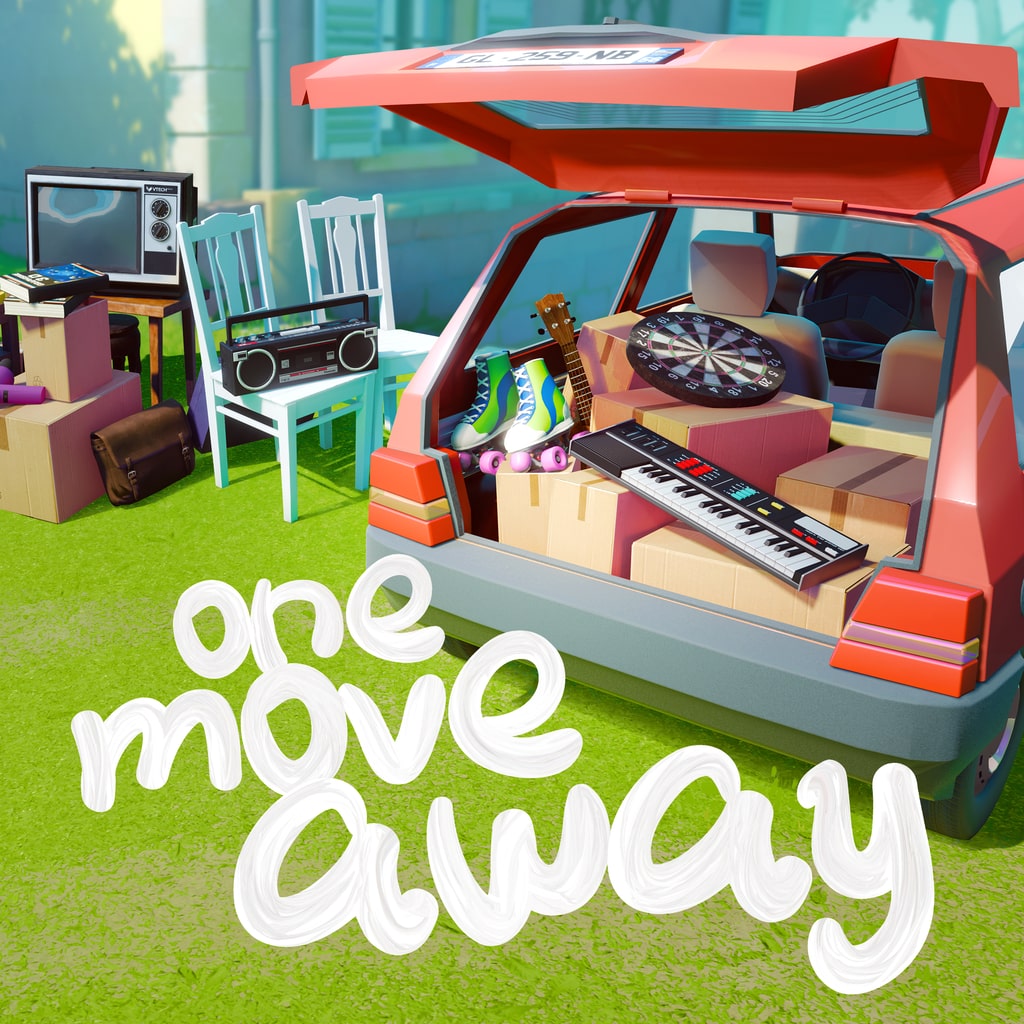
One Move Away begins with a deceptively simple idea that slowly reveals something far more thoughtful beneath the surface. You are not solving abstract puzzles or navigating stylised worlds, but instead helping to pack up real lives as they shift through time and circumstance. Developed by Ramage Games and published by Playstack, it sits comfortably within the cosy puzzle genre while gently pushing its boundaries.
Each scenario feels like stepping into the aftermath of change rather than the moment of change. Objects are scattered, half-organised, or left awkwardly in limbo, waiting for you to decide what becomes part of the next chapter. The game quickly establishes that this is not just about efficiency, but about interpretation.
As you progress, packing stops feeling like a mechanical task and starts to feel like a quiet form of storytelling. Every decision carries an unspoken weight, even when the object itself is trivial. The act of organising space becomes a way of understanding people without ever meeting them.
Boxes, Belongings and the Weight of Everything in Between
The structure of One Move Away unfolds through a series of life stages, each framed by a distinct moving situation. You begin with childhood clutter, then gradually move through adolescence and adulthood as belongings become more complex and emotionally charged. There is no spoken narration to guide you, only the steady accumulation of objects that suggest meaning through their placement.
A toy beside school books tells you something about growth without explanation. A stack of keepsakes tucked into a corner reveals what someone refuses to leave behind. The storytelling is entirely environmental, yet it becomes surprisingly clear the longer you spend with it.
Over time, you start to recognise patterns in what is kept, what is discarded and what is carefully preserved. It becomes less about inventory management and more about reading emotional continuity through physical objects. The game trusts you to piece together these fragments at your own pace.
The Art of Making Things Fit Where They Should Not
At its core, One Move Away is a spatial puzzle game centred on physics-driven packing challenges. You are given vehicles and containers that seem generous at first, only to realise that every angle, corner and gap matters far more than expected. Larger objects require careful rotation and planning, while smaller items become crucial final pieces that determine whether everything holds.
The challenge lies not only in fitting things in, but in keeping them stable once placed. A perfect arrangement can still fail if weight distribution is slightly off or if something shifts unexpectedly. This turns every level into a slow exercise in patience, planning and spatial awareness.
There is a satisfying rhythm to experimentation here. You try, adjust, undo and rebuild until the space finally clicks into place. When it works, the result feels earned in a way that simple placement puzzles rarely achieve.
When Order Collapses Into Controlled Chaos
The physics system is where One Move Away finds much of its personality. Carefully constructed stacks can suddenly shift under pressure, triggering chain reactions that undo minutes of careful placement in seconds. There is a particular kind of humour in watching a nearly perfect setup collapse because one small object rolls at the wrong moment.
Despite this unpredictability, the game rarely feels unfair. It gives you enough control over rotation and positioning that mistakes usually feel self-inflicted rather than random. The inclusion of the “poke and shove” mechanic reinforces this, allowing you to force items into tight spaces at the risk of destabilising everything around them.
This tension between control and chaos is what keeps the system engaging. You are never fully safe, even when things look stable, which mirrors the real frustration of moving far more closely than expected. It keeps every solution feeling slightly fragile in an interesting way.
Stories Hidden in Everyday Objects
One Move Away is at its strongest when it leans into environmental storytelling. Every object feels like a fragment of a larger life you are only briefly allowed to witness. You are not told who these people are, but you come to understand them through what they own and what they leave behind.
A worn toy, a faded photograph or a half-used kitchen appliance becomes part of a broader emotional puzzle. You start to notice how objects evolve across different stages of life, reappearing in altered contexts that suggest continuity. These small details quietly build a sense of familiarity with people you never meet directly.
What makes this effective is restraint. The game never over-explains, instead trusting players to assemble meaning from repetition and placement. It is subtle, yet it lingers long after you stop playing.
Stress Disguised as Cosy Design
Although presented with a soft, approachable tone, One Move Away is not purely relaxing in practice. As space becomes limited, decisions grow more intense and the pressure to optimise rises noticeably. What begins as meditative organisation gradually shifts towards something closer to controlled panic.
This balance is clearly intentional. The game reflects the real emotional tension of moving, where calm moments are constantly interrupted by urgency and constraint. It avoids becoming purely therapeutic, instead embracing the messiness of the experience it simulates.
For some players, this tension will enhance the appeal. For others expecting a purely soothing experience, it may feel slightly more demanding than anticipated. Either way, it is a deliberate design choice that defines the game’s identity.
Rough Edges Beneath the Calm Surface
While technically solid overall, One Move Away is not entirely friction-free. Occasional physics inconsistencies can cause objects to jitter or clip when placed in tight configurations. These moments are rare, but they can disrupt carefully constructed arrangements enough to require adjustment.
There are also instances where object placement feels slightly too sensitive, particularly with irregularly shaped items. This can lead to minor frustration when precision is required in already crowded spaces. However, these issues rarely break the flow for long.
They sit on the edge of irritation rather than true disruption, noticeable but not overwhelming. In a system built on physics and instability, some imperfection almost feels inevitable.
Final Verdict
By the time One Move Away reaches its final stages, it becomes clear that its real focus is not packing itself, but what packing represents. Each move feels like a transition not just of space, but of identity and memory. You are constantly deciding what to carry forward and what to leave behind.
There is a quiet emotional weight to that process, building gradually rather than dramatically. It does not rely on exposition or dramatic reveals, but on accumulation and absence. Over time, organising objects becomes a way of understanding change itself.
In the end, One Move Away succeeds because it finds meaning in the ordinary. It turns logistics into reflection and clutter into narrative, creating a puzzle experience that feels unexpectedly human in its delivery.