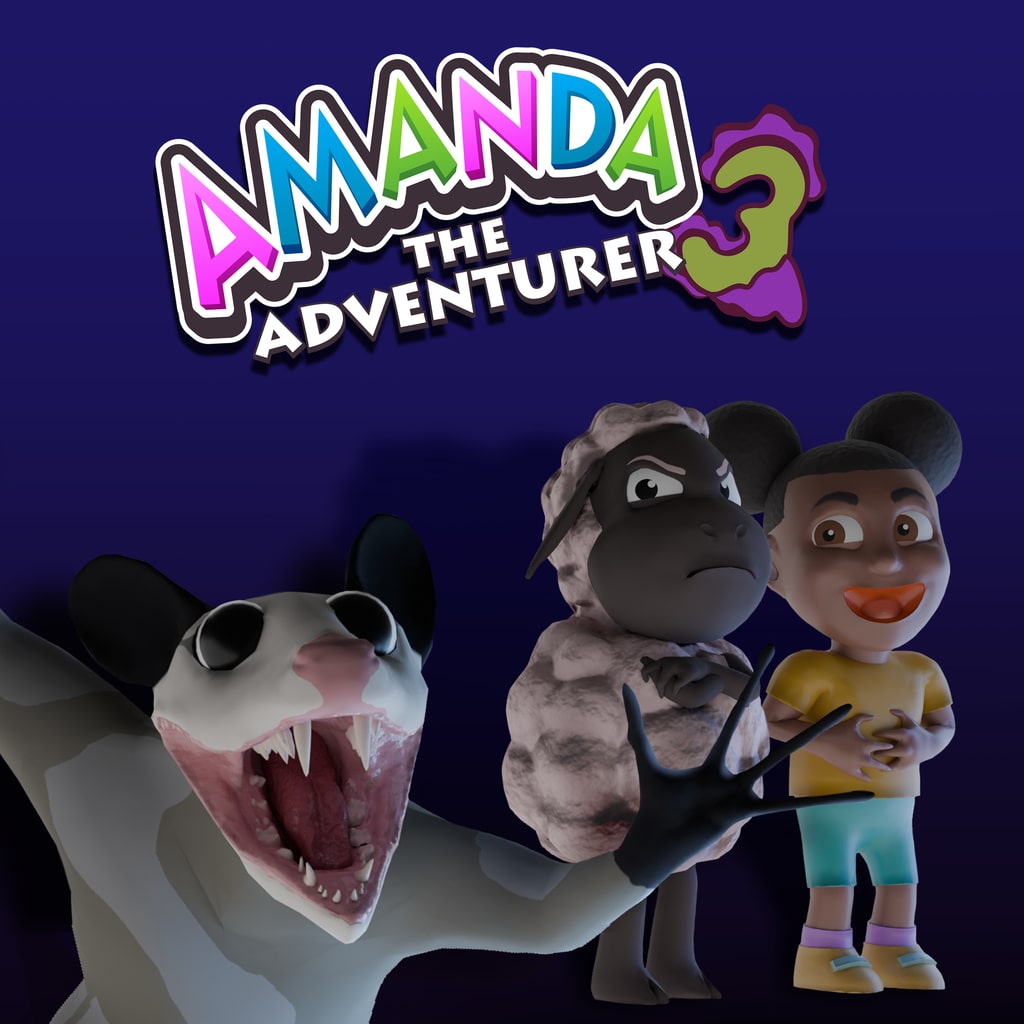
Amanda the Adventurer 3 arrives with the weight of conclusion pressing into every scene, every flicker of VHS static, and every uneasy pause in dialogue. This is the final chapter in Riley Park’s descent into the mystery of Hameln Entertainment, and it wastes no time signalling that the series has finished expanding its mythos and is now focused on sealing it shut. Developed by MANGLEDmaw Games and published by DreadXP, it feels tighter and more directed than the second entry, as if the team knew exactly which threads needed resolving and which could be left to rot in implication. That sense of purpose gives the game a different kind of tension, one less about confusion and more about inevitability.
The story picks up directly after the Kensdale Public Library escape, with Riley pushed into the abandoned Hameln facility. The shift in setting is immediate and striking. Instead of domestic unease or public stillness, you are now surrounded by industrial decay and corporate sterility. Fluorescent-lit corridors stretch into silence, research rooms sit frozen in half-cleared states, and vast chambers hint at experiments that were never meant to be witnessed. The horror here feels less personal at first glance, but it slowly becomes clear that this place is where everything personal was systematised, recorded, and buried.
VHS Logic and the Streamlined Unknown
At its core, Amanda the Adventurer 3 retains the series’ defining mechanic of interacting with corrupted VHS tapes to alter reality. Watching Amanda and Wooly perform their unsettling children’s show routines, pausing at precise moments to affect the physical environment, remains a clever and distinctive system. It continues to blend analog horror with environmental puzzle-solving in a way few other games attempt, and when it clicks, it still feels unsettlingly effective.
However, this entry noticeably softens its edges. The puzzles are more legible, the environmental logic more direct, and the overall structure less inclined to leave players stranded in abstraction. Where previous games sometimes forced long stretches of experimentation and misinterpretation, Amanda 3 leans towards clarity and progression. This makes the experience smoother and more accessible, especially for players coming in for the conclusion, but it also reduces the sense of dread that once stemmed from not knowing whether you were even interpreting things correctly.
The Cold Geometry of Hameln
The Hameln facility is a major tonal pivot for the series. It is no longer a space of scattered domestic horror or public unease, but a structured, corporate shell deliberately stripped of warmth. Offices sit abandoned mid-task, signage still clings to walls with fading authority, and sealed-off research zones suggest a company that stopped caring long before it stopped functioning. There is a quiet logic to the layout that makes it feel less like a haunted place and more like one that was never meant to survive scrutiny.
Exploration here is slower and more methodical, yet more legible. You are no longer piecing together fragmented spaces so much as moving through a contained narrative environment that steadily reveals its purpose. That clarity helps the story land its major beats, but it also removes some of the disorienting unpredictability that gave earlier entries their sharper psychological edge. The horror becomes less about confusion and more about recognition, which significantly alters the emotional rhythm.
Amanda, Wooly, and the Weight of Repetition
The most striking evolution in Amanda the Adventurer 3 is its treatment of Amanda herself. Across the trilogy, she has shifted from a corrupted children’s host to something far more tragic and self-aware, and this final entry leans fully into that transformation. Her presence in the tapes is no longer purely antagonistic. Instead, it carries moments of fragmentation, hesitation, and something that feels uncomfortably close to pleading.
Wooly’s role also deepens in subtle but effective ways, reinforcing the sense that these characters are not merely digital constructs but trapped remnants of something far more human than they appear. The emotional undertone of these interactions gives the VHS sequences a greater weight than before. They are still disturbing, but now the discomfort comes from empathy as much as from fear. Watching them feels less like decoding a threat and more like witnessing something deteriorate in real time.
Answers, Gaps, and the Shape of Closure
Narratively, Amanda the Adventurer 3 delivers on its promise of resolution. The mystery surrounding Hameln Entertainment, Rebecca Colton, and the show’s origins is finally brought into focus, with enough clarity to satisfy long-time followers of the series’ ARG-style breadcrumbs. There is a real sense of payoff here, especially for players who have been tracking its hidden lore across multiple entries and external materials.
At the same time, the game resists the urge to explain everything. Certain threads are resolved cleanly, while others are left deliberately open, as if acknowledging that some questions are less about answers and more about the discomfort they leave behind. It is a careful balancing act between closure and ambiguity, and for the most part it succeeds in maintaining that tension without undermining the narrative’s finality.
A Short Finale with a Long Echo
The most consistent criticism of Amanda the Adventurer 3 is its length. Even with its tighter structure and focus on resolution, the experience feels brief, with key narrative beats arriving in quick succession. At times, the pacing feels almost compressed, as if the story is determined not to linger too long in any one emotional state before moving on to the next revelation.
Still, there is a strange confidence in how it ends. It does not overextend itself, nor does it attempt to inflate its scope beyond what is necessary for closure. Instead, it delivers a concentrated final act that prioritises impact over longevity. The result is a game that may leave some players wanting more room to breathe, but also one that avoids overstaying its welcome in a genre that often struggles with excess.
Final Verdict
Amanda the Adventurer 3 is neither the most mechanically complex entry in the trilogy nor the most punishing in its puzzle design. Instead, it offers focus, emotional weight, and a clear sense of purpose. It trades confusion for clarity and difficulty for narrative momentum. While that shift may not satisfy every fan equally, it yields a finale that feels deliberate and controlled.
It is a conclusion that understands its own limitations and works within them rather than against them. By the time the final tape stops playing, what remains is not just the answer to a mystery but the lingering sense that some stories only resolve by finally going quiet.