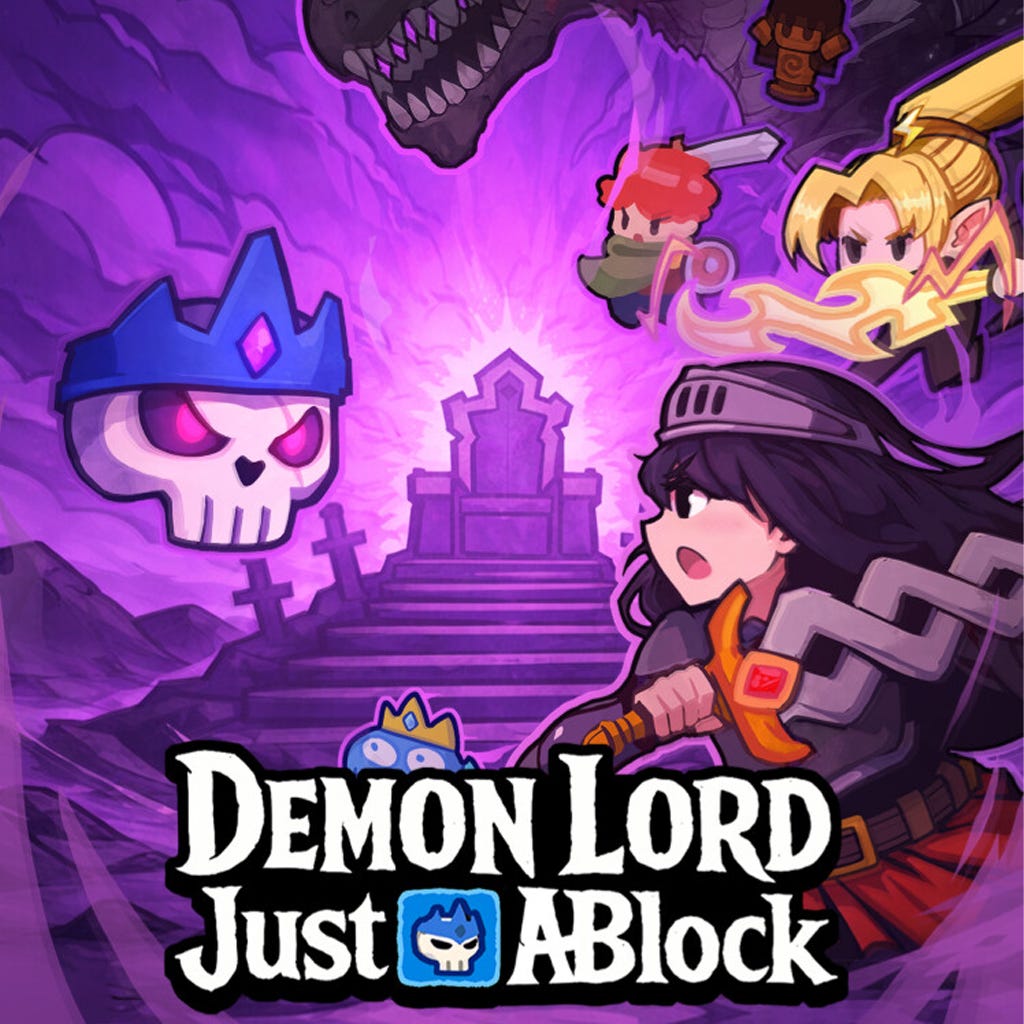
As a seasoned gamer, I know the frustration of reaching the final boss after hours of effort, only to be defeated swiftly and feel the urge to avenge yourself. Demon Lord by YuWave Studios embodies this sentiment flawlessly. Instead of playing the hero destined to save the kingdom, you take on the role of a fallen Demon Lord’s skull, revived with one goal: revenge.
Released at the end of April, this breakout indie roguelite takes familiar dungeon-crawling ideas and twists them into something surprisingly fresh. On paper, “the world only moves when you do” sounds like a gimmick we’ve seen before. In practice, Demon Lord transforms that mechanic into a tense dance between tactical planning and split-second reactions. One moment you’re carefully considering every tile like a chess player. The next, you’re dashing through incoming attacks with barely enough time to breathe. What impressed me most wasn’t just the clever design. It was how effortlessly the game balances chaos and control.
Gameplay
At first glance, Demon Lord looks deceptively simple. You move across compact arenas, collide with enemies to attack, and gradually build a devastating arsenal of weapons and abilities across repeated runs. Yet within minutes, the game reveals far more depth than its minimalist appearance suggests. The core mechanic is brilliant.
Enemies move only when you do, creating an experience somewhere between SUPERHOT, a turn-based tactics game, and a frantic action roguelite. It completely changes the rhythm of combat. You’re constantly analysing positioning, attack timing, and escape routes before committing to movement.
Then the game layers systems on top. Dodges can trigger invulnerability windows. Perfectly timed parries leave enemies open for brutal counterattacks. Backstabs deal massive damage if you approach from the right angle. Suddenly, every encounter becomes a tiny puzzle box where survival depends on reading enemy behaviour and making clean decisions under pressure.
What makes it work so well is how responsive everything feels. Movement is razor-sharp. Combat has weight despite the simple visuals. Smashing through a crowd of enemies with a heavy hammer or unleashing chain lightning across an entire room feels incredibly satisfying. The game understands the importance of momentum. Even when you’re technically stopping to think, battles maintain a sense of speed and urgency.
The roguelite progression is equally compelling. With 14 weapons and more than 200 abilities, no two runs feel identical. One attempt might turn you into a glass cannon that teleports through enemies with poison daggers. Another could transform you into a walking tank that freezes entire rooms before crushing them with explosive attacks.
Experimentation becomes addictive. Certain combinations feel almost broken in the best possible way. Lightning builds especially can spiral into absurd displays of destruction once upgrades begin stacking together. Even after balance tweaks, there’s still immense joy in discovering overpowered synergies and watching carefully planned builds come alive.
Importantly, the game never overwhelms players with complexity. Systems are introduced gradually, and the clean interface keeps everything readable even in chaotic encounters.
Boss Fights
The boss encounters deserve special recognition for consistently surprising you. In lesser roguelites, bosses often boil down to oversized health bars with predictable patterns. Demon Lord takes a far more creative approach. Every major fight introduces entirely new mechanics that force players to rethink how they approach combat.
One battle transforms the arena into a twisted version of Minesweeper, requiring careful movement and deduction while dodging attacks. Another revolves around gambling mechanics that force risky decisions in the middle of combat. These encounters feel inventive rather than repetitive. More importantly, they feel memorable.
The game constantly plays with expectations. Just when you think you’ve mastered its systems, it introduces a new enemy type or environmental twist that changes the flow of battle entirely. Over 70 enemy variations ensure combat remains engaging throughout the campaign. The difficulty scales aggressively, though.
Early runs feel approachable enough for newcomers, but later chapters become brutally demanding. Enemies attack in layered formations while environmental hazards pressure your positioning. Success increasingly depends on mastery of parries and movement timing. Thankfully, deaths rarely feel unfair. When you fail, you usually understand exactly why.
Graphics & Presentation
Visually, Demon Lord embraces a vibrant pixel-art style that contrasts beautifully with its darker themes. The art direction leans heavily into colourful fantasy aesthetics despite the revenge-driven premise. Enemies are expressive, environments are packed with personality, and spell effects explode across the screen in dazzling bursts of colour.
There’s a playful charm to everything. Even though you’re technically controlling a resurrected evil overlord, the presentation never becomes grim or oppressive. Instead, the game feels mischievous. Monsters bounce around arenas with exaggerated animation, while bosses tower over you like bizarre cartoon nightmares.
The clean visual clarity also deserves praise. In a genre where particle effects can easily overwhelm gameplay, Demon Lord keeps combat readable even during the busiest encounters.
Performance is excellent as well. On the Steam Deck, especially, the game feels perfectly suited to handheld play. Fast load times and smooth framerates reinforce the “just one more run” addiction that defines the experience.
Sound Design & Music
The soundtrack quietly carries much of the game’s energy. Music shifts seamlessly between playful dungeon themes and pulse-pounding combat tracks. It complements the action without overpowering it, preserving the game’s balance between tactical thoughtfulness and frantic execution.
Sound effects are equally sharp. Weapons crack with satisfying impact. Lightning spells sizzle across enemies. Successful parries land with a crisp, rewarding snap, making defensive play genuinely exciting. Small audio details constantly reinforce the tactile nature of combat.
There’s also a surprising amount of atmosphere beneath the chaos. Certain quieter moments between battles allow the music to soften, giving brief pauses before the next wave of insanity begins.
Frustrations
For all its creativity, Demon Lord stumbles occasionally. Some builds still feel noticeably stronger than others despite recent balancing patches. Certain elemental combinations can trivialise early encounters, while slower melee setups struggle to keep pace in later stages.
The procedural structure also means some runs feel dramatically easier depending on item luck. A poor sequence of upgrades can leave you underpowered against late-game bosses, which can create frustration beyond player skill alone.
Narratively, the story exists mostly as flavour rather than substance. The premise is entertaining, but characters and worldbuilding remain fairly light throughout the experience. Players hoping for a deeply emotional roguelite narrative may leave wanting more. Still, these issues rarely overshadow the game’s strengths, as the combat loop remains consistently engaging.
Final Verdict
Demon Lord succeeds because it understands the delicate balance between strategy and instinct. It’s a game that rewards patience without sacrificing adrenaline. Every movement matters. Every dodge feels earned. Every successful run becomes a carefully choreographed dance between planning and improvisation. What could have been a simple gimmick instead becomes one of the most satisfying combat systems I’ve encountered in an indie roguelite this year.
The beauty of Demon Lord lies in how approachable it feels while quietly demanding mastery. New players can enjoy the flashy combat and clever mechanics almost immediately, while veterans will spend hours chasing perfect runs and optimising builds. It also helps that the game simply feels good to play. That’s an intangible quality many roguelites struggle to capture. Here, movement, combat, and progression click together with remarkable confidence. For a solo-developed project, the accomplishment is even more impressive.
It may not reinvent the genre entirely, but it absolutely refines familiar ideas into something memorable. In a crowded sea of indie roguelites, Demon Lord stands tall because it remembers that satisfying gameplay should always come first. And few games this year are as immediately satisfying as smashing through a room full of fantasy heroes while time itself bends around your every move.