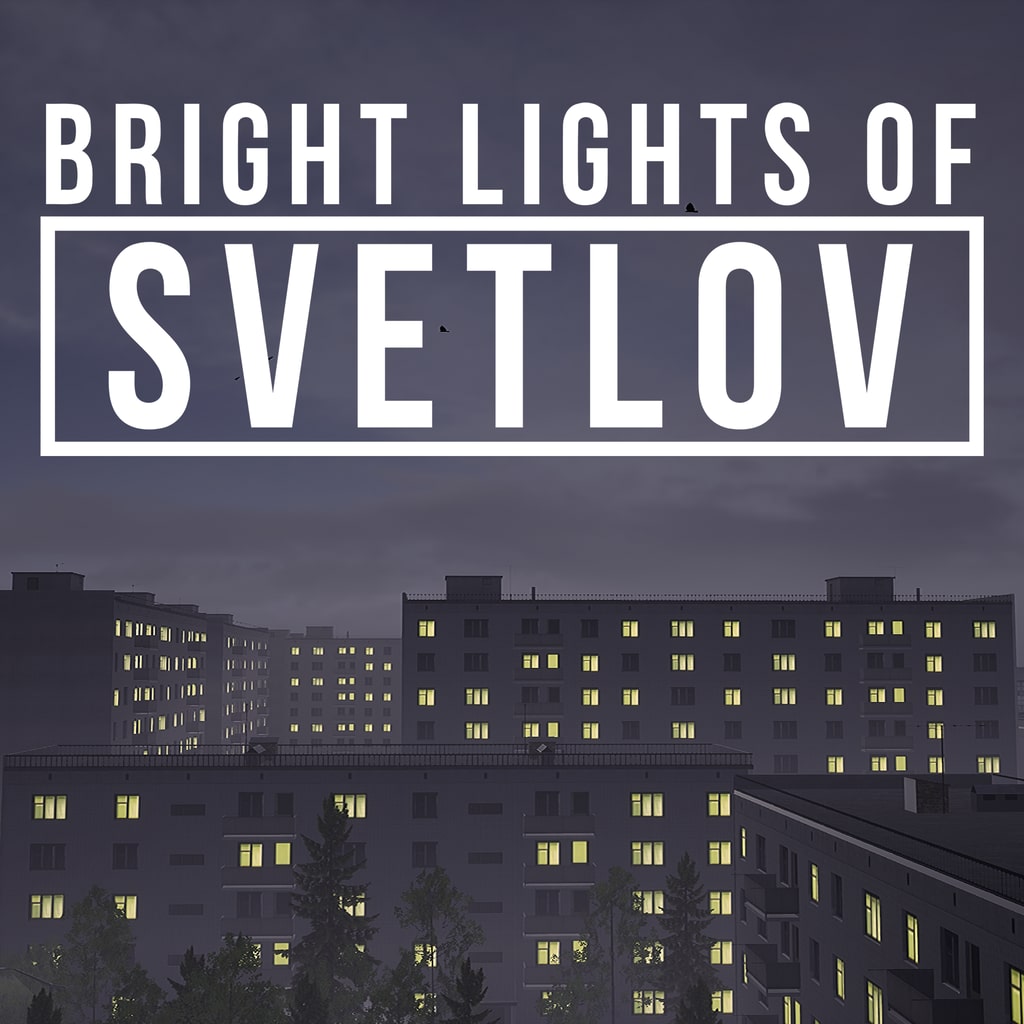
Developed by Vladimir Cholokyan and later brought to consoles with support from Sometimes You, Svetlov’s Bright Lights is a short, narrative-driven first-person experience set in a Soviet industrial town in the mid-1980s.
You step into the lives of a small family, moving between their perspectives as they go about their daily routines. There are no grand quests, no dramatic set pieces waiting around the corner. Instead, the game focuses on the small, repetitive actions that define everyday life. Cooking meals, tidying rooms, watching television, going to work. It all feels mundane, almost deliberately so.
But that mundanity is the point. The game builds its identity around routine, using it as both a structure and a storytelling device. Over time, small details begin to shift. Conversations change. The tone darkens. What once felt like simple observation becomes something more unsettling.
Gameplay
Bright Lights of Svetlov sits firmly within the “walking simulator” space, though even that label feels slightly too active for what it offers. You move through confined environments, interacting with objects and completing simple tasks that mirror daily life. Make tea. Turn on the radio. Put things away. These actions are not complex, nor are they meant to be. They are intentionally repetitive, designed to ground you in the rhythm of the family’s routine.
At first, this repetition can feel almost numbing. There is little in the way of traditional gameplay feedback, and progression is tied more to task completion than to any sense of challenge. But as the narrative unfolds, that repetition begins to take on a different meaning.
Familiar actions start to feel heavier. A simple task might carry emotional weight depending on what has already happened. The game rarely tells you directly how to feel, but it creates space for those feelings to emerge naturally.
That said, the interaction system can feel awkward at times. Picking up objects or triggering certain actions lacks the polish seen in more mechanically focused titles. It can occasionally pull you out of the experience, especially when you are trying to engage with something that should feel intuitive.
Still, the simplicity of the gameplay serves the narrative. It keeps your focus on the environment and the people within it, rather than on mastering systems.
World and Atmosphere
The setting is one of the game’s strongest elements. The Soviet-era apartment blocks, known as panel houses, are rendered with such care that they feel authentic rather than stylised. Rooms are small, functional, and filled with objects that suggest a life lived within constraints. Furniture is worn. Colours are muted. Everything feels slightly tired, as though time has settled into the walls.
There is a stillness to the environment that defines the experience. Spaces are not crowded with activity. Instead, they feel quiet, sometimes uncomfortably so. This quiet becomes a key part of the atmosphere, allowing small changes to stand out more clearly.
Sound design reinforces this. Background noise is minimal, often limited to distant sounds or the low hum of appliances. When music or dialogue does appear, it carries more weight because of that restraint.
Lighting also plays an important role. Interiors are often dim, with natural light filtering through windows in a way that feels subdued rather than warm. This creates a sense of distance, as though the world outside is just out of reach.
Narrative and Themes
Bright Lights of Svetlov tells its story through accumulation rather than revelation. There is no single moment when everything becomes clear. Instead, the narrative unfolds through a series of small observations. A conversation here, a detail there, a shift in tone that suggests something is not quite right.
The game explores themes of routine, pressure, and the quiet struggles that often go unnoticed in everyday life. It examines how external circumstances shape personal experiences and how those experiences can accumulate over time into something difficult to escape.
What makes the story effective is its restraint. It does not rely on dramatic twists or overt emotional cues. Instead, it trusts the player to piece things together, notice changes, and draw their own conclusions.
Multiple perspectives enhance this effect. Seeing the same environment through different characters highlights how each person experiences the same space in their own way. It creates a layered narrative that feels more complete without ever becoming explicit.
Pacing and Structure
The game’s pacing will not suit everyone. It moves slowly, often deliberately so. Tasks take time, and there is little sense of urgency. This can make the early moments feel uneventful, especially for players expecting a more traditional narrative structure.
However, that slow pace is essential to what the game aims to achieve. It allows the routine to settle in, making later developments feel more impactful by contrast.
The overall length, typically around an hour to ninety minutes, works in its favour. It does not overstay its welcome, delivering its experience in a concise form that respects the player’s time while still leaving an impression.
Final Verdict
Bright Lights of Svetlov is not a game designed for excitement. It is a quiet, reflective experience that invites you to slow down and notice the details of everyday life.
Its gameplay is minimal, sometimes awkward, and its pacing can feel slow to the point of discomfort. Yet these elements are part of its identity rather than flaws to be smoothed over. They serve a purpose, reinforcing the themes and atmosphere that define the experience.
What it offers instead is something more subtle. A glimpse into a life shaped by routine and circumstance, presented with care and restraint. It is not always easy to engage with, but it is difficult to forget.