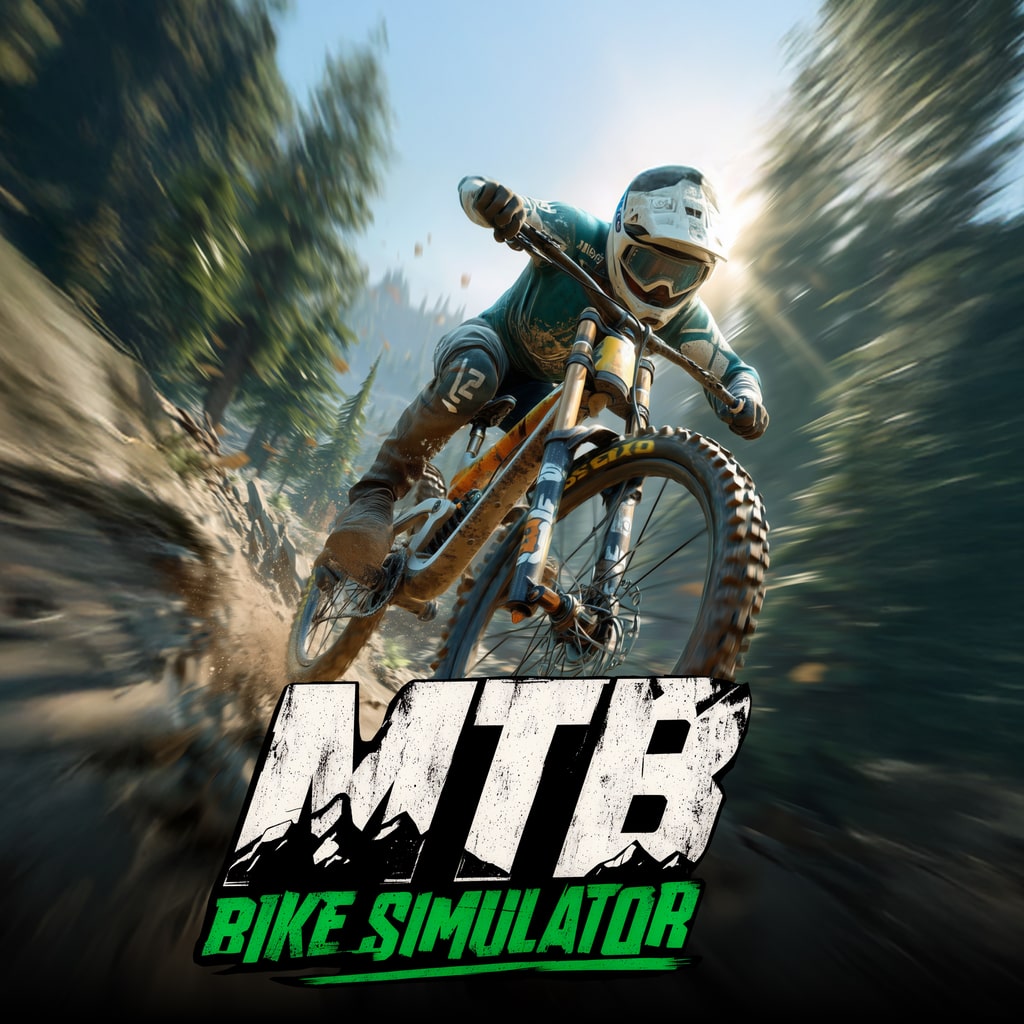
MTB Bike Simulator opens with very little ceremony. There is no dramatic intro, no sweeping narration about the thrill of the ride. You pick a course, mount the bike, and push off into terrain that immediately reminds you how unforgiving gravity can be.
That tone carries through the entire experience. This is not a game about carefree downhill cruising. It is about control. About the small, constant adjustments that keep you upright when the ground beneath you refuses to cooperate. Every descent feels like a negotiation between speed and stability, and losing that balance rarely ends gracefully. There is something refreshingly honest about that approach. The game does not try to romanticise the sport. It lets the terrain speak for itself.
A Physics System That Does the Heavy Lifting
The real strength of MTB Bike Simulator lies in how it feels to ride. The physics system is doing most of the work here, and it shows in subtle but important ways.
Different surfaces behave differently in ways that are immediately noticeable. Dirt offers a predictable grip, but loose patches can send your back wheel drifting if you push too hard. Rock feels rigid and punishing, demanding careful line selection. Snow introduces a soft unpredictability, where traction comes and goes in ways that force you to slow down and think ahead.
What makes this system work is not realism in a technical sense, but consistency. Once you understand how the bike responds, you can start to trust it. And that trust is essential, because the game asks a lot from you in terms of precision. There is no autopilot here. Every movement matters.
Control That Rewards Patience
The control scheme is deeper than it first appears. You are not simply steering and braking. You are managing weight distribution, adjusting speed, and preparing for terrain changes before they happen.
Customisation options allow you to tweak sensitivity for handlebars, braking, and other inputs, which is a welcome inclusion. It lets you shape the handling to suit your preferences, whether you want something more forgiving or something that demands tighter control.
The learning curve can be steep. Early rides are likely to be filled with small mistakes that quickly escalate into crashes. But as you spend more time with the game, those mistakes begin to fade. You start to anticipate how the bike will react. You begin to flow.
That sense of progression is not tied to unlocking new gear or abilities. It is tied to your own understanding of the system.
Tricks That Feel Secondary, but Still Matter
Alongside the core riding mechanics is a trick system that allows you to perform flips, grabs, and other manoeuvres. These are executed through manual inputs rather than automated animations, which gives them a satisfying level of control.
That said, tricks feel more like an extension of the core riding rather than a central focus. The game is at its best when you are navigating difficult terrain, not when you are trying to chain together flashy moves.
Still, they add variety and provide moments of expression, particularly when you begin to feel more confident in your control. Landing a clean trick after a difficult descent carries a quiet sense of achievement.
Environments That Challenge More Than Impress
The game offers a range of environments, from rocky mountain paths to snowy slopes and forest trails. Each one introduces its own challenges, primarily through how it affects traction and visibility.
Visually, these environments are functional rather than striking. They do their job, but they rarely leave a lasting impression. There is a lack of detail and atmosphere that keeps the world from feeling truly alive.
However, from a gameplay perspective, they succeed. Each terrain type forces you to adjust your approach, and that variation is enough to keep things interesting over time. This is a game where the ground matters more than the scenery.
A Pick-Up-and-Play Structure
MTB Bike Simulator is built around short sessions. You select a course, attempt a run, and either succeed or learn something from failure. There is no sprawling career mode or deep progression system to anchor the experience.
That simplicity works in its favour. It is easy to jump in for a quick ride without committing to a longer session. At the same time, it may leave some players wanting more structure or long-term goals.
The game feels content to exist as a mechanical sandbox rather than a fully realised sports package. Whether that is a strength or a limitation will depend on what you expect from it.
Where It Falls Short
For all its strengths in feel and control, MTB Bike Simulator struggles to create a lasting sense of excitement. The presentation is modest, and the lack of variety in modes and progression systems can make extended play sessions feel repetitive.
There is also a certain lack of personality. The game does not build a strong identity beyond its mechanics. It does not tell a story, create memorable moments, or offer a world that invites exploration. What you see early on is largely what you get throughout.
Final Verdict
MTB Bike Simulator is a focused, no-frills simulation that finds its strength in the feel of the ride. Its physics system delivers a convincing sense of weight and traction, and its control scheme rewards patience and practice.
It lacks the polish, variety, and personality of larger sports titles, and its presentation does little to elevate the experience beyond its core mechanics. But for players who value tactile feedback and technical challenge, it offers something quietly satisfying. This is not a game about spectacle. It is a game about control, and the slow, steady process of mastering it.