There’s something quietly comforting about a game that knows exactly what it wants to be. Not every title needs to chase scale or complexity. Some are content to settle into a rhythm, offering you a loop that feels familiar, even a little repetitive, and trusting that you’ll find satisfaction in the routine. Kingdom’s Return: Time-Eating Fruit and the Ancient Monster is very much that kind of game.
A modern reimagining of a now-defunct Japanese mobile title from the early 2010s, it carries that heritage with it in ways that are both charming and limiting. It blends side-scrolling action with light strategy, asking you to venture into the world, gather resources, and slowly rebuild a fallen kingdom, piece by piece. It’s simple. Sometimes too simple. But it’s also strangely hard to put down.
A Kingdom Worth Rebuilding
The premise is straightforward, but it works. You play as a lone adventurer tasked with restoring the ruined kingdom of Almacia, guided by Chronos, the Fairy of Time. It’s a classic fantasy setup. Swords, magic, monsters, and a land in need of saving. What gives it a bit of warmth is how personal it feels.
This isn’t about leading armies or shaping the fate of the world on a grand scale. It’s about rebuilding something small. A place that begins as empty land and slowly fills with life as you invest time in it. Shops appear. Villagers return. Structures take shape. There’s a quiet satisfaction in watching that progress unfold.
Two Loops, One Rhythm
The game is built around a dual-layered structure. On one side, you have the action. 2D side-scrolling stages where you fight enemies, collect materials, and level up your chosen character. On the other, you have the strategy layer, where you use those materials to construct buildings, upgrade your kingdom, and strengthen your party. In theory, it’s a strong foundation.
In practice, it’s a loop that quickly becomes familiar. You head out into a stage, clear enemies, gather resources, return home, build something new, then head back out again. It’s a cycle that repeats often, but it rarely feels completely empty. There’s always a small reward waiting at the end of each run, even if it’s just another step forward.
The game allows you to lean into either side. You can focus more on combat or spend more time developing your kingdom. That flexibility is welcome, even if both systems feel fairly lightweight.
Combat That Keeps Things Moving
The action side of the game is functional, though not especially deep. Combat is responsive and easy to understand. You attack, dodge, use skills, and manage positioning. It feels smooth enough, and there’s a certain charm to its simplicity.
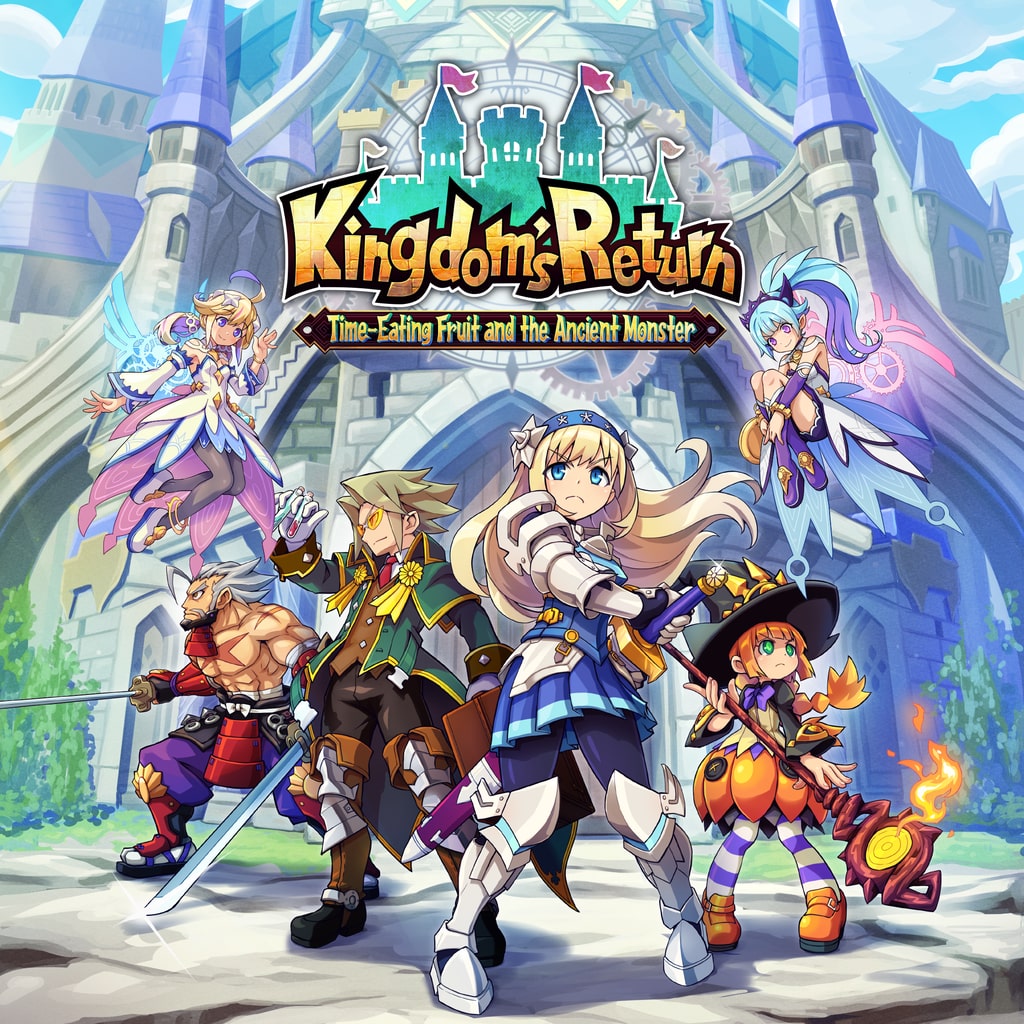
You can choose from several character types, including Imperial, Wizard, Alchemist, and Zipangu. Each has its own stats and abilities, offering some variety in how you approach battles. Swapping between them back in your kingdom keeps things from becoming too stale. But there’s no getting around it.
The combat lacks complexity. Enemy patterns are predictable, encounters repeat, and there’s limited room for mastery beyond basic efficiency. It works, but it rarely excites.
Building Something That Feels Like Yours
The strategy side is where the game finds a bit more identity. Using resources gathered from your adventures, you gradually rebuild Almacia. New buildings unlock bonuses, strengthen your characters, and open additional options. There’s a clear sense of progression, even if it’s driven by fairly simple systems. This is where the game’s “cozy” label feels earned.
There’s no pressure. No looming threat forces you to optimise every decision. You build at your own pace, shaping the kingdom in a way that feels comfortable rather than demanding. Watching your land grow from nothing into something functional, even if it’s not particularly complex, is genuinely satisfying.
The Grind Beneath the Surface
Over time, though, the cracks begin to show. Progression is heavily tied to repetition. You’ll revisit the same stages, fight the same enemies, and collect the same resources again and again. It becomes a grind, even if it’s a gentle one. For some players, that will be part of the appeal.
There’s a certain comfort in predictable loops, in watching numbers climb, and in making incremental progress with little resistance. It’s easy to play in short bursts, easy to pick up and put down. But for others, the lack of depth will become harder to ignore.
The systems never really evolve. They expand slightly, but they don’t transform in any meaningful way. What you see in the early hours largely holds throughout.
A Familiar INTI CREATES Touch
There’s a recognisable style here that fans of INTI CREATES will notice. The pixel art is bright, clean, and full of personality. Characters are expressive, environments are colourful, and bosses have a distinct design flair that stands out even when the mechanics behind them are fairly simple. It’s an inviting world. Not one that challenges you visually or mechanically, but one that feels pleasant to spend time in.
A Game That Knows Its Place
What helps Kingdom’s Return is its sense of scale. It doesn’t overreach. It doesn’t try to be more than it is. Instead, it settles into a “snackable” experience. Something you can play for a short time, make a bit of progress, and return to later without feeling lost. That approach won’t satisfy everyone.
Players seeking deep systems, complex combat, or meaningful strategic decisions may find it lacking. But those who enjoy low-stakes progression, gentle loops, and the simple pleasure of building something over time may find exactly what they’re looking for.
Verdict
Kingdom’s Return: Time-Eating Fruit and the Ancient Monster is a modest, easygoing hybrid that blends action and strategy into a loop that’s more comforting than compelling. Its systems are simple, sometimes to a fault, and its reliance on repetition can wear thin over longer sessions. Yet there’s a sincerity to it.
It doesn’t rush you. It doesn’t overwhelm you. It simply gives you a world to rebuild and lets you take your time. For the right player, that’s enough.