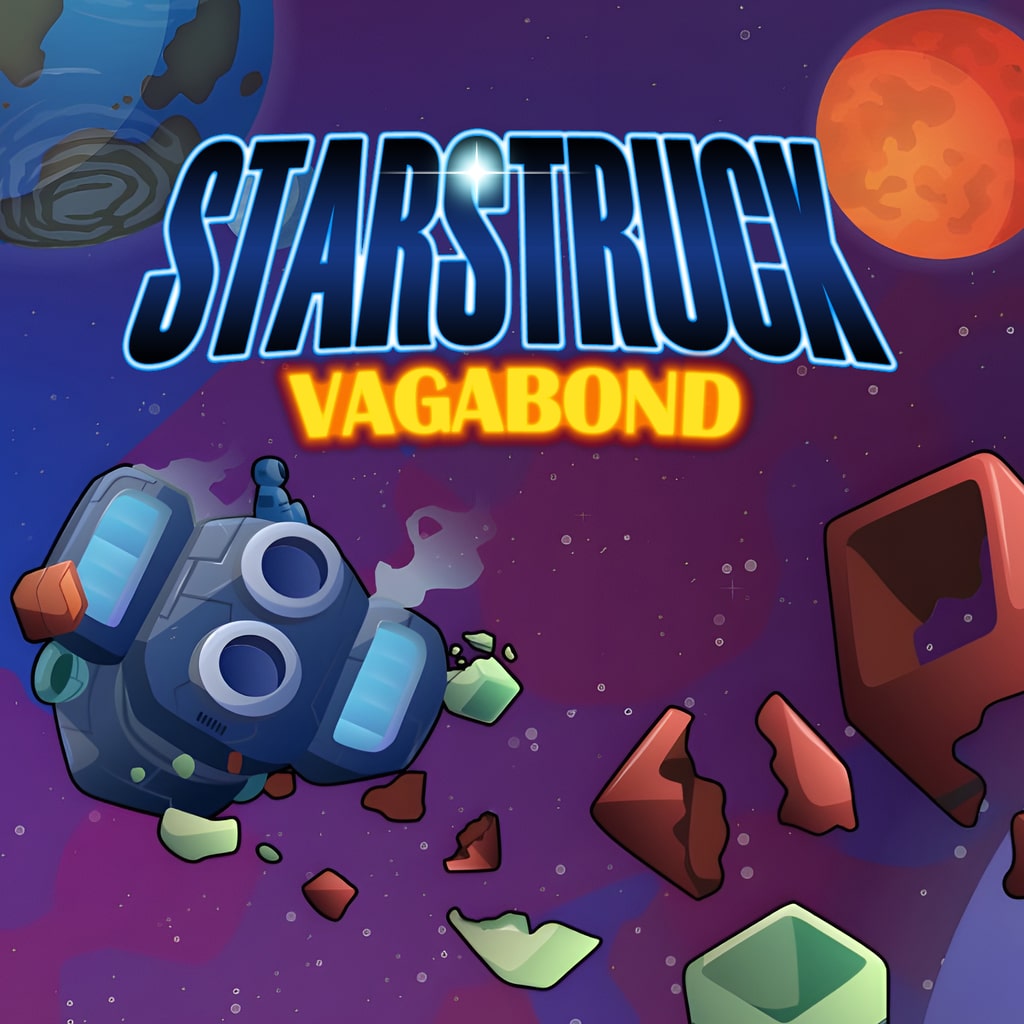
Starstruck Vagabond, created by Yahtzee Croshaw and published by Second Wind, is among the most addictive job simulators I’ve played in years. It debuted on PC in 2024 and is now available on consoles. The core job—delivering cargo as a space trucker between star systems—is just the backdrop of a much larger narrative. However, the engaging gameplay and the opportunities it offers help advance the story and allow players to deeply engage with the universe displayed.
This life simulation, inspired by games like Stardew Valley, isn’t about dramatic events, explosions, or last stands. Instead, it’s a calmer experience—perfect for those moments when you’re traveling between destinations, watching stars pass by your cockpit window, with crates softly rattling behind you. There’s no rush, no heroics—just work, time to reflect, and Starstruck Vagabond captures that mood more accurately than most. I’ve lost track of how many nights I’ve stayed up until dawn playing it, even with a 6 am. start the next day.
A Life Built One Job at a Time
You begin with very little. A battered transport ship, a vague sense of purpose, and a galaxy that doesn’t particularly care whether you succeed. There’s no grand opening act. No heroic framing. Just a simple premise. People need things moved from one place to another, and you are the one willing to do it.
The core loop is built around that idea. Accept a job, load the cargo manually, chart a course, travel, unload, get paid. It’s repetitive by design, but there’s a rhythm to it that feels almost meditative once you settle in. Each job unlocks new systems, new locations, and new opportunities. Not in big, dramatic bursts, but in small, steady increments. A new star system here. A slightly better engine there. Enough money to keep going. It’s not about getting rich or powerful. It’s about staying afloat.
The Work Is the Point
What makes Starstruck Vagabond stand out is its commitment to treating work as gameplay. Loading cargo isn’t a menu interaction. You physically move crates. Ship maintenance isn’t abstract. You fix things, piece by piece. Even travel has a sense of presence, with navigation demanding attention rather than simply selecting a destination and waiting. There’s a groundedness to it that feels refreshing. You’re not skipping over the mundane parts of space life. You’re living them.
At times, this can feel slow, even tedious, depending on your tolerance. But the game never hides what it is. It asks you to engage with its pace rather than fight against it. And if you do, it rewards you with something that feels oddly calming.
A Galaxy That Feels Lived In
The procedurally generated galaxy gives Starstruck Vagabond a sense of scale without overwhelming you. Each system has its own jobs, small stories, and quiet details that make it feel distinct, even when the overall structure remains familiar.
You’ll find yourself doing all sorts of odd tasks. Surveying planets, salvaging wreckage, responding to distress calls, cleaning buildings, even dealing with alien pests. None of it is particularly glamorous, but that’s part of the charm. This is not a galaxy of heroes. It’s a galaxy of people trying to get by. And you’re one of them.
Crew, Conversation, and Connection
Over time, your solitary routine begins to shift as you recruit crew members. A ragtag group of misfits, each with their own personalities, quirks, and stories to tell. These relationships are where the game starts to open up emotionally.
You talk to them, cook meals, share drinks, and listen to their concerns. It’s not a deep simulation in a mechanical sense, but it carries weight because of how it’s framed. These are people sharing your space, your routine, and your quiet moments between jobs.
You can’t recruit everyone in a single playthrough, which adds a layer of choice to your journey. Who you bring aboard shapes not just your ship, but your experience of the story. And those stories, while not always dramatic, feel personal in a way that suits the game’s tone.
A Story That Sneaks Up on You
For a game that feels so grounded, Starstruck Vagabond carries a surprisingly strange central narrative. At the centre of the galaxy sits a massive purple egg, an object so large and unnatural that it feels almost absurd. Around it, factions struggle to respond, strange creatures begin to appear, and events slowly pull you into something larger than your day-to-day routine.
But the game never rushes you into that story. It lets it unfold gradually, often in the background of your regular work. You might stumble into a key event during a routine delivery, or find yourself drawn into faction politics simply because you happened to be in the right place at the wrong time. It’s a story that builds through proximity rather than urgency. And that makes it feel more organic than it has any right to.
Where It Drifts
For all its charm, Starstruck Vagabond is not without its limitations. Repetition is the most obvious. The core loop, while satisfying at first, can wear thin over longer sessions. Jobs blur together, and the sense of progression can feel slow, especially if you’re not actively chasing upgrades.
The galaxy’s procedural nature, while effective, also means that some locations lack a strong sense of identity. You remember the feeling of a place more than the place itself. There’s also a certain roughness to the experience. Systems don’t always feel as polished as they could be, and some interactions lack the depth that might have elevated them further. But none of these issues undermine the core of the game. They simply exist alongside it.
The Space Between Things
What Starstruck Vagabond does better than most is capture the space between events. Not the big moments. Not the dramatic reveals. But the quiet stretches in between. The time spent travelling. The conversations that don’t lead anywhere. The small decisions that shape your day rather than your destiny.
It’s a game about routine, about finding purpose in repetition, and about building something meaningful from ordinary actions. It doesn’t try to be everything. It doesn’t need to.
Verdict
Starstruck Vagabond is a thoughtful, unhurried take on life in space that trades spectacle for sincerity. Its focus on work, routine, and relationships creates a personal experience, even when its systems show their limits. It won’t appeal to everyone. Its pace is slow, its repetition is real, and its rewards are often subtle rather than immediate. But for those willing to meet it where it is, it offers something rare. A game that lets you drift and finds meaning in drifting.