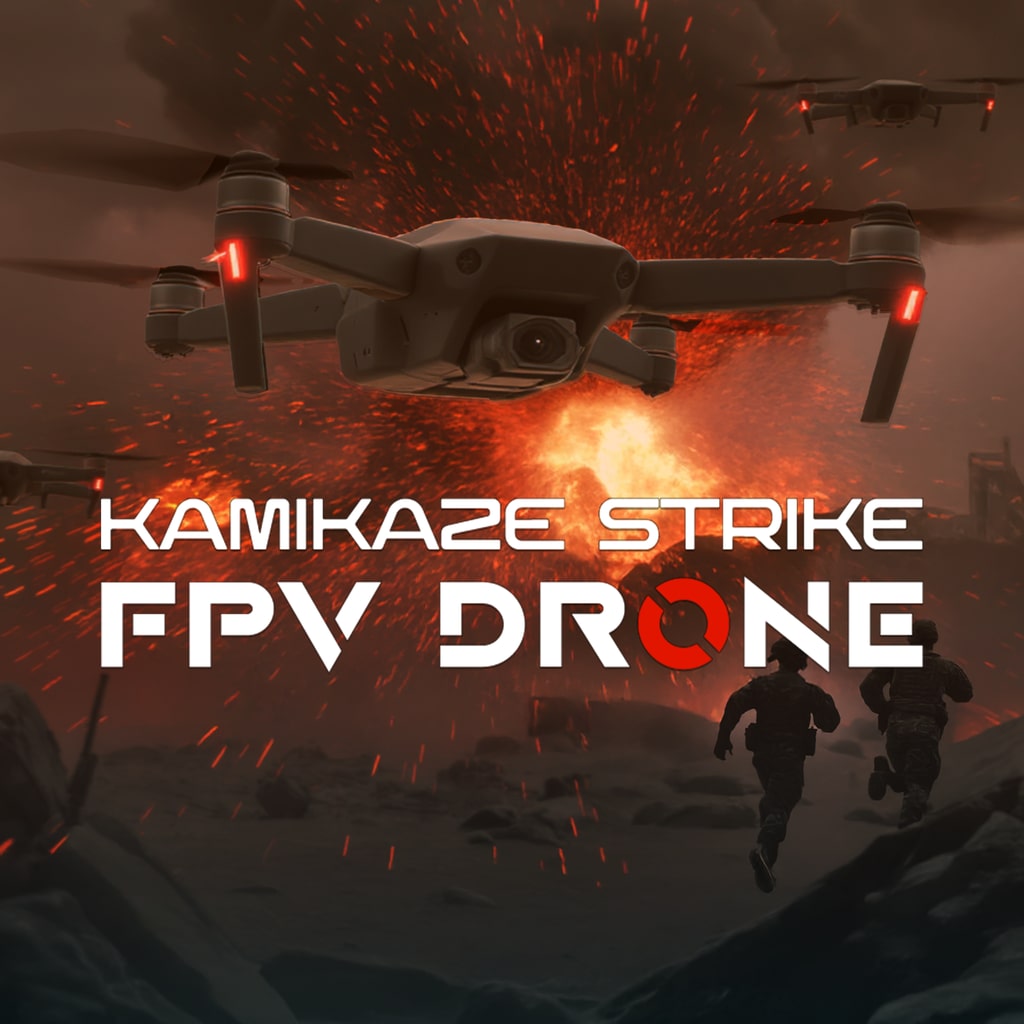
There’s a moment in Kamikaze Strike: FPV Drone where the game stops feeling like a game and starts feeling like a skill. At first, it’s awkward. You fumble with the controls, misjudge distances, drift too far, overcorrect, and slam straight into the ground. It can feel clumsy, even a bit unfair. Then something clicks.
Your hands begin to understand the drone before your brain does. You start to feel the movement. You learn how to ease into turns, how to manage speed, how to line up an approach without panicking. And suddenly, you’re not just controlling a drone. You’re piloting it. That transition is the heart of Kamikaze Strike, and it’s what carries the entire experience.
A Simulation with Real-World Echoes
Developed by Dinomore Games, Kamikaze Strike: FPV Drone first launched on PC before arriving on consoles in April 2026. It’s important to separate it from the flood of similarly named mobile titles. This is not a lightweight arcade experience; it’s a focused simulation that leans into realism, control, and mission-based structure—a design philosophy similarly seen in the developer’s earlier title, Last Battalion Defense. That commitment to tactical depth feels especially relevant right now.
Drone warfare has reshaped modern conflict in ways that are still unfolding. The war in Ukraine, often described as a real-world testing ground for drone technology, has shown how rapidly this space is evolving. Both sides have pushed innovation at speed, creating what can only be described as an ongoing drone arms race.
Kamikaze Strike doesn’t attempt to replicate that complexity in full, but the influence is there. The idea of guiding a fragile, fast-moving drone through hostile territory toward a precise target carries a weight that feels grounded in reality. It adds a layer of tension that goes beyond simple gameplay.
Learning the Language of Flight
The biggest barrier to entry is also the game’s greatest strength. Flight mechanics here are not simplified for convenience. They demand attention. The drone feels responsive, but also sensitive. Small inputs matter. Speed is something you actively manage rather than passively experience.
Controller play feels like the intended approach, even if it’s not perfect. There’s a learning curve to it, and it can feel slightly rough at first, but it allows for the kind of fine control the game is built around. Compared to more arcade-like alternatives, this feels deliberate and grounded. The early hours can be punishing. You will crash. Often. But the game is consistent. Failures rarely feel random. You understand why things went wrong, even if you couldn’t stop it in the moment. And when it starts to come together, it’s deeply satisfying.
The Art of the Approach
Every mission revolves around a simple but effective loop. Navigate hostile environments, avoid detection or destruction, and guide your drone into a high-value target. It sounds straightforward. It isn’t. You’re constantly balancing speed with control. Too fast and you lose precision. Too slow and you become an easy target. Environmental hazards, enemy fire, and jamming systems all add layers of pressure.
Moving targets are especially challenging. They force you to think ahead, to prioritise threats, to sometimes eliminate the most difficult targets first just to create breathing room for the rest. There’s a rhythm to it. A sense of flow that only emerges once you’ve spent time with the mechanics. And when you nail a perfect run, weaving through danger and hitting your target cleanly, it feels earned.
Tools, Variety, and Experimentation
The game offers a range of drones with different characteristics, and this variety helps keep things interesting. Some drones are quick and agile, ideal for tight manoeuvres and fast strikes. Others are heavier, more stable, better suited for controlled approaches and high-impact payloads. There’s a genuine sense of experimentation as you find what works best for your playstyle.
There’s room for improvement here. It would have been exciting to see even more extremes, perhaps a truly wild, high-speed drone that pushes the limits of control. But what’s here is solid, and it gives you enough flexibility to adapt. Upgrades and customisation add another layer, letting you tweak performance and approach missions in different ways.
Maps That Make You Work
The environments are well designed, offering a mix of open spaces and tight, hazardous areas that demand different strategies.
Some maps stand out more than others. The Phalanx map, for example, is particularly memorable. It’s challenging in a way that feels fair, pushing your skills without overwhelming you. It’s the kind of level that highlights the game’s strengths, forcing you to engage fully with its systems. Combat scenarios in general are thoughtfully laid out. They give you room to experiment, to find your own routes and solutions, rather than forcing a single approach.
Addictive by Design
There’s an addictive quality to Kamikaze Strike that creeps up on you. You start with the intention of playing a few quick missions. Then you try again to improve your run. Then again to perfect it. Before long, hours have passed. Part of this comes from the mechanics. Once they click, they feel good. Every movement has weight. Every successful manoeuvre feels intentional.
Part of it comes from the tension. The constant risk of failure keeps you engaged, even in familiar scenarios. And part of it is simply the satisfaction of flying. The sense of movement, the way the world shifts around you, the final impact. It all comes together in a way that’s easy to return to.
Where It Falters
The game is not without its issues. The learning curve is steep, and it won’t be for everyone. Some players will bounce off the controls before they have a chance to fully understand them.
Mission variety, while solid, doesn’t evolve dramatically over time. The core loop remains consistent, which can lead to repetition in longer sessions. There are also minor control frustrations. While generally good, they’re not always as refined as they could be, especially in more precise situations.
It’s also worth noting that the demo does not represent the full experience particularly well. The controls feel noticeably worse there, which could give a misleading first impression.
A Glimpse of Something More
There’s an interesting idea beneath all of this. With further development, Kamikaze Strike could evolve into something even more substantial. The foundation is there for a deeper simulation, perhaps even something that edges toward training tools for understanding drone operation.
That might sound ambitious, but the core mechanics already hint at it. For now, it remains a game first and foremost. But it’s a game with a clear direction and a strong identity.
Verdict
Kamikaze Strike: FPV Drone is a focused, immersive simulation that rewards patience, precision, and persistence. Its demanding controls and limited variety hold it back from broader appeal, but its core mechanics are strong enough to create a genuinely engaging experience.
It’s a game about learning, improving, and mastering something that doesn’t come easily. And in a landscape full of instant gratification, that feels refreshing.