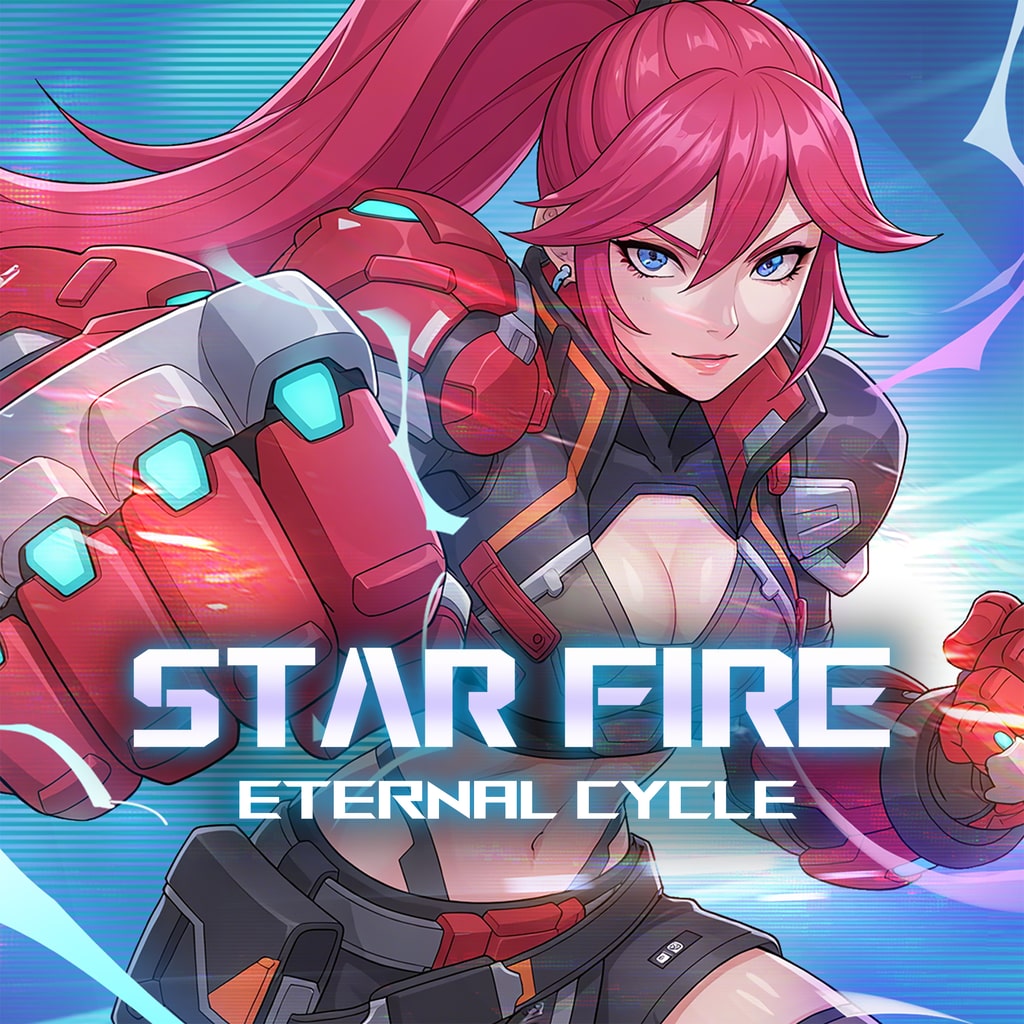
Some games demand a big time investment, yet they also inspire you to keep going. You might tell yourself just one more run, a quick dive into the action, a few fights, or maybe unlocking something new if luck is on your side. Then, suddenly, everything changes. A build clicks, the controls start to feel natural, enemies seem easier, and before you realise it, you’re back at the start screen, amazed at how hours have flown by. Star Fire: Eternal Cycle captures that feeling perfectly.
Created by Ethereal Fish Studio and brought to consoles by E-Home Entertainment after its initial PC release through Indie Herb Games, it’s essentially a mechanics-driven roguelite. A neon-lit, side-scrolling brawler that emphasizes how it feels to play, even if not every aspect lands with equal confidence.
Movement First, Everything Else Later
From the moment you take control, Star Fire: Eternal Cycle makes a strong first impression. Movement is quick, responsive, and clean in a way that feels immediately satisfying. Your character dashes, slides, and attacks with a kind of precision that makes even basic encounters feel engaging. There’s very little friction here. Inputs translate directly into action, and that sense of control is what carries the entire experience.
Combat builds on that foundation with a simple but flexible system. Light and heavy attacks chain into combos, dodges cancel into movement, and everything feeds into a rhythm that feels closer to a dance than a fight once you get comfortable. It doesn’t overwhelm you with complexity. It earns your attention. And that makes a difference.
The Core of the Chaos
What elevates Star Fire beyond a straightforward brawler is its build system, centred around what the game calls its core mechanics. Each run introduces a mix of weapons, elemental modifiers, and abilities that gradually shape how you approach combat.
There are eight elemental types, each interacting in ways that can either complement or completely redefine your playstyle. Fire might push you towards aggressive, close-range damage. Ice leans into control and spacing. Other combinations feel more experimental, sometimes chaotic, sometimes surprisingly effective. This is where the game finds its hook.
You’re not just improving your skills between runs. You’re discovering interactions. Testing combinations. Finding that one setup where everything aligns and the game suddenly opens up in a way it didn’t before.
It’s not always balanced, and that’s part of the appeal. Some builds feel overpowered in the best possible way. Others fall apart before they ever get going. But even those failed runs contribute to a growing understanding of what works.
The Loop That Pulls You Back
Like most roguelites, Star Fire lives and dies by its loop. Enter, fight, adapt, fall, repeat. Here, that loop is strong enough to carry the experience for long stretches. Procedural generation keeps enemy placements and stage layouts feeling fresh enough, while branching paths give you a sense of agency in how you approach each run. There’s always something just out of reach. A better build. A cleaner run. A deeper understanding of how systems interact.
Unlocks play a role too. New weapons, abilities, and upgrades gradually expand your options, giving each run a slightly different texture. It’s not a massive system, but it’s enough to keep things moving forward. The game knows exactly what it is in this regard. It doesn’t try to overcomplicate the formula. It just keeps feeding you reasons to come back.
Neon Style, Arcade Soul
Visually, Star Fire: Eternal Cycle leans hard into its neon aesthetic. Bright colours cut through dark backdrops, attacks leave glowing trails, and enemies burst with energy when defeated. It’s clean, readable, and stylish without becoming overwhelming. There’s a clear focus on clarity, which is essential in a game built around fast reactions and precise movement.
The soundtrack complements this effectively, featuring electronic beats that align with the pace of combat. While not overly diverse, it performs well by maintaining your focus on each encounter’s rhythm. The game exhibits a strong arcade feel, evident not only in its presentation but also in its emphasis on immediacy rather than spectacle. It aims to immerse you swiftly into the action, and it does so reliably.
Where It Starts to Fray
For all its strengths, Star Fire has a noticeable gap between its mechanics and everything around them. The narrative, such as it is, feels fragmented. There are hints of a larger story, suggestions of a world beyond the arena, but they never quite come together into something cohesive. It feels more like background noise than a driving force.
For some players, that won’t matter. This is a game about action, not storytelling. But the absence is noticeable, especially when the rest of the experience feels so tightly constructed.
Difficulty is another sticking point. Early runs ease you in gently, but the curve can spike sharply once elite enemies and bosses enter the picture. These encounters often lean on high health pools rather than complex mechanics, which can make fights feel drawn out rather than challenging in interesting ways. It’s not unfair, but it can feel a little blunt.
The Weight of Repetition
As with many roguelites, repetition is both a strength and a weakness. The core loop is strong enough to sustain multiple runs, but over time, the lack of environmental variety and narrative progression begins to show. You start to recognise patterns, not just in enemies, but in the overall structure of each run. That sense of discovery, so strong in the early hours, gradually gives way to familiarity.
Whether that becomes a problem depends on what you’re looking for. If you’re here for mechanical mastery and build experimentation, there’s still plenty to engage with. If you’re hoping for a more evolving experience, it may start to feel a little static.
The Feeling It Leaves Behind
What Star Fire: Eternal Cycle excels at is generating momentum. This isn’t limited to just movement; it also keeps you engaged in planning the next run, the next build, and the next attempt.
It doesn’t linger in your mind because of its story or its world. It lingers because of how it feels in your hands. The responsiveness, the flow, the small moments where everything comes together and you move through a fight without hesitation. It’s a game that understands the power of feel, even if it doesn’t fully explore everything around it.
Verdict
Star Fire: Eternal Cycle is a confident, mechanics-first roguelite that excels where it matters most for this kind of experience. Its combat is fluid, its movement is satisfying, and its build system offers enough variety to keep each run engaging.
It stumbles when it steps outside of those strengths. The narrative lacks cohesion, and the difficulty curve can feel uneven, particularly in later encounters. But when you’re in motion, when a build clicks and the action flows without interruption, it delivers exactly what it promises. A fast, addictive loop that keeps pulling you back for one more run.