There is a particular kind of tension that only arcade games really understand. Not the cinematic kind, not the slow-burn narrative pressure, but that tight, quiet panic that builds when you realise you have something to lose. OBLITACRATER is built entirely around that feeling. It does not just flirt with risk. It makes it the whole point.
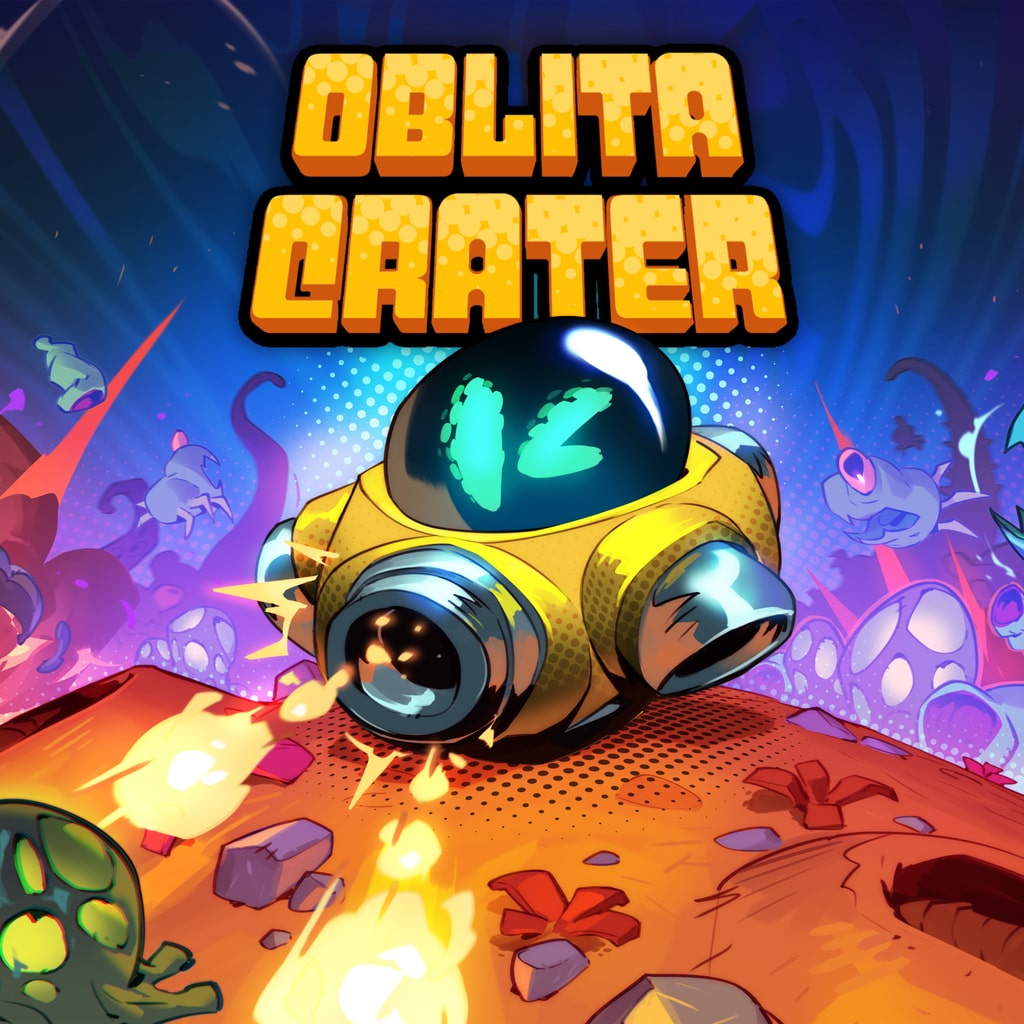
At a glance, it looks familiar. Twin-stick shooting, waves of enemies, colourful chaos on a small, stylised planet. It wears its influences openly, with echoes of Space Invaders and other arcade staples baked into its DNA. But spend a few minutes with it and the hook becomes clear. This is not about survival alone. It is about greed. It is about knowing when to stop, and more often than not, ignoring that instinct completely.
Gameplay
The core loop is deceptively simple. You drop onto a spherical planet, fight off waves of alien creatures, and build up your score. At any point, you can choose to leave by hitting the escape point, banking your progress and locking it in. Or you can stay, push further, and risk everything for a bigger number.
That single decision drives the entire experience.
Movement feels tight and responsive, which is essential for a game that demands constant awareness. You are circling a globe rather than a flat plane, which adds a subtle twist to positioning. Enemies can come from any direction, and the curvature of the planet keeps you moving in ways that feel just slightly unfamiliar at first. It does not take long to adjust, but it keeps the action feeling fresh.
Combat is fast, clean, and satisfying. Weapons have weight, enemies react clearly, and the sheer volume of targets on screen creates that classic arcade pressure where you are always one mistake away from being overwhelmed. There is no clutter here, no unnecessary systems getting in the way. It is just you, your ship, and a growing problem that refuses to slow down.
What elevates it is the scoring system. Everything feeds into one single, persistent score. Each drop adds to it. Each success builds it higher. And one death wipes it all away. Not reduced. Not softened. Gone.
It is brutal in a way most modern games avoid, and that is exactly why it works.
Risk and Reward
OBLITACRATER lives and dies on its risk-reward balance, and for the most part, it gets it right. Early runs are cautious. You dip in, build a small score, and leave before things get out of hand. It feels safe, almost routine. Then the game starts to whisper to you. One more wave. One more upgrade. You are doing well. You can handle it. That is when it gets dangerous.
The longer you stay, the more chaotic things become. Enemy numbers swell, patterns overlap, and the space you once controlled starts to shrink. But your power grows as well. Upgrades stack, weapons evolve, and suddenly you feel unstoppable. That feeling is a trap.
Because no matter how strong you become, the game never stops escalating. There is always a point where control slips, where one missed dodge or poorly timed movement ends everything. And when it does, it hurts. Not in a frustrating way, but in that sharp, immediate way that makes you sit back and stare at the screen for a moment. You knew you should have left.
Upgrades and Builds
Progression within a run comes from a wide pool of upgrades. Some are straightforward, boosting movement speed or fire rate. Others introduce new weapons like rockets, lasers, or mines that dramatically change how you approach combat.
The real wildcard is the random upgrade system. It is tempting, especially when you are already deep into a strong run. Sometimes it rewards you with something powerful that pushes you even further. Other times it actively makes things worse, introducing drawbacks that can quickly spiral into disaster.
It is a brilliant addition because it feeds directly into the game’s central idea. You are not just managing enemies. You are managing your own decisions. There is no perfect build, no guaranteed path to success. Every run feels slightly different, shaped by the choices you make and the risks you are willing to take.
Visuals and Style
Visually, OBLITACRATER strikes a clever balance. The alien creatures are described as horrifying, but they lean more towards odd and slightly cute than genuinely unsettling. It gives the game a strange charm that contrasts nicely with its unforgiving mechanics.
The spherical planet is the real star. It is small enough to keep the action contained, but dynamic enough to feel alive as you circle it under constant pressure. Effects are clean and readable, which is essential when the screen fills with enemies.
Nothing feels overly detailed or cluttered. The game understands that clarity is more important than spectacle, especially at high speeds. It may not be visually groundbreaking, but it is purposeful, and that matters more here.
Audio and Atmosphere
Sound design does a lot of heavy lifting. Weapons feel punchy, enemy sounds are distinct, and the overall mix keeps you aware of threats even when things get hectic.
The soundtrack leans into that classic arcade energy. It builds tension without becoming overwhelming, sitting just beneath the action and pushing you forward. It is not something you will necessarily remember outside the game, but it fits perfectly in the moment.
What stands out most is the silence after failure. When a run ends and your score disappears, the absence of noise hits just as hard as the action did moments before. It gives those losses weight.
Replayability and Longevity
This is a game built for repetition, but not in a lazy way. Every run feels like a story. Not a scripted one, but a personal one. The run where you played it safe. The run where you got greedy. The run where everything lined up and you felt invincible, right up until you weren’t.
Leaderboards reinforce that loop. Whether you are competing globally, with friends, or just against your own best score, there is always a reason to come back.
Dead Run Mode adds another layer for those who want even more pressure. One hit and it is over. No second chances, no recovery. It strips the game down to pure execution, and it is as punishing as it sounds.
The only real limitation is how much you enjoy that core loop. There is not a huge variety of modes or objectives beyond score chasing. If that does not hook you, the experience may feel thin over time. But if it does, it is very hard to put down.
Verdict
OBLITACRATER is a reminder of how powerful simple ideas can be when they are executed with confidence. It takes a familiar formula and sharpens it around a single, brutal concept. Risk everything, or walk away. It is fast, focused, and quietly addictive. The kind of game where you tell yourself you will stop after one run, only to find yourself dropping back in ten minutes later because you know you can do better.
It is not for everyone. The loss of progress will frustrate some players, and the lack of broader variety may limit its long-term appeal. But for those willing to embrace its design, it offers something rare. A game that respects your time, challenges your instincts, and punishes your greed in equal measure. And more often than not, you will choose greed.