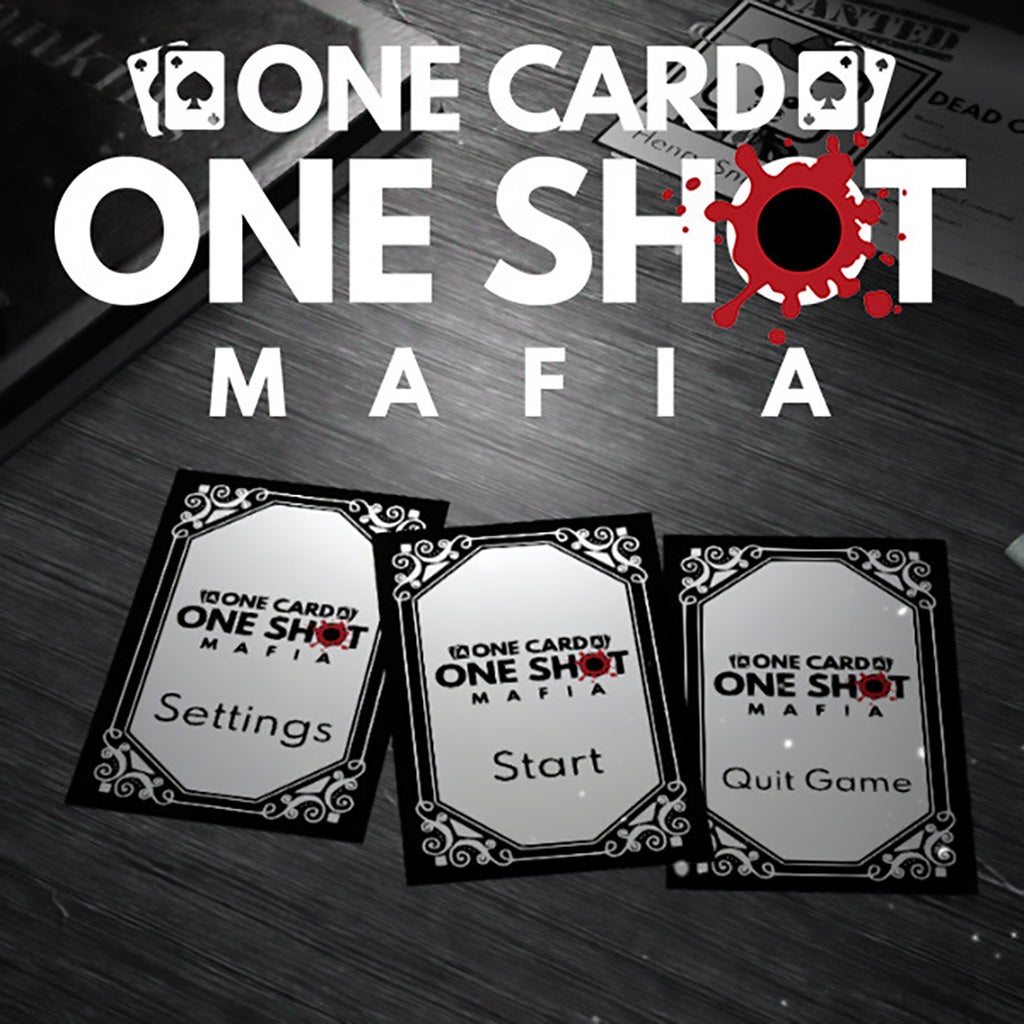
Hybrid games often promise innovation, yet too many settle for novelty. Blending genres is easy in theory but hard in practice, especially when those genres operate on fundamentally different rhythms. One Card One Shot – Mafia, developed and published by YAW Studios, takes a bold swing by merging tactical deckbuilding with first-person shooting.
Released on April 10, 2026, for PC and Xbox, the game drops players into a stylised mafia underworld where every mission is a calculated gamble. Cards shape the battlefield, bullets decide the outcome, and every run hinges on a single, well-timed shot.
It is a striking idea on paper. In practice, One Card One Shot – Mafia is an inventive, occasionally brilliant, but uneven experiment in genre fusion.
Core Concept & Structure
At its heart, the game runs on a simple yet compelling loop. Players enter short, roguelite-style missions where they build a deck, navigate encounters, and ultimately attempt to eliminate targets with limited ammunition.
The twist lies in how these systems interact. Before action begins, players select and activate cards that alter the battlefield. These can grant armour, modify enemy behaviour, provide additional ammo, or create unique conditions that shape the encounter.
Once the setup phase is complete, gameplay shifts into action. Encounters can begin in a top-down perspective, transition into a first-person shooting segment, or blend both perspectives dynamically. The goal is always the same: create the perfect conditions, then execute a precise shot.
It is a loop built on preparation and execution. When it works, it feels genuinely fresh.
Deckbuilding Mechanics
The card system is the backbone of the experience. Each card represents a strategic choice, shaping how a mission unfolds before a single bullet is fired.
Cards can be combined to create synergies. Defensive setups might prioritise survivability, while aggressive builds aim to create high-risk, high-reward scenarios. Some cards introduce entirely new mechanics, forcing players to adapt their approach.
The strength of this system lies in its flexibility. There is no single “correct” way to build a deck, and the game’s short-run structure encourages experimentation.
However, the system is not without its issues. Balance can feel inconsistent, with certain card combinations clearly outperforming others. This can reduce experimentation over time, as players gravitate towards more reliable setups.
Shooting Mechanics & Execution
The transition from strategy to action is where One Card One Shot – Mafia either shines or stumbles. First-person shooting segments are built around precision and restraint. Ammunition is limited, and each shot carries weight.
This creates tension. Players are encouraged to wait for the right moment rather than rush into action. Timing, positioning, and awareness are crucial to success.
The shooting itself is functional, though not exceptional. Controls are responsive, but the mechanics lack the depth and refinement of dedicated first-person shooters. This is not necessarily a flaw, but it does highlight the game’s identity as a hybrid rather than a specialist.
The key is how shooting integrates with the card system. A well-prepared setup can turn a difficult encounter into a controlled execution. A poorly planned one can lead to failure before the trigger is even pulled.
Dynamic Gameplay Flow
One of the game’s most interesting features is its shifting perspective. Missions can switch between top-down action and first-person shooting, sometimes within the same encounter.
This variety keeps players engaged. Each perspective emphasises different skills, from spatial awareness to precision aiming.
However, these transitions are not always seamless. The shift between mechanics can feel abrupt, disrupting the flow of gameplay. While the idea is strong, the execution sometimes struggles to maintain cohesion.
Roguelite Progression
The roguelite structure ties everything together. Players navigate branching paths, choosing between enemy encounters, events, sub-bosses, and safehouses.
Runs are relatively short, typically lasting 8 to 15 minutes. This makes the game highly accessible, encouraging repeated playthroughs and experimentation.
Progression takes the form of unlocks, new cards, and expanded options. Each run contributes to a broader sense of growth, even when individual attempts end in failure.
Replayability is a clear strength. The combination of randomised elements and player-driven choices ensures that no two runs feel identical.
Enemy Design & Boss Encounters
Enemy variety is solid, with different types introducing unique behaviours and challenges. Some require careful positioning, others demand quick reactions, and many interact with the card system in interesting ways.
Boss encounters are a highlight. Each territory introduces a major enemy with distinct mechanics, forcing players to adapt their strategy. These fights often test both deckbuilding and execution skills.
That said, difficulty spikes can be uneven. Certain encounters feel significantly more demanding than others, sometimes without adequate preparation.
Visual & Audio Presentation
Visually, One Card One Shot – Mafia adopts a stylised approach that complements its hybrid gameplay. Environments are clean and readable, enabling players to quickly assess situations in both strategic and action phases.
Character and enemy designs are functional rather than memorable, yet they serve the gameplay effectively.
Audio design supports the experience well. Sound cues are clear, particularly during shooting segments, where feedback is essential. Music leans towards a tense, understated tone, reinforcing the game’s focus on precision and timing.
Strengths
The game’s greatest strength is its originality. The fusion of deckbuilding and first-person shooting is not just novel but genuinely engaging when it clicks.
Short run times and strong replayability make it easy to return to, while the roguelite structure encourages experimentation.
The tension created by limited ammunition and high-stakes execution adds a distinctive flavour to the experience.
Weaknesses
Despite its innovation, the game struggles with consistency. Balance issues in the card system can limit long-term variety, and the shooting mechanics, while functional, lack depth.
Transitions between gameplay styles can feel disjointed, occasionally breaking immersion.
Additionally, the game’s reliance on its core gimmick means that players who do not connect with the hybrid design may find little else to engage them.
Final Verdict
One Card One Shot – Mafia is a bold and inventive hybrid that successfully fuses two very different genres into a cohesive, if occasionally uneven, experience. It does not always achieve perfect balance, but it consistently offers moments of genuine creativity and tension.
For players willing to embrace its experimental nature, it offers a fresh take on both deckbuilding and action gameplay. For others, its inconsistencies may prove frustrating.
It is not flawless, but it is memorable—and in a crowded market, that counts for a great deal.