Competitive puzzle games have always thrived on one simple principle: clarity under pressure. Whether it’s the methodical stacking of traditional falling-block puzzlers or the frantic decision-making of modern hybrid systems, the genre succeeds when players can think faster than the chaos unfolding on screen. SHIKA-Q, developed and published by AGNI-FLARE CO., LTD., takes that principle and pushes it into unfamiliar territory—blending puzzle mechanics with the pacing, tension, and presentation of a fighting game.
Released on April 9, 2026, for Nintendo Switch and PlayStation platforms (with a Steam version forthcoming), SHIKA-Q is not interested in easing players in. It is loud, fast, reactive, and often overwhelming in its design. At its best, it feels like a competitive sport disguised as a puzzle game. At its most intense, it feels like trying to solve equations during a street fight while a concert is happening in the background.
In short, it is designed to overwhelm you—and then reward you for surviving that overwhelm.
A Puzzle Game That Refuses to Be Still
The most immediate and important difference between SHIKA-Q and traditional puzzle games is structural. There are no falling blocks. No waiting for pieces to descend. Instead, the game takes place on a 10×10 board where pieces are placed instantly, forming what are called “Links.”
This single design decision fundamentally reshapes the experience. Without gravity or turn-based pacing, SHIKA-Q becomes a game of immediate commitment. Every placement is final in intent, if not always in consequence. There is no delay between thought and action—only execution.
This creates a unique kind of pressure. In most puzzle games, hesitation is something you can afford in small doses. Here, hesitation is actively punished. The moment you stop reacting, the match begins to slip away.
It is not just about solving a board—it is about controlling momentum.
Puzzle Combat as Fighting Game Design
Where SHIKA-Q truly distinguishes itself is in borrowing structure from fighting games rather than puzzle traditions. Matches are not slow battles of attrition but rapid exchanges of offence and defence, in which players constantly respond to each other’s actions in real time.
Attacks, interference, and special moves occur simultaneously. You are not simply building your own strategy—you are reacting to your opponent’s intent while trying to execute your own.
This creates a layered mental load. You must track the board state, anticipate incoming disruptions, and execute your own Link formations under pressure, all while the tempo of the match accelerates.
The result is a game that feels less like solving a puzzle and more like maintaining control of a collapsing system.
At higher levels, SHIKA-Q can be almost unreadable to spectators at first glance—but that chaos is part of its appeal. Beneath the surface, there is structure. And learning to see that structure is where mastery begins.
Music as a Gameplay System
One of SHIKA-Q’s most ambitious ideas is integrating music into the gameplay flow. This is not merely background audio—it is an active component of pacing and emotional escalation.
Each match is accompanied by high-energy vocal tracks that intensify as tension rises. The music does not merely respond to gameplay; it helps define it. As the tempo increases, so does the perceived speed of decision-making.
This creates a feedback loop between sound, emotion, and action. Players are not just reacting to the board—they are carried forward by rhythm, pushed into faster decisions by the soundtrack itself.
In some moments, this synergy works brilliantly. Long exchanges of offence and defence feel cinematic, almost choreographed, as the music swells in sync with shifting momentum.
However, this system can also become overwhelming. At peak intensity, the combination of visual chaos and high-tempo audio can make it difficult to parse individual moves clearly. Whether this is a flaw or a feature depends largely on the player’s tolerance for sensory overload.
Modes and Structure
SHIKA-Q offers several modes designed to support both competitive and solo play.
Ranked and Online Battles form the core competitive experience, emphasising quick thinking and adaptability against real opponents. These matches are where the game’s systems shine brightest, as human unpredictability amplifies the already fast-paced design.
Challenge Mode provides a structured single-player progression across 99 stages, each synchronised with music and featuring increasingly complex mechanics. This mode serves as both a tutorial and an endurance test, gradually introducing players to advanced systems while maintaining pressure through escalating difficulty.
There is also a robust customisation suite, allowing players to alter UI elements, emotes, wallpapers, and even character-specific music themes. While largely cosmetic, this system reinforces the game’s identity as a performance-driven competitive title.
The inclusion of a Battle Pass system further extends progression, offering cosmetic rewards tied to playtime and mission completion. While not intrusive, it reflects the game’s intent to maintain long-term engagement.
Presentation and Identity
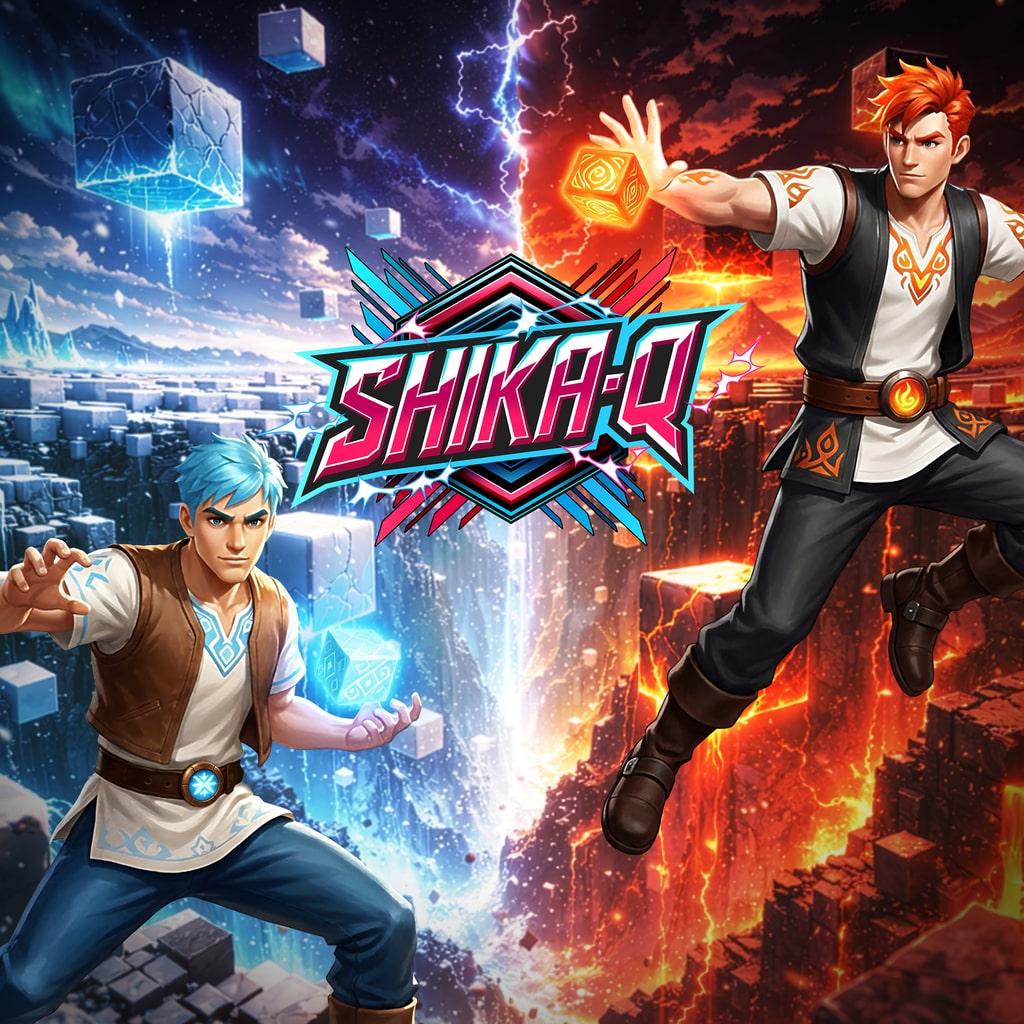
Visually, SHIKA-Q adopts a sharp, energetic aesthetic designed to maximise readability under pressure. The 10×10 board remains clear even during high-intensity sequences, though the surrounding effects—flashing indicators, attack overlays, and animated UI elements—can become visually dense.
Character designs and thematic presentation lean into stylised, almost idol-like performance energy, reinforcing the link between gameplay and music-driven spectacle.
It is not a subtle game. Everything about SHIKA-Q is designed to communicate urgency, intensity, and forward momentum.
Where It Falters
For all its innovation, SHIKA-Q is not without issues.
The most significant challenge is accessibility. The learning curve is steep, and new players may struggle not only to learn how to play but also to interpret what is happening on screen during high-level matches. The required pace of decision-making can feel overwhelming, even in the early stages.
Additionally, while the fusion of puzzle mechanics and fighting-game structure is ambitious, it can sometimes feel conceptually overloaded. There are moments when systems overlap to the point of confusion, particularly when multiple attacks and disruptions occur simultaneously.
The visual and audio intensity, while central to the game’s identity, may also deter players who prefer more controlled or methodical puzzle experiences.
Final Thoughts
SHIKA-Q is a bold reimagining of competitive puzzle design. It abandons traditional structure in favour of immediacy, reaction, and rhythmic intensity, making it feel closer to a performance sport than a conventional puzzler.
When it works, it is exhilarating—fast, reactive, and deeply engaging at high skill levels. But it is also demanding, occasionally overwhelming, and unapologetically hostile to hesitation or indecision.
It is not a game that seeks comfort. It seeks intensity.