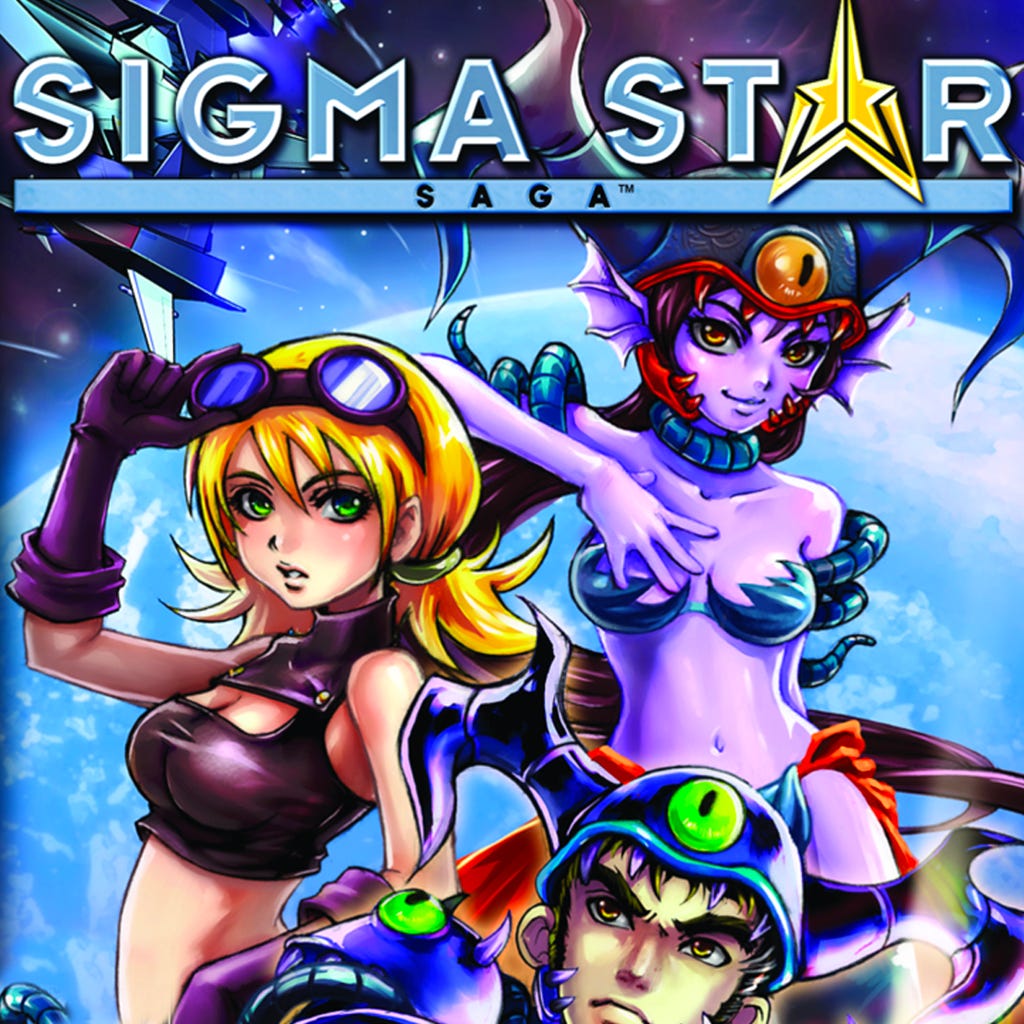
Some games are remembered for pushing genres forward. Others are remembered for not quite fitting into any genre at all. Sigma Star Saga DX, developed by WayForward and Mighty Rabbit Studios, comfortably falls into the latter category—and that has always been both its greatest strength and its most persistent problem.
Originally released on the Game Boy Advance in 2005, this cult oddity returns nearly two decades later as a fully enhanced remaster, arriving on Nintendo Switch, PlayStation 5, and PC (Steam) for £19.99. The “DX” label isn’t just decorative; this version offers meaningful improvements, from a reworked map system and adjusted EXP pacing to reduced random encounters and a revised script.
But the real question is whether these refinements are enough to elevate a fascinating but flawed hybrid into something truly essential.
The answer, as with the original, remains complicated.
A Genre Collision That Still Feels Unique
At its core, Sigma Star Saga DX combines two games infused with ambition and chaos equally.
One side features a top-down action RPG experience: exploring planets, chatting with NPCs, navigating dungeons, and gradually unveiling a sci-fi conspiracy involving humanity and the alien Krill Empire. The other side abruptly switches to side-scrolling shoot-’em-up combat, where encounters transform into fast-paced space battles that test reflexes, pattern recognition, and loadout strategies.
You control Ian Recker, an Allied Earth Federation pilot operating undercover as a double agent within the Krill Empire. The story echoes classic mid-2000s sci-fi melodrama: mistrust, identity conflicts, and a looming interstellar war where neither side is entirely trustworthy.
It’s not subtle, but it doesn’t need to be. The story functions best as a framework for the constant mechanical switching that shapes the experience.
And that switching remains unlike almost anything else in gaming.
Exploration First, Chaos Always Waiting
The top-down exploration segments form the core of the game. You’ll explore six unique planets, each with its own environment, enemy factions, and traversal challenges. These sections reflect classic handheld RPG design—compact maps, frequent encounters, and gradual ability unlocking.
The DX version notably enhances this flow. The updated map system is clearer and more practical, reducing one of the original’s biggest frustrations: disorientation. Navigation remains deliberately old-school, but it no longer feels unnecessarily obscure.
Random encounters have also been reduced, greatly improving pacing. In the original release, exploration was interrupted so often that it hampered curiosity. Now, there’s more space to fully absorb the environments.
That said, Sigma Star Saga DX still maintains a certain level of friction. Movement can seem stiff by modern standards, and objectives are often given with minimal guidance. It’s a game that expects you to experiment, backtrack, and sometimes get lost.
For some players, that’s part of the charm. For others, it may feel like an obstacle.
When the Screen Flips: Shooter Combat Returns
The defining feature of Sigma Star Saga DX remains its sudden shift into side-scrolling shoot-’em-up battles whenever you encounter enemies.
These segments are where the game truly comes alive.
Combat is fast, dynamic, and highly customisable thanks to the Gun Data system, which offers over 70 different weapons and more than 15,000 possible combinations. This allows players to personalise their ship’s loadout significantly, experimenting with various attack patterns, spread types, and special effects.
The result is a surprising layer of depth added to what initially seems to be a straightforward shooter system. Some loadouts lean towards aggressive close-range bursts, while others encourage cautious, screen-controlling projectile spam.
Boss fights, in particular, are a highlight. They challenge players to adapt loadouts during gameplay and learn enemy patterns with precision. When the system clicks, these encounters feel explosive and satisfying, elevating the entire game.
However, consistency remains a challenge. Because combat encounters are linked to exploration frequency, difficulty pacing can fluctuate unpredictably. Sometimes battles feel perfectly tuned; at other times, they occur too often or seem slightly out of sync with your current progression.
The DX adjustments help smooth this out, but they don’t completely eliminate it.
Quality-of-Life Improvements That Matter
What makes Sigma Star Saga DX more than just a re-release is its thoughtful array of improvements.
The revised EXP system cuts down on grinding, making progression feel more natural and less punishing. Additional save points lessen frustration during longer dungeon sections. The updated script enhances clarity and flow, ensuring the narrative remains coherent without compromising its retro charm.
Most importantly, the reduced random encounters and improved map usability fundamentally alter the game’s rhythm. Exploration no longer feels constantly interrupted, allowing players to engage with the world at a more relaxed pace.
These aren’t flashy upgrades, but they are vital ones. They show a clear understanding of what made the original both captivating and tiring.
Aesthetic Identity That Still Holds Up
Visually, Sigma Star Saga DX remains a strong example of late-era GBA pixel art design, now sharpened and stabilised for modern displays. The sci-fi environments are clear and easy to read, with distinct planetary identities that help differentiate exploration zones.
The transition into shooter segments is still visually impressive, especially in boss encounters where screen-filling effects and projectile patterns create a sense of scale that exceeds the game’s origins.
The soundtrack warrants special praise. It leans heavily into atmospheric sci-fi tones during exploration, shifting to more energetic, rhythm-driven tracks during combat. While not overly complex, it complements the dual-genre structure effectively and helps unify the overall experience.
The Core Problem: Identity Friction
Even with its improvements, Sigma Star Saga DX cannot escape the underlying tension at the core of its design.
It is both an RPG and a shooter, yet never fully commits to either identity. Exploration can feel interrupted by combat, while combat may seem more contextual than central. The two elements are intriguing together but rarely feel seamless.
This friction is what gives the game its cult following—yet it also prevents it from feeling entirely polished.
The DX version smooths some edges, but it does not—and arguably should not—eliminate that tension completely. Doing so might risk erasing what makes the game distinctive in the first place.
Final Thoughts
Sigma Star Saga DX is a rare kind of remaster: one that doesn’t try to reinvent its source material but rather carefully stabilises it. By enhancing pacing, navigation, and progression systems, it turns a historically rough experience into something far more playable without sacrificing its experimental core.
It remains a game defined by contradiction. Frustrating yet inventive. Uneven yet memorable. Occasionally archaic, but undeniably bold.
If you approach it expecting a polished modern hybrid, you might find its roughness distracting. But if you engage with it as a preserved experiment—an unusual collision of design philosophies that still hasn’t been repeated—you’ll discover something genuinely special beneath the surface.