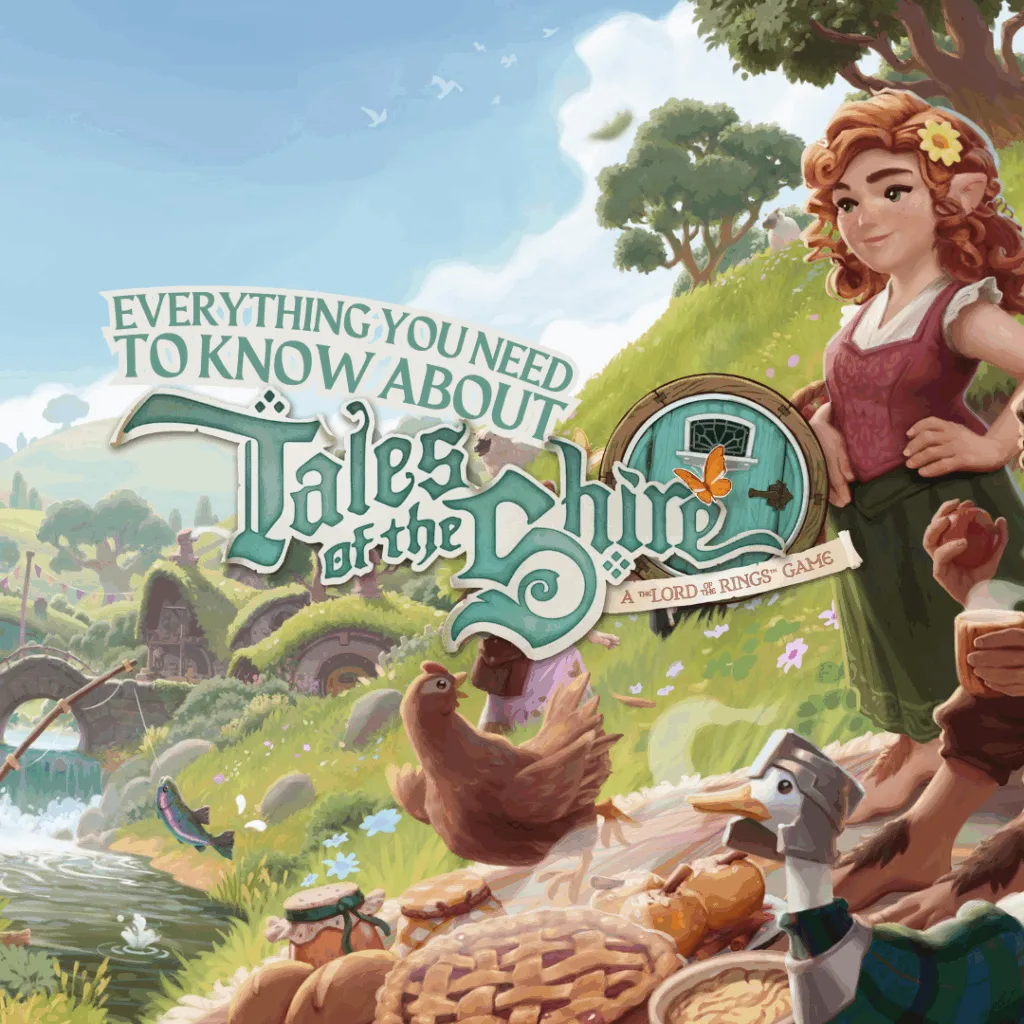
Some games ask you to save the world. Others ask you to conquer it. But Tales of the Shire, created by Wētā Workshop and published by Private Division, takes a different approach—and, in many ways, a more radical one: what if nothing needed saving at all?
Set in the tranquil village of Bywater during the transition period between The Hobbit and The Lord of the Rings, this life simulation encourages players to embrace the gentle pace of Hobbit life. The Nintendo Switch 2 “Anniversary Edition,” launched as a technological and performance upgrade to the original 2025 release, sharpens that vision into its most stable and visually unified form yet.
It isn’t a game about adventure. It’s a game about upkeep, comfort, and the quiet rituals that hold a community together.
Bywater: A Village in Becoming
Bywater is not yet the idyllic postcard version of Hobbiton most players might expect. Instead, it is a community in transition—small, slightly disorganised, and gently striving toward official village status.
As a custom Hobbit, your role is not heroic in any traditional sense. You are a participant in everyday life: gardening, fishing, foraging, decorating your home, and most importantly, contributing to the social fabric of the village through shared meals and hospitality.
This framing is where Tales of the Shire finds its identity. Progress is not measured in combat victories or narrative climaxes, but in incremental improvements to relationships, home aesthetics, and communal harmony.
The result is a game that feels less like a structured narrative and more like an ongoing habit.
The Hobbit Fantasy, Fully Embraced
Few adaptations of Tolkien’s work have embraced the domestic side of Hobbit culture as fully as this one. Tales of the Shire unapologetically centres on food, comfort, and routine.
Cooking is the emotional and mechanical focal point. Preparing meals is not a mere background activity — it’s a key way of building relationships. Sharing dishes with neighbours strengthens bonds, encourages dialogue, and gradually broadens your social circle within Bywater.
The focus on second breakfast, dinner parties, and seasonal ingredients underscores the game’s commitment to Tolkien’s most subtle theme: that joy resides in small, repeated pleasures.
Mechanically, cooking is straightforward and tactile, with ingredient gathering directly supporting recipe experimentation. Although not overly complex, it offers a satisfying experience through its grounded simplicity.
Life Simplicity, for Better and Worse
As a life simulation, Tales of the Shire intentionally avoids pressure. There are no fail states in the traditional sense, no urgent crises, and no overarching threat to the Shire’s existence.
Instead, progression is linked to daily routines and community milestones—helping Bywater achieve official village status, upgrading homes, and building relationships through consistent interaction.
This structure creates a calming, almost meditative loop. However, it also reveals the game’s most significant limitation: repetition.
While early hours feel full of discovery, later stages can become mechanically predictable. Gardening, fishing, and foraging all serve similar progression functions, and although their presentation is charming, their depth remains relatively shallow.
It is a game that excels more in atmosphere than complexity.
A Home You Shape, Slowly
One of the most impressive systems in Tales of the Shire is its grid-free home decoration. Players are given the freedom to arrange furniture, décor, and personal items within their Hobbit hole without strict placement restrictions.
This system promotes personal expression in a way that resonates with Hobbit culture itself—comfort over precision, warmth over optimisation.
Building a home becomes a slow, iterative process rather than a checklist of upgrades. Each object feels like part of a lived-in, growing space rather than just a functional addition.
It is in these quiet moments—adjusting a chair near a window, placing a book on a table, rearranging a kitchen—that the game’s emotional intent comes through most clearly.
The Rhythm of Everyday Life
The passage of time in Bywater is gentle yet meaningful. Seasons change, weather varies, and different ingredients become available depending on the season.
These shifts are subtle rather than dramatic, but they gently influence daily routines. A rainy day might promote indoor cooking and social visits. A sunny afternoon could lead you to fishing or foraging in nearby fields.
This environmental rhythm prevents the experience from feeling static, even if the core mechanics stay the same.
However, the absence of major systemic changes between days can cause longer play sessions to feel somewhat repetitive.
Characters and Community
The residents of Bywater are central to the game’s emotional core. Each Hobbit has their own preferences, dialogue styles, and relationship development paths, though none are crafted with dramatic arcs or intense narrative conflict.
Instead, relationships grow through repetition and familiarity. Bringing someone their favourite meal, assisting with small tasks, or simply spending time together gradually strengthens bonds.
This slow-burn approach suits the game’s tone, but it also means character development is subtle and understated. Players seeking strong narrative moments or emotional turning points might find the storytelling restrained.
However, there is a quiet authenticity to how these relationships are formed. They feel deserved rather than scripted.
Technical Refinement on Switch 2
The Switch 2 Edition marks a significant technical upgrade over the original release. Improved resolution, more stable frame rates, and considerably shorter loading times all contribute to a smoother experience.
Textures are sharper, lighting is more consistent, and environmental detail—especially in foliage and water—benefits from greater clarity.
These improvements do not fundamentally alter the game, but they do enhance its immersion. In a game so heavily reliant on atmosphere, technical stability is more important than spectacle.
The result is the most refined version of Tales of the Shire available to date.
Where the Comfort Becomes Confining
Despite its charm, Tales of the Shire struggles with pacing and depth in its later hours.
Once core systems are unlocked, the cycle of gathering, cooking, and socialising can start to feel repetitive. The lack of meaningful mechanical progression limits long-term engagement.
Additionally, while the game’s dedication to low-stakes design is commendable, it sometimes veers into under-stimulation. Some players might wish for more systemic interaction or narrative unpredictability.
It is a game that clearly knows what it aims to be—but that clarity also highlights its limitations.
Final Verdict
Tales of the Shire: A The Lord of the Rings Game is a warm, deliberately paced life simulation that beautifully captures the spirit of Hobbit life with sincerity and care. It does not seek to reinterpret Tolkien through action or spectacle, but through ritual, routine, and community.
It is at its strongest when it embraces simplicity, and at its weakest when that simplicity turns into repetition.