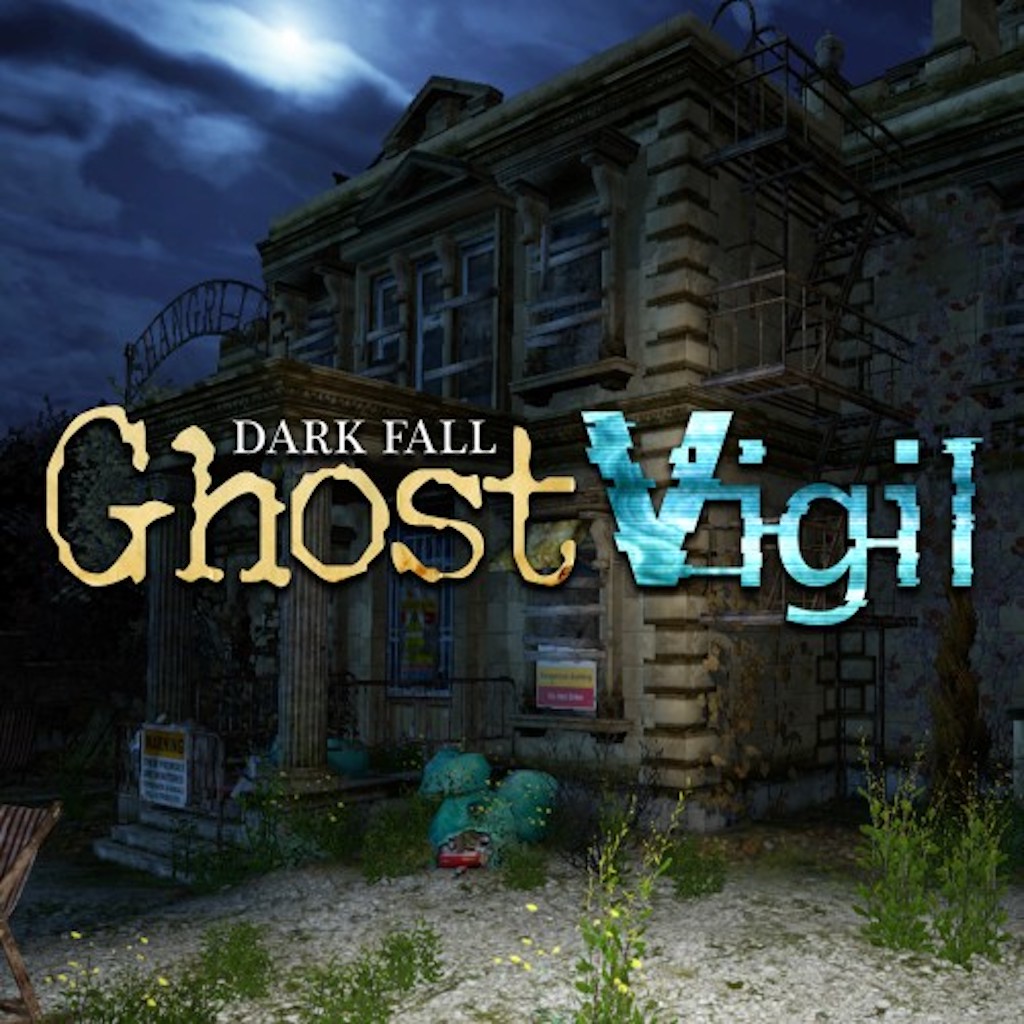
Atmosphere is crucial in a good horror game. While many modern titles rely heavily on action or jump scares, some developers still believe that the most effective fear arises from tension, mystery, and the slow realisation that something is terribly wrong.
Dark Fall: Ghost Vigil is very much founded on that philosophy.
Originally released for PC in 2020 and recently arriving on Nintendo Switch, this paranormal investigation adventure continues the legacy of the long-standing Dark Fall series. Written and designed by Jonathan Boakes, the creative mind behind The Lost Crown: A Ghost-Hunting Adventure, Ghost Vigil adopts a slower, more methodical approach to horror.
Instead of fleeing from monsters or hiding in lockers, players assume the role of a paranormal investigator tasked with documenting unexplained activity inside a long-abandoned building.
The experience feels less like a traditional horror game and more like taking part in a late-night ghost hunt—complete with strange noises, eerie recordings, and creeping dread.
A Night Inside Harwood House
The entire game takes place during an overnight investigation at Harwood House, a dilapidated building believed to be haunted by supernatural activity.
As part of a ghost-hunting team, your task is straightforward: gather evidence.
Players explore the dark corridors and abandoned rooms of the building while setting up monitoring equipment, analysing strange signals, and recording paranormal phenomena.
Initially, the environment seems quiet—almost unnervingly so.
However, as the night unfolds, subtle disturbances start to manifest. Eerie sounds echo through empty hallways, objects shift unexpectedly, and unusual energy readings appear on your devices.
The suspense gradually heightens, rewarding patience and attentive observation.
The Tools of a Ghost Hunter
What truly distinguishes Dark Fall: Ghost Vigil from other horror games is its focus on investigation tools.
Players depend on a range of professional ghost-hunting devices to sense paranormal activity, including:
- EMF meters to detect electromagnetic disturbances
- Thermal cameras to spot unusual temperature changes
- EVP recorders to capture unexplained voices
- CCTV systems for remote observation of rooms
- Mastering these tools becomes central to the gameplay.
You’ll often switch between exploring the building and analysing surveillance feeds, scanning for tiny details that might reveal supernatural phenomena.
Sometimes the clues are straightforward.
Other times, they are extremely subtle.
A faint whisper on an audio recording. A shadow flickering briefly on a camera feed. A sudden spike in EMF readings.
These moments generate the game’s most terrifying experiences.
Slow-Burn Horror Done Right
Modern horror games often rely on quick scares, but Ghost Vigil takes a different approach.
The game’s pacing is intentionally slow.
Players spend extended periods quietly exploring rooms, examining environmental clues, and piecing together the building’s tragic history.
The horror develops gradually through atmosphere rather than sudden shocks.
Creaking floorboards, distant echoes, and flickering lights keep players constantly tense.
The building itself becomes the highlight of the experience.
Every room seems to hold a story just waiting to be uncovered.
This style of horror might not appeal to everyone, but for those who enjoy psychological tension, it’s highly effective.
Puzzle-Solving and Investigation
Beyond ghost hunting, the game also features traditional point-and-click puzzle design.
Many sections require players to solve logic puzzles or find key items that unlock new areas of the building.
These puzzles range from simple environmental challenges to more complex riddles that demand careful attention to detail.
Some puzzles are directly connected to the house’s history, encouraging players to read notes, examine artefacts, and piece together the narrative.
The investigative structure works well with the game’s slow pace.
However, some puzzles can occasionally feel obscure, requiring players to experiment with inventory items or revisit locations multiple times.
Storytelling Through Atmosphere
One of Ghost Vigil’s strongest features is its narrative delivery.
Instead of lengthy dialogue scenes for exposition, the story develops through environmental storytelling.
Players gradually discover details about the former residents of Harwood House, the eerie events that took place there, and why the building remains haunted.
Documents, recordings, and visual hints progressively uncover the truth.
This method sparks curiosity.
You’re not just told what happened—you find out gradually, piece by piece.
Fans of The Lost Crown: A Ghost-Hunting Adventure will recognise a similar storytelling style.
A Classic Point-and-Click Feel
Although the game is shown from a first-person perspective, its design still reflects the traditions of classic point-and-click adventure games.
Movement is often node-based, with players moving between fixed viewpoints within each room.
This structure allows the developers to carefully control the visual layout of each scene.
Lighting, shadows, and sound design work together to create a persistent feeling of unease.
The approach may evoke nostalgia for fans of older adventure games.
At the same time, it strengthens the methodical pace that defines the experience.
The Nintendo Switch Version
The new Nintendo Switch release brings the entire investigation to a portable platform.
Performance remains stable, and the game’s slower pacing actually works well for handheld play sessions.
Exploring the building in short bursts—perhaps during a quiet evening—fits the game’s atmospheric design surprisingly well.
The Switch version doesn’t introduce major new features, but it successfully preserves the original PC experience.
Where It Falls Short
Although Ghost Vigil has its strengths, it also has flaws.
Players used to fast-paced horror might find the gameplay too slow or methodical.
Much of the game involves careful observation rather than immediate action.
The node-based movement system may also seem outdated compared to modern free-roaming exploration.
Furthermore, some puzzles can be frustratingly unclear, which could break immersion when players get stuck.
However, these issues are mostly down to personal preference rather than a failure of design.
Pros
- Deep atmospheric horror and immersive sound design
- Authentic ghost-hunting mechanics with realistic equipment
- Strong environmental storytelling
- Thoughtful puzzles that reward investigation
Cons
- Slow pacing may not appeal to all players
- Node-based movement feels dated
- Some puzzles can be overly obscure
Final Verdict
Dark Fall: Ghost Vigil is a rare kind of horror game.
Rather than following modern trends, it embraces the traditions of classic point-and-click adventures while providing an authentic paranormal investigation experience.
Writer and designer Jonathan Boakes once again shows his talent for creating deeply atmospheric worlds filled with mystery and understated dread.
For players who enjoy thoughtful puzzles, ghost-hunting gadgets, and stories that unfold through quiet discovery, Ghost Vigil offers a hauntingly memorable night inside Harwood House.
It’s not a game about escaping monsters.
It’s a game about listening carefully in the dark—and realising you might not be alone.