Rhythm games have long been a staple of virtual reality. The immersive nature of VR makes it perfect for music-driven experiences where physical movement and timing blend to create something closer to performance than traditional gameplay. Titles like Beat Saber and Synth Riders have demonstrated how effective that formula can be, but DrumBeats VR adopts a slightly different approach.
Instead of swinging lightsabers or dancing through neon landscapes, DrumBeats VR places players behind a virtual drum kit, inviting them to become part of the band’s rhythm section. Originally released on PC VR and Meta Quest, the game has now launched on PlayStation VR2 as of 6 March 2026, offering additional polish and a particularly interesting feature: bass drum pedal support using PS5 racing wheel pedals.
The outcome is a VR rhythm experience that resembles a drumming simulator more than many arcade-style music games. While it maintains the accessible scoring mechanics typical of the genre, the PSVR2 version provides one of the most realistic virtual drumming experiences presently available on console.
Playing the Beat
At its core, DrumBeats VR is built around a familiar rhythm-game concept.
Notes appear across the drum kit in sync with the music, and players must hit the correct drums or cymbals using motion controllers. Accuracy, timing, and strike force affect the player’s score.
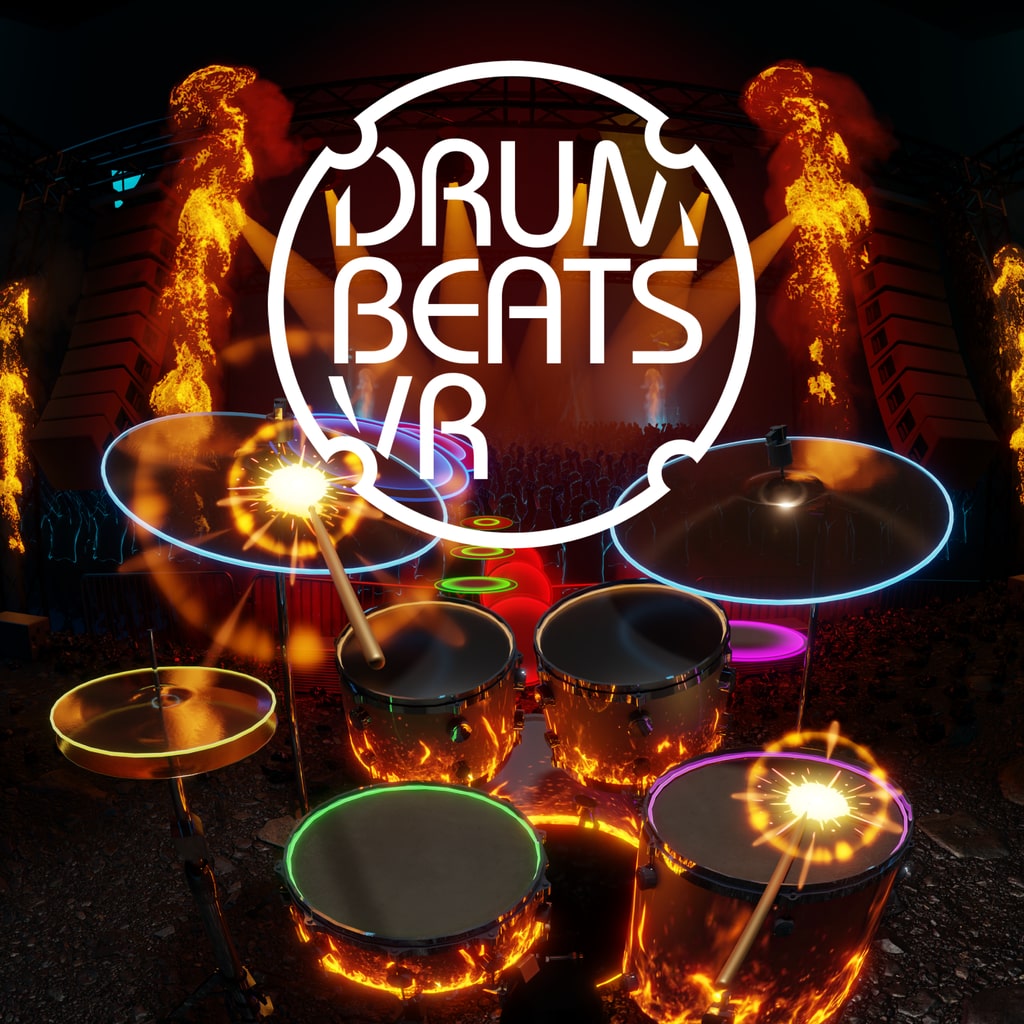
What sets DrumBeats VR apart from many rhythm games is how closely it aims to replicate the physical layout of a real drum kit.
Players perform natural drumming movements, reaching across the kit to strike toms, cymbals, and snares just as a drummer would during a real performance.
This creates a strong sense of physical immersion. Instead of abstract inputs, every action corresponds to a realistic drumming motion.
The PlayStation VR2 version enhances this experience with precise motion tracking, ensuring that hits feel responsive and consistent. Striking a cymbal more firmly produces a louder sound, while softer hits generate gentler tones.
These subtle variations make the experience feel less like pressing buttons and more like genuinely playing an instrument.
Bass Pedal Support
The standout feature of the PSVR2 release is its support for bass drum pedals.
Players can connect compatible PlayStation racing wheel pedals and use them as a kick drum input, transforming the experience significantly.
While most rhythm games simulate bass drum hits with controller buttons, DrumBeats VR allows players to physically press a pedal with their foot—just like a real drummer.
This results in a much more authentic drumming experience. Coordinating hand strikes with foot pedals adds an extra layer of challenge and realism.
For players with any drumming background, this feature makes the game feel much closer to a genuine practice tool rather than just a simple rhythm game.
Even newcomers will find the pedal system adds a satisfying physical element that makes performances feel more lively.
The Soundtrack
DrumBeats VR launches with a setlist of 21 tracks, spanning several genres including rock, metal, electronic music, and experimental rhythm-focused compositions.
The music selection leans heavily towards energetic songs that highlight complex drum patterns. Many tracks feature rapid cymbal hits, syncopated rhythms, and powerful kick drum sequences that challenge players to maintain precision.
Although the included soundtrack is relatively small compared to some rhythm games, it offers enough variety to keep players engaged across multiple sessions.
The true longevity of DrumBeats VR comes from its support for custom songs.
Recent updates introduced integration with Mod.io, allowing players to download user-created tracks. This feature significantly expands the available song library and ensures the game can continue evolving long after its initial release.
For dedicated rhythm game enthusiasts, this kind of community-driven content is crucial for long-term replayability.
Environments That Amplify the Experience
Another distinctive feature of DrumBeats VR is its collection of dynamic environments.
Instead of placing players in a static performance space, the game offers a variety of visually striking locations.
Players can perform in a traditional recording studio, but they might also find themselves drumming on the surface of the moon, surrounded by stars and glowing planetary horizons.
Other stages include surreal environments such as the depths of the ocean, the icy landscapes of Antarctica, or even fiery underworld scenes resembling hellish caverns.
These environments are not merely decorative. Many feature lighting effects and visual elements that react to the music, enhancing the feeling of performing within a living stage.
While the gameplay itself remains consistent, the changing scenery helps keep sessions visually engaging.
Balancing Simulation and Arcade Gameplay
DrumBeats VR balances simulation and arcade elements effectively.
On one hand, the physical layout of the drum kit and strike sensitivity provide a realistic simulation of actual drumming techniques.
On the other hand, the game features traditional rhythm-game scoring systems, combo meters, and accuracy ratings.
This balance ensures the game is accessible to players who have never played a drum kit before.
Beginner difficulty levels offer simpler rhythms, while higher levels significantly increase note density and complexity.
Expert players will need quick reflexes and precise timing to achieve high combo scores.
This tiered difficulty system appeals to both casual gamers and dedicated rhythm game fans.
Physical Intensity and Immersion
One aspect players quickly notice is how physically involving DrumBeats VR can be.
Full drum patterns demand continuous arm movement and occasional rapid strikes across the kit. Coupled with the bass pedal mechanic, sessions can feel surprisingly athletic.
Unlike many VR rhythm games that depend on repetitive gestures, drumming naturally promotes varied movement patterns.
The result is a gameplay experience that feels energetic and immersive without becoming dull.
However, the physical intensity also means that longer play sessions can become tiring. Fortunately, most songs last only a few minutes, making it easy to take breaks between performances.
Visual and Technical Performance
On PlayStation VR2, DrumBeats VR runs smoothly with stable frame rates and responsive input tracking.
The PSVR2’s improved display clarity makes note indicators easier to read during rapid sections of songs.
Haptic feedback in the Sense controllers delivers subtle tactile sensations with each strike, enhancing immersion.
Although the environments are visually appealing, they remain relatively simple in terms of graphical complexity. This is likely a deliberate choice to maintain performance stability during fast-paced gameplay.
Pros & Cons
Pros
- Convincing VR drumming mechanics
- Bass drum pedal support adds realism on PSVR2
- Energetic soundtrack with multiple genres
- Custom song support greatly expands replayability
- Visually creative performance environments
Cons
- Default song list is relatively small
- Physically demanding during long sessions
- Environments are visually simple
- Requires sufficient play space for full immersion
Final Verdict
DrumBeats VR successfully delivers one of the most authentic drumming experiences available in virtual reality today.
By blending realistic drum kit mechanics with the accessibility of a rhythm game, it offers an experience that feels both welcoming and rewarding.
The addition of bass drum pedal support on PlayStation VR2 enhances the console version, surpassing many competitors and providing a level of physical immersion rarely seen in rhythm games.
Although the base soundtrack might seem somewhat limited, the inclusion of custom tracks ensures players will always have fresh challenges.
For VR enthusiasts eager to experience the thrill of performing behind a drum kit, DrumBeats VR hits all the right notes.