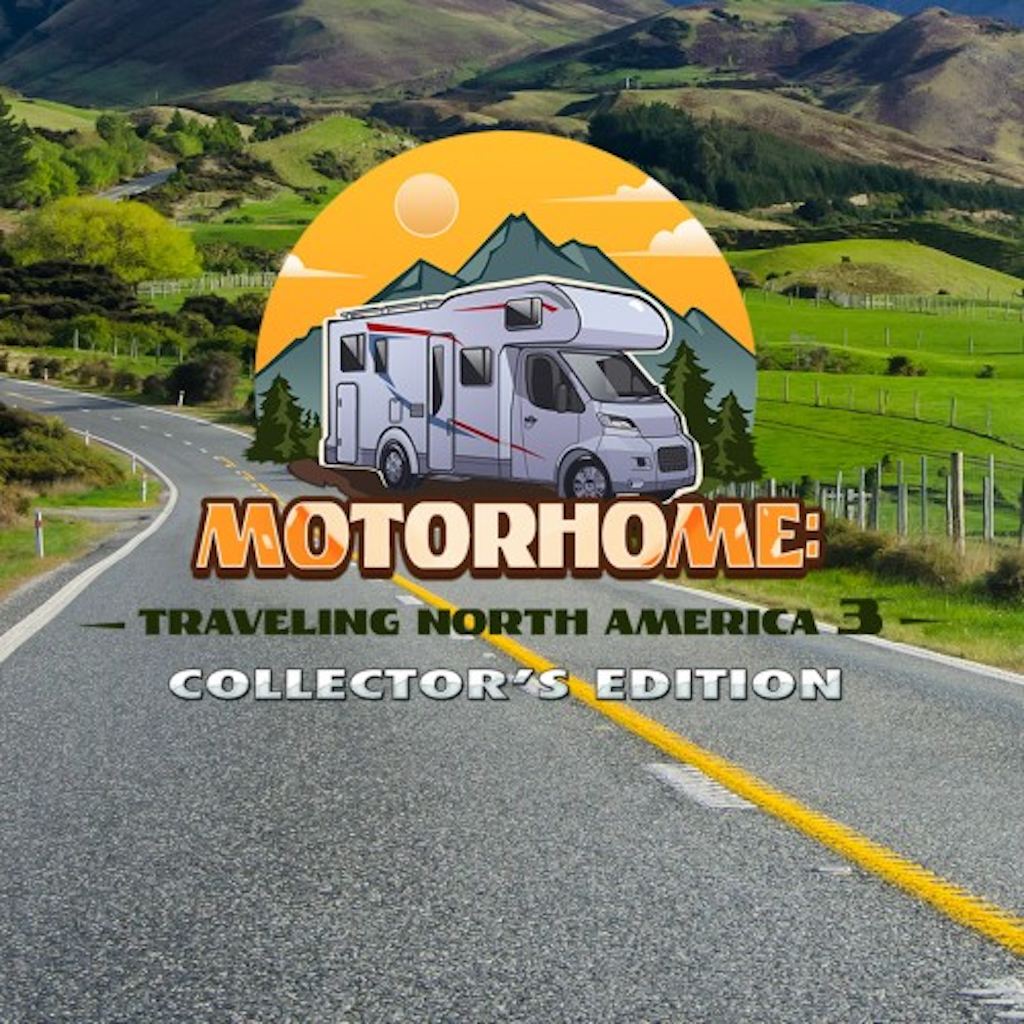
There’s a particular comfort niche within gaming that thrives far away from competitive multiplayer, cinematic storytelling, or mechanical mastery. Hidden-object adventures occupy that space — games designed not to challenge reflexes but to create calm routines and gentle satisfaction. Motorhome: Traveling North America 3 Collector’s Edition, developed by AviGames and released on Nintendo Switch in February 2026 following its 2025 PC debut, sits firmly within that tradition.
The third installment in the Motorhome series continues its relaxed road-trip formula, following a traveling family journeying from Portland, Oregon, to Key West, Florida. Rather than presenting high drama or complex puzzles, the game focuses on cozy exploration through illustrated scenes packed with objects to discover.
This Collector’s Edition expands the base experience with bonus locations, additional puzzles, and cosmetic extras — transforming what could have been a short casual diversion into a longer, more leisurely travel scrapbook.
It’s comfort gaming distilled into its purest form.
The Road Trip Structure — Travel as Atmosphere
Unlike many hidden-object titles built around mystery or supernatural narratives, Motorhome: Traveling North America 3 centers on everyday adventure.
Each chapter represents a stop along a cross-country road trip:
- Forested national parks
- Snowy mountain overlooks
- Coastal boardwalks
- Lakeside campsites
- Warm southern beaches
The pacing intentionally mirrors travel itself. Scenes unfold sequentially, with gentle transitions that reinforce the feeling of moving steadily across America.
There’s no urgency. No looming threat. The narrative simply celebrates discovery — waking up somewhere new, exploring local culture, and collecting memories along the way.
It’s less a story and more a travel diary.
Hidden Object Gameplay — Familiar but Polished
The core gameplay remains classic hidden-object design.
Players search richly illustrated scenes for items using multiple formats:
- Traditional text lists
- Silhouette outlines
- Picture-based searches
- Pattern and color matching (“swatch” searches)
This variety prevents monotony better than earlier entries in the series. Just as your eyes begin to tire of one format, the game introduces another variation.
Scenes are dense without feeling unfair. Objects blend naturally into environments but rarely rely on pixel-hunting frustration.
The pacing encourages observation rather than speed — ideal for handheld play sessions where players can relax rather than concentrate intensely.
The Sly Raccoon — A Simple but Effective Hook
A recurring series tradition returns in the form of the hidden raccoon mascot, secretly placed within every major scene.
Spotting him becomes a mini-meta game layered atop the main objective. Completionists will find themselves scanning environments more carefully, extending engagement beyond simple checklist completion.
It’s a small feature, but it adds personality and encourages attentive play.
Collectibles & Progression — Building Memories
One of the stronger additions to this installment is the sense of progression through collectibles.
Players gather:
- State-themed baseball caps, representing travel milestones.
- Polaroid-style photographs, filling a digital family album.
These systems transform otherwise isolated puzzles into part of a larger journey. Completing scenes contributes to a growing archive of memories, reinforcing the road-trip theme emotionally.
The album becomes surprisingly satisfying to revisit — less a reward mechanic and more a nostalgic scrapbook.
Collector’s Edition Content
The Collector’s Edition justifies its label primarily through added longevity.
Included extras:
- 10 additional hidden-object locations
- 8 exclusive mini-games
- 12 bonus puzzles
- Digital soundtrack player
- Wallpapers and collectibles
The bonus content doesn’t radically change gameplay, but it significantly extends playtime, making the Switch version feel more complete than a standard casual release.
The built-in music player is a particularly nice touch, allowing players to enjoy the mellow soundtrack outside gameplay sessions.
Mini-Games & Puzzle Variety
Between search scenes, players encounter light puzzle diversions:
- Jigsaw-style image reconstruction
- Pattern matching challenges
- Logic-based tile puzzles
- Simple sequencing games
None are particularly difficult, but they provide pacing breaks that prevent fatigue from continuous object searching.
The design philosophy remains consistent: relaxation first, challenge second.
Visual Presentation — Cozy Americana
Visually, the game leans into warm, hand-painted 2D artwork emphasizing comfort over realism.
Scenes are colorful and inviting, filled with small environmental storytelling details:
- Campfires glowing at dusk
- Souvenirs scattered across picnic tables
- Wildlife hidden among foliage
While animation is minimal, the illustrations successfully capture a nostalgic view of American travel — idealized but pleasant.
On Switch, image clarity holds up well in handheld mode, though zoom functionality becomes useful in busier scenes.
Sound & Atmosphere
The soundtrack deserves special mention.
Soft acoustic melodies and ambient road-trip tunes accompany gameplay, reinforcing a calm, reflective mood. Music rarely demands attention but subtly enhances immersion.
Sound effects remain understated — gentle clicks, camera shutters, and confirmation tones provide feedback without disrupting relaxation.
The audio design aligns perfectly with the game’s intention: unwind, don’t rush.
Performance on Switch
Performance is stable throughout the experience.
Menus respond quickly, load times are short, and touchscreen controls function smoothly in handheld mode — arguably the best way to play.
Occasional small text elements may feel cramped on smaller screens, but overall usability remains strong.
Where the Experience Stumbles
Despite its charm, repetition remains the game’s biggest weakness.
Veterans of hidden-object titles — especially earlier Motorhome entries — will notice familiar structures reused heavily. Innovation is minimal, and gameplay rarely evolves beyond its established loop.
Additionally:
- Dialogue and narrative elements remain light.
- Puzzle difficulty stays consistently low.
- Long sessions can feel visually repetitive.
Players seeking novelty or deep mechanics may struggle to stay engaged beyond casual play bursts.
Pros & Cons
Pros
- ✔ Relaxing, cozy hidden-object gameplay
- ✔ Charming road-trip theme and atmosphere
- ✔ Strong variety of search modes
- ✔ Collector’s Edition adds meaningful extra content
- ✔ Perfect fit for handheld sessions
Cons
- ✘ Very little innovation from previous entries
- ✘ Low difficulty throughout
- ✘ Repetition during longer play sessions
Final Verdict
Motorhome: Traveling North America 3 Collector’s Edition knows exactly what it wants to be — a gentle escape rather than an ambitious reinvention. AviGames delivers a comfortable, predictable hidden-object adventure that prioritizes relaxation and familiarity above all else.
Its strength lies not in surprise but in consistency. The road-trip framing gives purpose to its puzzles, the collectible systems add warmth, and the Collector’s Edition content ensures players have plenty of peaceful hours ahead.
For fans of cozy puzzle games, it’s easy to recommend. For newcomers curious about the genre, it’s an accessible entry point. But those seeking innovation or challenge may find the journey pleasant yet forgettable.
Sometimes, though, a quiet drive across familiar roads is exactly what you need.