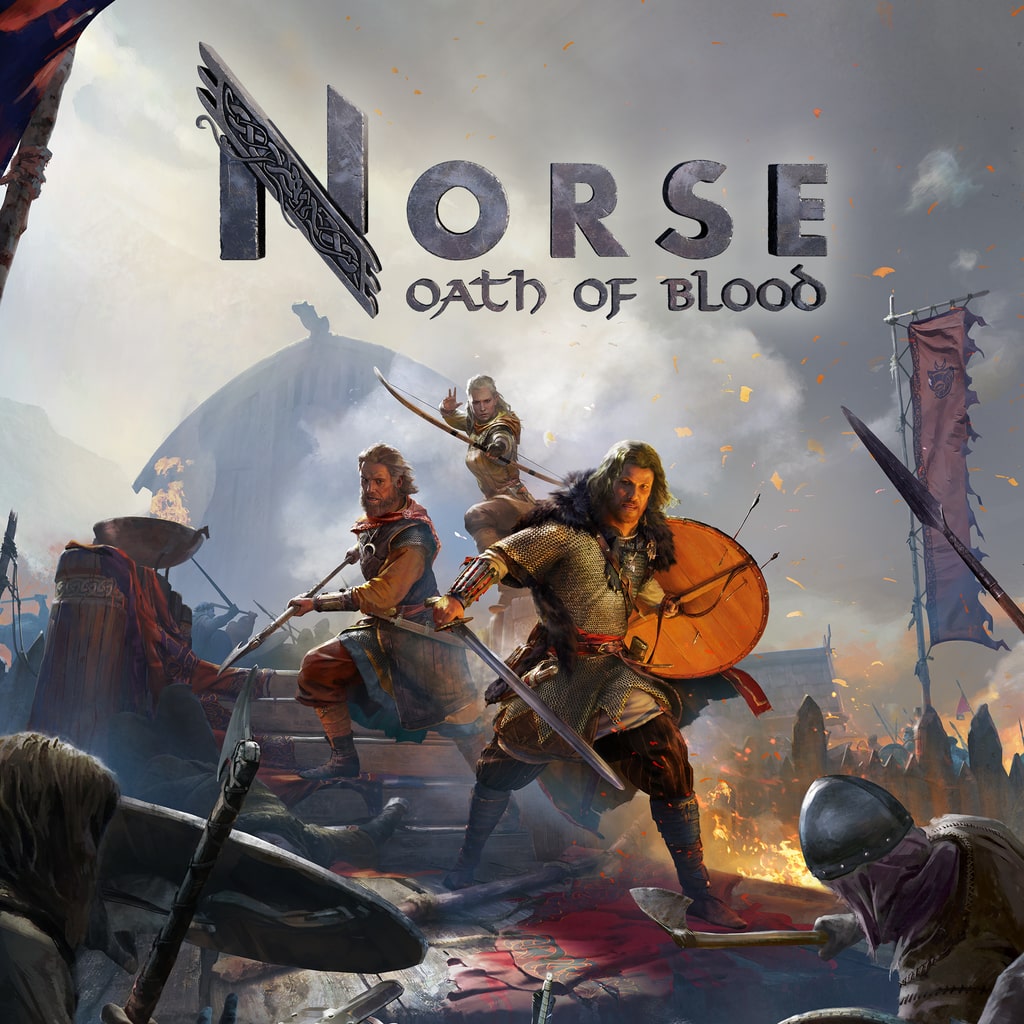
Viking games rarely aim for restraint. Most lean heavily into myth — gods, monsters, and supernatural spectacle dominating their interpretation of Norse history. Norse: Oath of Blood, developed by Arctic Hazard and published by Tripwire Presents, takes a dramatically different path. Released on February 17, 2026 for PC (with console versions arriving later this spring), it presents a grounded, historically focused Viking saga built around tactical combat and community survival rather than fantasy heroics.
Often described by players as “Axe-COM,” the comparison is fitting. The game blends turn-based tactical battles with settlement management, permanent consequences, and a story-driven campaign centered on revenge and rebuilding. Written in collaboration with historical fiction author Giles Kristian, the narrative ambition here clearly extends beyond standard strategy fare.
The result is a fascinating hybrid: part tactical RPG, part management sim, part historical drama. It’s thoughtful, immersive, and occasionally brilliant — though technical issues and pacing problems prevent it from fully realizing its potential at launch.
Story & Setting
You play as Gunnar, a young warrior forced into exile after the murder of his father, Jarl Gripr, at the hands of rival warlord Steinarr Far-Spear. With your settlement destroyed and your people scattered, the game begins not with conquest, but survival.
This grounded approach immediately distinguishes Oath of Blood. There are no mythical beasts or divine interventions — only political alliances, harsh winters, and human ambition. The narrative unfolds like a historical novel, emphasizing dialogue, character motivations, and cultural authenticity.
Kristian’s influence is evident in the writing. Conversations feel deliberate and weighty, exploring themes of loyalty, honor, and leadership rather than simple revenge fantasy. Characters develop gradually through shared hardship, and choices often carry emotional consequences beyond mechanical rewards.
While the pacing can feel slow early on, the investment pays off as relationships deepen and conflicts escalate. By mid-campaign, battles feel personal rather than procedural — a rare achievement for strategy games.
Gameplay
Norse: Oath of Blood splits its gameplay into two interconnected pillars: turn-based tactical combat and settlement management.
Tactical Combat
Battles take place on grid-based maps where positioning, elevation, and synergy determine success. Combat strongly emphasizes realism:
- Flanking provides decisive advantages.
- Higher ground improves accuracy and damage.
- Shields matter as much as weapons.
- Terrain can dictate victory before combat even begins.
Unlike many tactics games, characters feel fragile. A reckless advance can permanently remove a veteran warrior from your warband. Permadeath adds constant tension, forcing careful planning over aggressive experimentation.
Each fighter possesses unique skills shaped by gear and progression rather than rigid class archetypes. Equipment choices significantly alter tactical roles — a heavily armored axeman functions entirely differently from a lightly equipped skirmisher.
Combat animations are brutal and grounded. Blows feel heavy, shields splinter convincingly, and injuries reinforce the sense that every fight carries real risk.
However, pacing occasionally falters. Enemy turns can feel slow, especially during larger encounters, and some missions drag longer than necessary.
Settlement Management
Between battles, players oversee Gunnar’s growing settlement — arguably the game’s most distinctive feature.
Your village evolves from a fragile camp into a functioning Norse community. You assign villagers to roles such as:
- Farmers producing food supplies
- Smiths crafting weapons and armor
- Scouts gathering resources
- Warriors training for future raids
Every decision has cascading effects. Neglect food production and morale suffers. Fail to upgrade your smithy and your warriors fall behind technologically.
What makes this system compelling is its integration with combat. Better infrastructure directly improves battlefield options, creating a satisfying loop between strategy layers.
Unlike many management systems that feel detached from gameplay, here the village represents your people — not just resources. Watching survivors grow into a thriving community creates genuine attachment.
Warband Progression
Your warband evolves organically over time. Fighters gain abilities, develop specialties, and accumulate history through battles survived together.
Customization is meaningful rather than cosmetic. Gear upgrades unlock new tactical possibilities, encouraging experimentation with team composition and synergy.
The permadeath system ensures emotional stakes remain high. Losing a veteran warrior can disrupt strategies built over hours, forcing adaptation and reinforcing the harsh realities of Viking-age warfare.
It’s punishing — but appropriately so.
Graphics & Art Direction
Visually, Oath of Blood opts for muted realism over spectacle. The isometric perspective showcases rugged Norwegian landscapes: fog-covered valleys, snow-lashed settlements, and muddy battlefields.
Character models prioritize authenticity, featuring historically inspired armor and weaponry rather than exaggerated fantasy designs. The subdued color palette reinforces the game’s grounded tone.
Environmental storytelling shines, particularly within the settlement as new structures physically reshape the village over time.
That said, graphical polish varies. Some animations feel stiff, and environmental detail can appear uneven depending on camera distance.
Sound & Music
The audio presentation is one of the game’s strongest elements.
Composer Dan Wakefield, alongside neo-folk band Galdorcræft, delivers a haunting soundtrack built around ritual drums, chants, and atmospheric instrumentation. Music rarely dominates but subtly reinforces mood and tension.
Battle sounds emphasize weight and brutality — steel clashing, shields cracking, and distant war cries enhancing immersion.
Ambient audio during settlement management adds warmth, with villagers working and conversing in the background, helping the world feel alive.
Performance & Technical State
At launch, performance issues significantly impacted reception.
Mid-range PCs may experience frame drops during large battles or settlement expansion phases. Long loading times and occasional stuttering disrupt immersion, though the v1.01 stability patch released shortly after launch improves overall performance noticeably.
Installing the game on an SSD is strongly recommended.
While not unplayable, technical roughness remains the game’s biggest weakness and explains its mixed early user reviews.
Replay Value & Longevity
Replayability depends largely on player attachment to systems rather than procedural randomness.
Branching decisions, warband outcomes, and settlement development encourage multiple playthroughs. Different alliances and survival outcomes can reshape the narrative arc, giving choices lasting significance.
The campaign length feels substantial without becoming overwhelming, striking a balance between narrative and strategy progression.
Future console releases may benefit from additional optimization and post-launch refinement.
Pros & Cons
Pros
- ✔ Deep, grounded tactical combat with meaningful positioning
- ✔ Excellent historical atmosphere and writing
- ✔ Settlement management integrates naturally with gameplay
- ✔ Strong emotional stakes through permadeath systems
- ✔ Outstanding soundtrack and sound design
Cons
- ✘ Launch optimization issues on mid-range PCs
- ✘ Slow pacing during some battles
- ✘ Occasional animation stiffness
- ✘ Early game progression feels sluggish
Final Verdict
Norse: Oath of Blood is an unusually thoughtful entry in the tactical RPG genre — one that trades spectacle for authenticity and patience for payoff. By grounding its Viking setting in historical realism and intertwining combat with community survival, Arctic Hazard creates a strategy experience that feels personal rather than purely mechanical.
Its greatest strength lies in cohesion. Every system — combat, settlement growth, character progression, and narrative — feeds into a central theme: leadership under hardship. You aren’t commanding disposable units; you are safeguarding a people trying to survive in an unforgiving world.
Unfortunately, technical performance holds the experience back at launch. Optimization problems interrupt immersion and may frustrate players without strong hardware. Yet beneath those issues lies a deeply compelling strategy game with clear long-term potential.
For fans of tactical RPGs and historical storytelling, Oath of Blood is worth the patience — especially as patches continue improving stability ahead of the console release.
It may not be the loudest Viking saga, but it is one of the most human.