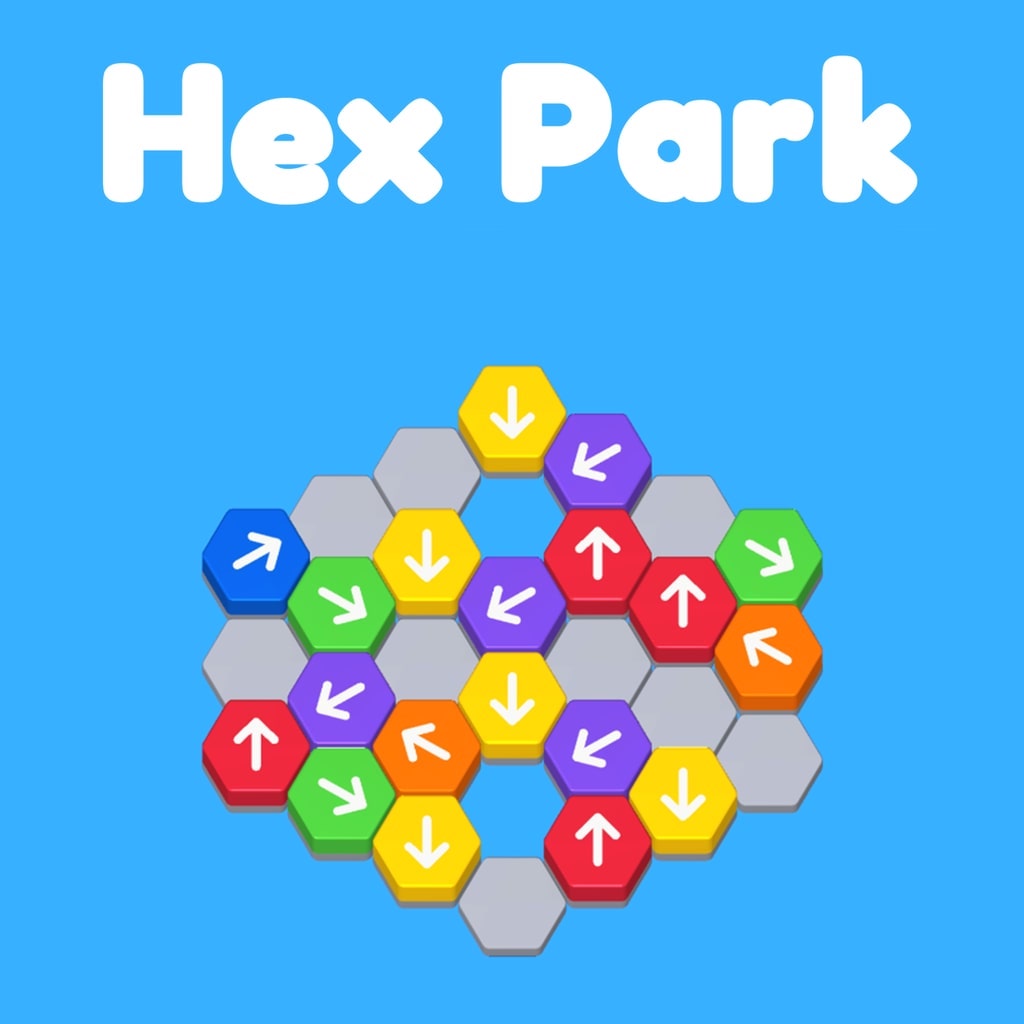
Puzzle games often live or die by the elegance of a single idea. The genre doesn’t necessarily need spectacle, narrative ambition, or high production budgets — it needs clarity, consistency, and that elusive “just one more puzzle” pull. Hex Park, developed and published by Webnetic, understands this philosophy completely. Released on PlayStation platforms in December 2025 before arriving on Xbox Series X|S, Xbox One, and Windows PC on February 18, 2026, the so-called Hex Park Series is a minimalist logic puzzler that strips gameplay down to its intellectual core.
At first glance, Hex Park looks almost deceptively simple. Bright colors, clean UI design, and calming presentation suggest a casual mobile-style experience. Spend more than ten minutes with it, however, and it becomes clear that this is a carefully constructed strategy puzzle built around efficiency, foresight, and satisfying chain reactions. It’s not flashy — but it is quietly addictive.
A Puzzle Built on Direction
The central mechanic of Hex Park revolves around arrow tiles placed across a hexagonal grid. Each tile points in a direction, and your task is to rotate these arrows so that movements flow correctly across the board, triggering interactions that clear obstacles and complete the level.
Conceptually, it’s simple:
- Rotate arrows.
- Guide movement paths.
- Trigger interactions.
- Clear the board using as few moves as possible.
But the hex grid changes everything.
Unlike square-grid puzzlers where movement feels predictable, the six-directional geometry introduces spatial complexity. Angles matter more. Path planning becomes less intuitive, forcing players to mentally simulate outcomes before committing to moves.
Early levels function as tutorials without explicitly saying so. Within minutes, players understand the language of the puzzle — arrows guide motion, objects react to direction, and efficiency matters.
Then the game slowly begins to twist that understanding.
Gradual Complexity Done Right
Hex Park’s strongest design decision is its pacing. Across 150 handcrafted levels, mechanics are layered carefully rather than dumped all at once.
New elements include:
- Keys and Locks requiring sequencing logic
- Mystery Tiles hiding unknown directions
- Bombs that clear multiple spaces
- Ice Counters needing repeated interactions
- Gears that redirect or alter movement patterns
Each addition expands the puzzle vocabulary without overwhelming the player. Importantly, mechanics rarely replace old ideas — they combine with them. Later stages become intricate logic webs where solving one section incorrectly can cascade into failure elsewhere.
The result feels closer to solving a mechanical device than completing a traditional puzzle level.
You’re not reacting; you’re engineering solutions.
The Satisfaction of Efficiency
Hex Park avoids timers entirely. There’s no pressure to think quickly — only to think well.
Instead, the game rewards efficiency. Completing a puzzle is only the first victory; completing it in minimal moves becomes the real challenge.
This design appeals strongly to perfectionist players. After finishing a stage, it’s common to immediately replay it, convinced there must be a smarter solution hiding beneath your first attempt.
That loop becomes dangerously compelling:
Solve → Improve → Optimize → Repeat.
The absence of punishment keeps frustration low, while optimization creates long-term engagement. It’s a delicate balance that Hex Park handles expertly.
Tools Without Compromise
Puzzle games often struggle with hint systems. Too generous, and puzzles lose meaning; too restrictive, and players become stuck.
Hex Park introduces optional helper tools:
- Hammer – removes individual obstacles
- Drill – clears stubborn tiles
- Dynamite – resets problem areas
These tools are cleverly implemented. They don’t automatically solve puzzles; they merely create new possibilities. Using them feels like nudging a system rather than cheating it.
Purists can ignore them entirely, while casual players gain a safety net that prevents progression from stalling. This flexibility makes the game accessible without sacrificing its intellectual integrity.
Minimalism as Strength
Visually, Hex Park embraces clean minimalism.
The presentation features:
- Soft color palettes
- Smooth tile animations
- Clear iconography
- Distraction-free backgrounds
At 120 FPS support on newer hardware, movement and rotations feel incredibly smooth. The responsiveness enhances clarity — every rotation feels deliberate and precise.
There’s a quiet confidence in the presentation. Hex Park doesn’t attempt visual spectacle because it doesn’t need it. The focus remains squarely on problem-solving.
The soundtrack follows a similar philosophy: gentle ambient music that encourages concentration rather than excitement. It’s the kind of audio that fades into the background until you realize you’ve been playing for an hour straight.
Accessibility and Pick-Up Appeal
Hex Park excels as a “daily puzzle” experience. Levels are short enough to complete in minutes, making it ideal for:
- Quick play sessions
- Portable gaming devices
- Mental warm-ups or cooldowns after larger games
Cloud saves and cross-platform availability enhance this flexibility, especially within the Xbox ecosystem where players can continue progress between console and PC.
Controls are intuitive across all platforms, requiring only simple directional inputs and rotation commands. There’s almost zero learning barrier — a rarity for logic-heavy games.
The Achievement Hunter Phenomenon
One unexpected aspect of Hex Park’s popularity comes from achievement communities.
Each platform version offers its own full achievement list:
- Xbox Series X|S: 1000GS
- Xbox One: 1000GS
- Windows PC: 1000GS
That means up to 3000 Gamerscore across versions — a significant incentive for completionists.
Fortunately, achievements align naturally with gameplay progression rather than arbitrary tasks. Players earn them organically while solving puzzles, making the hunt feel rewarding rather than grindy.
Where Hex Park Falls Short
Despite its strengths, Hex Park isn’t flawless.
Limited Visual Variety
While clean design aids clarity, environments rarely evolve visually across 150 levels. Some players may crave stronger thematic progression.
Repetition in Late Game
Advanced puzzles rely heavily on combining familiar mechanics rather than introducing radically new ideas, which can make late stages feel iterative.
Lack of Social Features
Leaderboards or solution-sharing tools could have extended community engagement significantly.
None of these issues break the experience, but they prevent Hex Park from reaching puzzle-game greatness alongside genre-defining classics.
Final Verdict
Hex Park succeeds by understanding exactly what it wants to be — a calm, intelligent puzzle experience built on elegant systems rather than spectacle. Its arrow-based hex logic feels fresh without being complicated, and its carefully structured difficulty curve keeps players engaged from start to finish.
The game respects the player’s intelligence. It never rushes you, never overwhelms you, and never wastes your time. Instead, it invites you into a steady rhythm of thought, experimentation, and quiet triumph.
At its budget price, Hex Park is an easy recommendation for puzzle fans, achievement hunters, and anyone looking for a mentally satisfying game that fits into short sessions yet remains deeply engaging over time.
It may not shout for attention, but once you start rotating those arrows, it becomes very difficult to stop.