City-building games usually have players act as all-powerful planners, laying roads and skyscrapers to achieve economic success or architectural beauty. Technotopia, created by Yustas Game Studio, adopts a more thoughtful approach. Instead of just building structures, players enter the digital mind of an artificial intelligence responsible for balancing the diverse needs of a fractured society.
Originally launched on PC and Mac in 2024, the game has now been extended to consoles through publishers ESDigital Games and ChiliDog Interactive. It offers a unique mix of city-building, card-based strategy, and political simulation, challenging players to develop a functioning city while managing ongoing social and economic tensions.
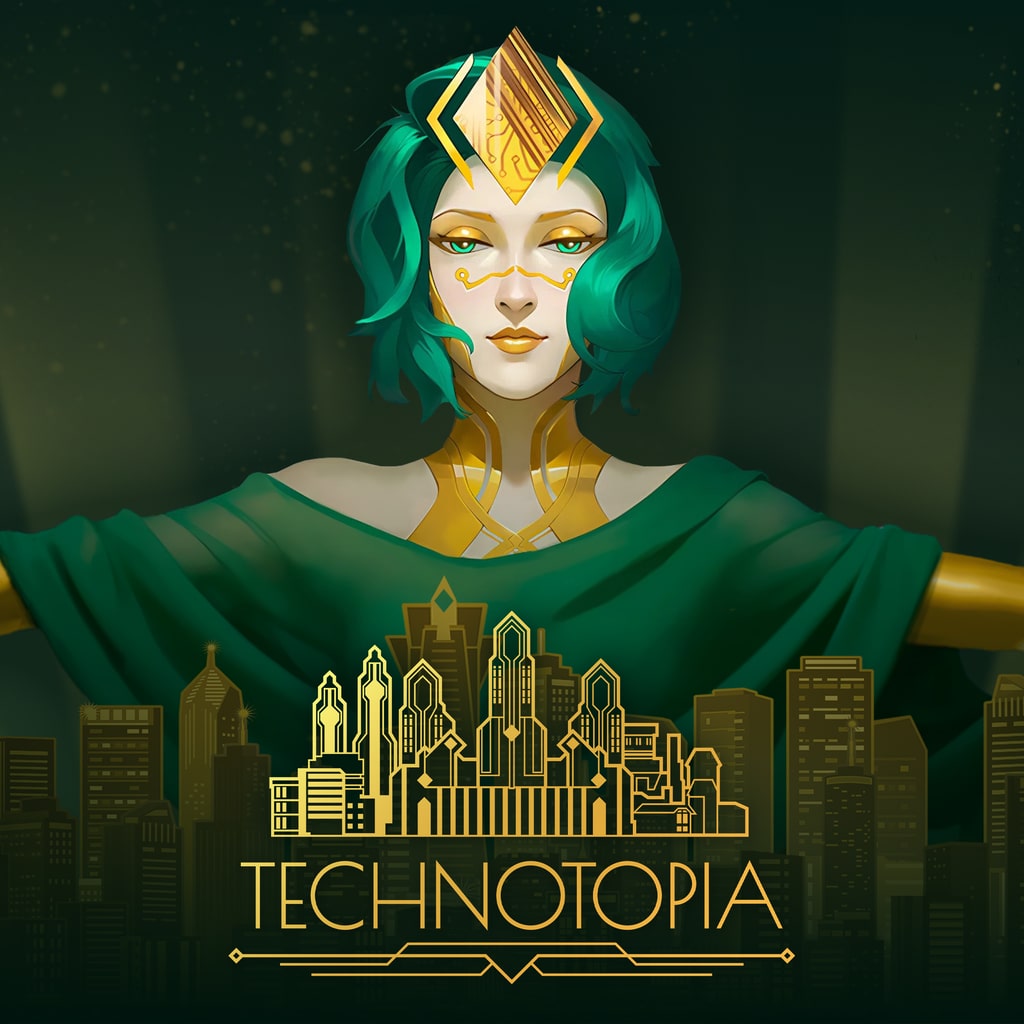
Technotopia’s concept is immediately captivating. In a world marked by upheaval, only one city remains standing—but just barely. To uphold peace, authorities create an algorithm designed to craft the ideal society. This algorithm is Iris, the artificial intelligence that guides players in shaping the city’s future.
The challenge? Everyone desires something different from your utopia.
Building a City with Cards
The most immediately noticeable difference between Technotopia and traditional city builders is its card-based construction system.
Instead of selecting buildings from menus or placing infrastructure directly through standard simulation tools, players draw from a deck of cards representing various city developments. Each card corresponds to a specific structure or upgrade: residential districts, transport routes, parks, corporate buildings, or towering skyscrapers.
When a card is played, the chosen building appears within the city grid, affecting nearby districts and altering the balance of resources, population happiness, and faction influence.
At first, the system feels surprisingly simple. Draw cards, place them carefully, and watch the city evolve. But beneath this accessible structure lies a surprisingly strategic puzzle.
Because cards are drawn randomly, players must constantly adapt to the options available. Planning a city becomes less about perfect long-term layouts and more about creative problem-solving with limited resources.
This design introduces a light element of unpredictability that keeps the gameplay engaging throughout longer sessions.
A Delicate Political Balance
While constructing buildings is important, Technotopia’s true challenge lies in managing the city’s four competing factions.
Each group represents a powerful social force within the metropolis:
- Capitalists seeking economic expansion
- Aristocrats defending traditional privilege
- Politicians pursuing authority and influence
- The common people demanding stability and fair living conditions
Every decision you make impacts these groups differently.
Building corporate districts may please the capitalists while angering the working class. Expanding social housing might support ordinary citizens but frustrate wealthy elites.
The ongoing push and pull between these factions creates a constant balancing act.
Ignore one group for too long, and their dissatisfaction begins to destabilise the city. Keep everyone moderately satisfied, however, and your utopian experiment can continue to grow.
This system transforms city-building into a subtle form of political diplomacy, where each new development risks upsetting the fragile equilibrium.
Events That Shape the City
Technotopia avoids feeling static by regularly presenting players with dynamic events that require immediate decisions.
A fire might destroy a residential block, forcing you to decide where displaced citizens should live. Criminal gangs could start influencing certain districts, threatening the safety of nearby areas. Political factions might propose new policies that could shift the balance of power across the city.
These scenarios often have multiple solutions, each supported by different factions.
Do you accept the politicians’ suggestions, reinforcing governmental authority? Or do you side with the people, even if it risks economic decline?
These narrative moments give the city a sense of life and unpredictability. Instead of merely expanding infrastructure, players are constantly responding to the ever-changing social landscape.
Characters in a Digital Society
Beyond the major factions, Technotopia features a variety of individual characters who populate the metropolis.
Hackers, oligarchs, inventors, and criminals all influence the city’s development. Engaging with these figures can unlock additional benefits, from new cards to unique abilities that shape the urban environment.
Some characters offer assistance in exchange for political favour or resources. Others may present risky opportunities that could either benefit the city or further destabilise it.
These interactions bring personality to the world, making the city feel like a living ecosystem rather than just a mechanical simulation.
A Futuristic Visual Identity
Technotopia’s presentation captures its futuristic theme with a distinctive visual style.
The city itself is depicted through stylised isometric environments filled with neon-lit architecture, modern infrastructure, and extensive districts. Buildings gradually occupy the landscape as cards are played, transforming vacant spaces into vibrant urban zones.
The interface is tidy and practical, making it relatively straightforward to navigate the various systems even on consoles.
The soundtrack leans towards ambient electronic tones, emphasising the feeling that players are controlling a sophisticated artificial intelligence overseeing a living city.
While the visuals are not hyper-realistic, they effectively convey the sleek technological atmosphere of a society governed by algorithms.
Where Technotopia Stumbles
Despite its creative design, Technotopia faces a few challenges.
The card-based system, while engaging, can sometimes feel limiting. Random draws may leave players without the tools needed to solve urgent problems, forcing them to wait for better options.
The learning curve can also seem steep for players expecting a traditional city-building experience. Balancing factions, responding to events, and managing card mechanics all at once can become overwhelming early on.
Finally, the pace occasionally slows once players grasp the core systems. While the city continues to evolve, the gameplay loop can start to feel somewhat repetitive over longer play sessions.
These issues never fully ruin the experience, but they highlight how tricky it is to blend multiple strategy genres into one design.
Pros
- Creative blend of city-building and card strategy
- Fascinating political balancing system
- Dynamic events keep the city feeling alive
- Distinctive futuristic art direction
Cons
- Random card draws can feel limiting
- Steeper learning curve than typical city builders
- Gameplay loop may become repetitive over time
Final Verdict
Technotopia stands out as a distinctive and thoughtful take on the city-building genre. Developed by Yustas Game Studio, the game combines card-based mechanics with political simulation to create a city management experience that feels both strategic and narrative-driven.
By placing players in the role of the AI Iris, the game transforms urban planning into a constant balancing act between competing social forces. Every decision has consequences, forcing players to consider not only how their city develops but also how its citizens respond.
While the randomised card system and steep learning curve may not appeal to everyone, the game’s unique approach to city-building offers a refreshing alternative to more traditional simulations.
For players who enjoy strategy games with a strong conceptual twist, Technotopia provides an engaging and thought-provoking urban experiment.