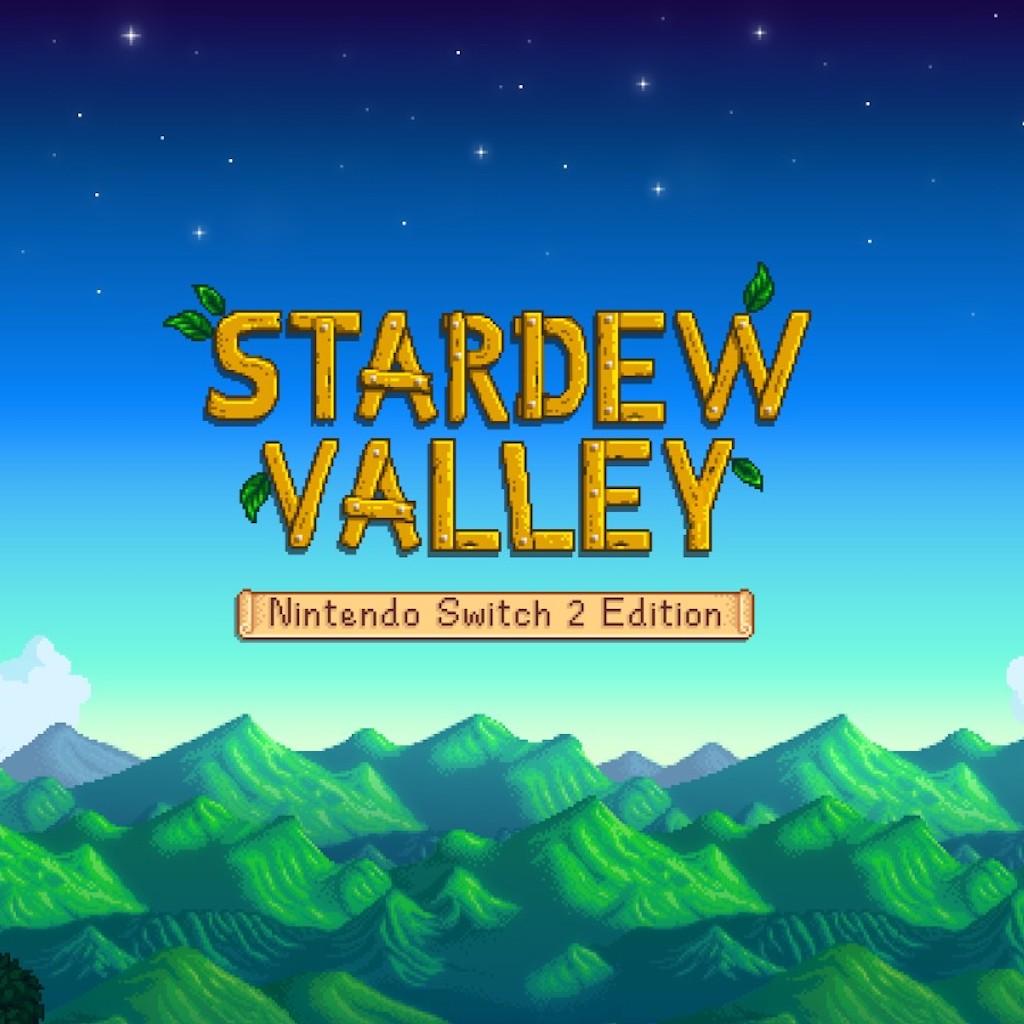
Few indie games have left as lasting an impact on modern gaming as Stardew Valley. When developer Eric “ConcernedApe” Barone released the game in 2016, it was widely regarded as a heartfelt homage to classic farming simulations like Harvest Moon. Over time, however, Stardew Valley developed into something much larger: a genre-defining life simulator that continues to attract millions of players years after its debut.
Nearly a decade later, Stardew Valley: Nintendo Switch 2 Edition, released on 25 December 2025, offers the latest way to experience the beloved farming RPG. While the core game remains unchanged, this version introduces technical improvements, full integration of the massive 1.6 update, expanded multiplayer features, and new control options designed specifically for Nintendo’s latest hardware.
The result is not a reinvention of Stardew Valley but rather the most refined and adaptable version of one of the most influential indie games ever created.
A Familiar Beginning
Stardew Valley starts with a seemingly simple idea.
The player inherits an old, neglected farm in the rural town of Pelican Town after growing tired of their corporate office job. Equipped with a few basic tools and plenty of empty land, players begin the gradual process of restoring the farm and becoming part of the local community.
From that point, the game develops at the player’s own speed. There is no strict structure controlling progress, nor a fixed deadline for success.
Instead, Stardew Valley celebrates player freedom. One person might concentrate on growing crops and expanding their farm, while another may spend their time fishing, mining, socialising with villagers, or exploring the mysterious caves beneath the valley.
This open-ended style remains one of the game’s greatest strengths.
Farming at Your Own Pace
At its core, Stardew Valley is a farming simulation, but the term hardly encompasses the full breadth of its gameplay.
Growing crops is certainly key. Players plant seasonal vegetables, water them daily, harvest produce, and gradually expand their farmland.
Yet, farming quickly becomes just one part of a much broader ecosystem.
Players can also raise animals, produce artisan goods like cheese and wine, decorate their farm, and upgrade buildings to boost efficiency. Managing crops requires careful attention to seasonal cycles, encouraging strategic planning for each in-game year.
The gameplay loop is simple but deeply satisfying. Each day starts with a few small tasks—watering plants, collecting eggs, selling produce—but these routines gradually develop into a larger, self-sustaining operation.
Watching a modest patch of soil turn into a thriving farm remains one of the most fulfilling experiences in gaming.
Life Beyond the Farm
While farming provides the foundation, Stardew Valley’s world offers much more than just agriculture.
The town of Pelican Town is full of memorable characters, each with their own routines, personalities, and stories.
Players can build friendships by talking to villagers, giving gifts, and taking part in seasonal festivals. Some relationships even grow into romance, allowing players to eventually marry and start a family.
These social elements add emotional depth to the experience. Over time, Pelican Town begins to feel like a real community rather than just a game hub.
Beyond the town, players can explore mines filled with monsters and rare minerals, fish in rivers and oceans, gather resources in forests, or uncover hidden secrets scattered throughout the valley.
This variety ensures that Stardew Valley rarely feels repetitive, even after dozens of hours of play.
The Massive 1.6 Update
The Nintendo Switch 2 Edition includes the full 1.6 update, one of the most significant content expansions in the game’s history.
While many of the additions improve existing systems, the update also introduces new items, events, dialogue, and gameplay adjustments that enrich the overall experience.
The update enhances certain mechanics while maintaining the balance long-time players expect. It also introduces small surprises that encourage exploration and experimentation.
For returning players, the 1.6 update ensures that Stardew Valley remains full of new discoveries.
Multiplayer and Community
One of the most exciting aspects of the Switch 2 edition is its expanded multiplayer support.
Players can now enjoy local split-screen co-op for up to four players, allowing friends or family members to build a shared farm together on a single system.
Online multiplayer has also been expanded to support up to eight players, creating lively cooperative farms where tasks can be divided among multiple players.
Perhaps the most intriguing feature is GameShare, which allows players to invite up to three friends to join their farm even if those players do not own the game themselves.
This feature significantly lowers the barrier for cooperative play, making Stardew Valley an even stronger social experience.
Working together to manage crops, care for animals, and explore the valley creates a sense of collaboration rarely seen in farming simulators.
Switch 2 Improvements
While the core gameplay remains the same, the Nintendo Switch 2 Edition introduces several technical improvements.
The most notable upgrade is smoother performance, with faster loading times and more stable frame rates compared to the original Switch version.
Adding mouse-style controls for inventory management and furniture placement also enhances usability. Organising items and decorating the farm now feels quicker and more intuitive.
Although Stardew Valley’s pixel art visuals were already charming, the improved hardware ensures that the game runs more smoothly during larger multiplayer sessions.
These enhancements might not drastically change the experience, but they make the game more comfortable to play.
Visual Style and Atmosphere
Stardew Valley’s pixel art remains timeless.
The colourful landscapes, charming character sprites, and seasonal visual changes create a warm and inviting atmosphere that perfectly matches the game’s relaxed pace.
Spring flowers bloom across the valley, summer crops thrive under bright sunshine, autumn brings golden leaves and harvest festivals, and winter covers the land in snow.
Paired with a soothing soundtrack composed by Eric Barone himself, the game offers one of the most comforting atmospheres in modern gaming.
Longevity and Replay Value
Few games offer the longevity of Stardew Valley.
A single playthrough can easily last dozens—or even hundreds—of hours depending on how deeply players engage with its systems.
The open-ended design encourages experimentation with different farming strategies, relationships, and playstyles.
Multiplayer further extends the game’s lifespan, as cooperative farms often develop into long-term projects shared among friends.
Even years after release, Stardew Valley continues to feel like a game players can return to whenever they seek a relaxing escape.
Pros & Cons
Pros
- One of the most rewarding farming simulators ever made
- Enormous amount of content and replay value
- Expanded multiplayer with up to eight players online
- GameShare makes cooperative play more accessible
- Smooth performance improvements on Switch 2
Cons
- Core experience remains largely unchanged for returning players
- Early-game progression can feel slow
- Limited tutorial guidance for new players
Final Verdict
Stardew Valley: Nintendo Switch 2 Edition might not bring drastic new features, but it remains the best way to enjoy an already excellent game.
With improved performance, expanded multiplayer options, and the full 1.6 update included, this version ensures that Stardew Valley stays as engaging and inviting as ever.
Nearly a decade after its original release, Eric Barone’s farming RPG continues to be one of the greatest indie success stories in gaming history.
Whether you are exploring Pelican Town for the first time or returning to cultivate another farm, Stardew Valley still offers one of the most relaxing and rewarding adventures you can find.