Looking back on the early days of 3D gaming can be a difficult exercise. Many titles that once seemed revolutionary now struggle under the weight of technological progress. Blocky models, unstable frame rates, and limited draw distances often make revisiting gaming history feel more like an academic exercise than genuine entertainment. Yet every so often, a classic emerges that reminds us why it became legendary. Star Fox is one of those games.
Originally released on the Super Nintendo Entertainment System, Star Fox marked a leap into the unknown. Nintendo and Argonaut Software took a considerable gamble by introducing the Super FX chip, enabling players to experience polygonal 3D graphics on hardware never designed for such ambitions. The result was unlike anything many players had seen before. While modern audiences may focus on the technical limitations, the real achievement lies in how effectively Nintendo built an exciting and memorable adventure around them. Even today, Star Fox remains a fascinating example of innovation triumphing over hardware constraints.
Defending the Lylat System
The story is simple, but simplicity works in its favour. The Lylat System is under threat from the brilliant yet dangerous scientist Andross, whose ambitions threaten every planet in the region. With Corneria’s military forces struggling to contain the crisis, General Pepper turns to an independent team of mercenary pilots known as Star Fox.
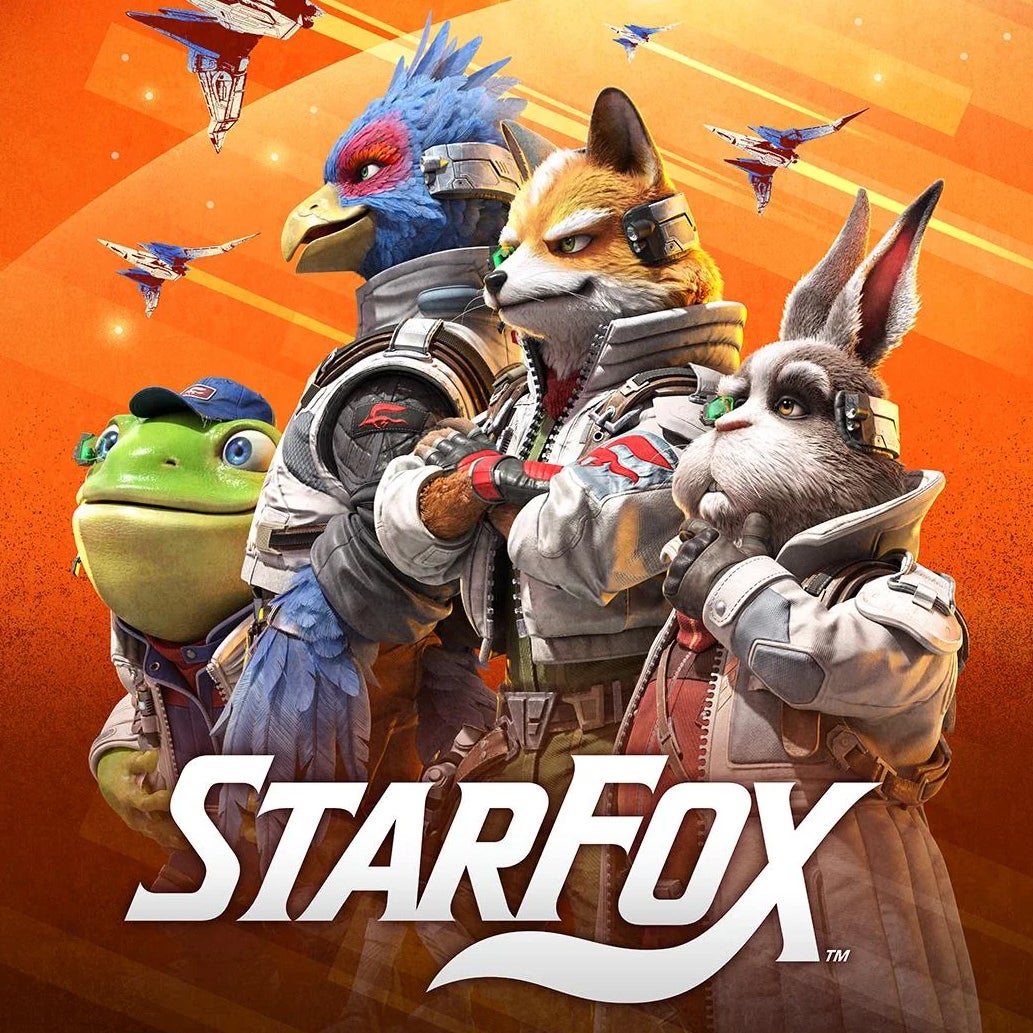
Leading the charge is Fox McCloud, a young pilot carrying his missing father’s legacy. Alongside him are the sharp-tongued Falco Lombardi, the dependable Peppy Hare, and the often-panicked but lovable Slippy Toad. While the narrative remains relatively straightforward, the strength of Star Fox lies in its cast’s personalities.
Radio chatter constantly fills missions with character. Falco’s confidence, Peppy’s advice, and Slippy’s cries for help bring the squadron to life. What could have been a simple arcade shooter instead feels like a genuine team effort. The dialogue may be limited by modern standards, but it succeeds in making players care about their wingmen and the mission they share.
Arcade Action at Its Finest
At its heart, Star Fox is an arcade shooter built around speed, precision, and constant motion. Players pilot the Arwing through forward-scrolling stages packed with enemy fighters, environmental hazards, and enormous bosses. The controls are remarkably intuitive, letting players focus on dodging incoming fire and lining up laser shots rather than wrestling with complex systems.
The Arwing feels responsive despite the hardware’s limitations. Barrel rolls provide both defence and visual flair, while Smart Bombs offer a satisfying way to clear crowded battlefields. Every stage introduces new obstacles and enemy formations, ensuring the action rarely becomes repetitive.
What remains impressive is the game’s pacing. Star Fox knows exactly when to ramp up the pressure and when to give players a brief moment to breathe. One minute you are weaving through narrow canyons under heavy fire, and the next you are confronting a giant mechanical monstrosity that dominates the screen. The constant escalation keeps each mission engaging from start to finish.
Even after all these years, there is something undeniably satisfying about blasting through enemy squadrons while your team calls out targets over the radio.
Multiple Routes, Endless Replays
One of Star Fox’s most enduring strengths is its branching campaign structure. Rather than forcing players down a single path, the game offers multiple routes through the Lylat System. These routes serve as varying difficulty levels, with each path presenting unique challenges, enemies, and environments.
This design dramatically increases replay value. A second playthrough is not simply a repeat of familiar content. Different routes introduce entirely new planets, alternate bosses, and tougher encounters. Players are encouraged to experiment, hone their skills, and discover everything the game has to offer.
The branching structure also contributes to the sense that the Lylat System is a living place rather than a collection of disconnected levels. Each route tells a slightly different version of the same conflict, giving players greater agency in how they approach the campaign. It is a surprisingly sophisticated design choice for a game released in 1993, and it remains one of Star Fox’s defining features.
Your Team Matters
Many shooters feature supporting characters who exist purely for decoration. Star Fox takes a different approach, making squadron management an important part of the experience. Fox’s wingmen actively participate in combat, engaging enemies and providing assistance throughout missions.
Protecting them becomes an important secondary objective. If a wingman takes too much damage and is forced to retreat, their absence is felt immediately. Losing support makes future encounters more challenging and can significantly alter the flow of later missions.
This mechanic instils a strong sense of responsibility. Players are not simply fighting for their own survival. They are fighting alongside a team that relies on their support. The emotional investment generated by these relationships helps elevate Star Fox beyond a straightforward arcade shooter. Saving Slippy from danger may become a running joke among fans, but there is a reason those moments remain memorable decades later.
A Technical Marvel with Visible Scars
There is no avoiding the fact that Star Fox looks primitive today. Its flat-shaded polygons, sparse environments, and simple models are products of an era when developers were still learning the language of 3D game design. Yet its visual presentation has an undeniable charm.
The clean geometric designs make enemy ships and bosses instantly recognisable. Massive war machines loom over battlefields with surprising presence, while each planet has a distinct visual identity. The game relies heavily on imagination, allowing players to fill in the gaps left by technological limitations.
The soundtrack deserves equal praise. Composer Hajime Hirasawa crafted a score that feels grand, heroic, and adventurous. The music injects excitement into every mission and helps sell the fantasy of participating in a galaxy-spanning conflict. Combined with the iconic radio chatter, the audio design remains one of the strongest aspects of the experience.
Unfortunately, the frame rate is where age becomes impossible to ignore. The Super FX chip pushed the SNES beyond its intended limits, and performance suffers as a result. Busy combat encounters often cause noticeable slowdowns, making precise aiming feel less responsive than modern players may expect. These issues are understandable given the hardware, but they remain difficult to overlook during particularly intense moments.
A Foundation for a Franchise
Modern players may know Star Fox through later entries such as Star Fox 64, but revisiting the original reveals how much of the series was established from the outset. The core characters, the blend of arcade action and cinematic storytelling, and the sense of camaraderie among the team all originated here.
More importantly, Star Fox demonstrated that 3D gaming had a future on home consoles. It was not merely a technical showcase. It was a genuinely entertaining game built on strong design principles that remain effective today.
The influence of Star Fox extends beyond its own franchise. It helped prove that players were ready to embrace new perspectives, technologies, and ways of experiencing action games.
Final Verdict
Star Fox is not perfect. Its frame rate struggles, simplistic visuals, and lack of modern conveniences are impossible to ignore. Yet focusing solely on those shortcomings misses the bigger picture. This is a game that dared to push beyond the boundaries of what was considered possible on the Super Nintendo, and in doing so helped shape the future of gaming.
What remains remarkable is how much fun it still delivers. The branching routes encourage repeat playthroughs, the combat remains engaging, and the cast continues to charm. Most importantly, the game never loses its sense of adventure. Every mission feels part of a larger journey through a dangerous and fascinating universe.
For retro enthusiasts, Nintendo historians, and anyone interested in witnessing one of gaming’s most important technological milestones, Star Fox remains essential. It may no longer be the future of gaming, but it is a powerful reminder of how exciting that future once looked.