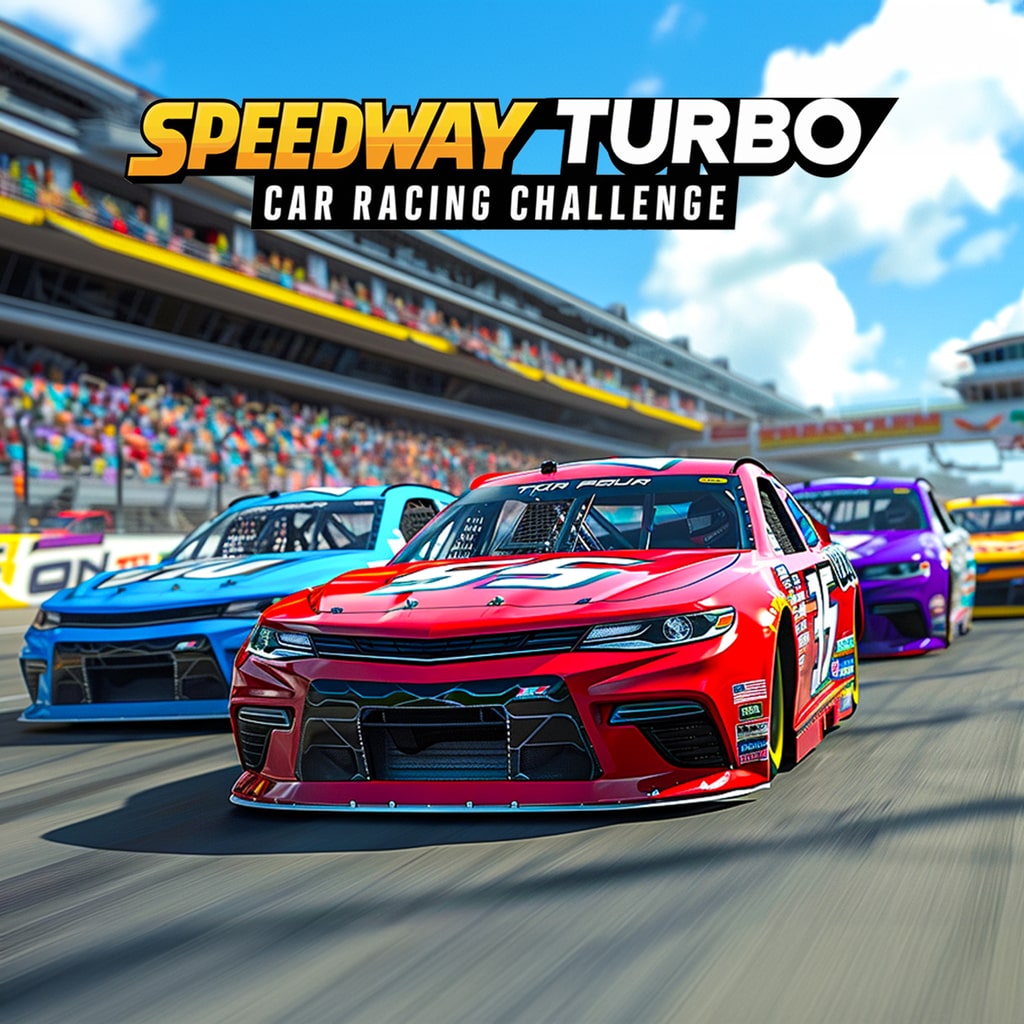
Racing games span a wide spectrum — from hyper-realistic simulators to arcade thrill-rides that prioritise pure, unadulterated speed. Speedway Turbo: Car Racing Challenge positions itself squarely in the latter category: an accessible, colourful racer designed to deliver quick bursts of adrenaline, tight races, and an emphasis on fun over technical precision. While the result isn’t flawless, it’s often engaging and offers enough momentum to make it a worthy diversion for fans of arcade racing.
If you want deep vehicle simulation, complex tuning, and lifelike physics — this isn’t that game. But if you enjoy pick-up-and-play races, convincing velocity, and a sense of unrelenting motion, Speedway Turbo often gets the job done with style.
First Lap: First Impressions
From its main menu to its opening race, Speedway Turbo immediately telegraphs its intentions: fast gameplay, bright visuals, and an emphasis on entertainment over simulation. Loading times are brief, the UI is uncluttered, and the options menu lets you jump into a race quickly.
The game strikes a confident first impression. It feels responsive, controls are intuitive, and the sense of speed is present even in the earliest stages. Whether you’re using a controller or a keyboard, accelerating onto a track and feeling your car rocket toward the first bend is instantly satisfying.
The presentation sets the tone well for what follows: this is a racing game that’s not afraid to be bold, loud, and a little bit showy.
Gameplay: Speed Over Simulation
At its core, Speedway Turbo: Car Racing Challenge is an arcade racer without complicating factors. There’s no need to manage fuel, tyre wear, or realistic suspension dynamics. There are no clutch pedals, engine remaps or gearbox strategies — just pure throttle, braking and tactical racing.
This simplicity is both a strength and a limitation.
On the positive side, the game’s accessibility is undeniable. Almost anyone can pick up the controller and start driving within minutes. Steering feels smooth, acceleration is satisfying, and braking — while simplistic — reacts consistently. The game avoids punishing players for minor mistakes, instead encouraging experimentation and rapid learning.
But that same simplicity occasionally reduces long-term engagement. Because vehicle performance across the board feels uniform, races can begin to blend together. Opponent behaviour is competent but rarely surprising: competitors are quick, but predictable, and react in ways that feel “designed” rather than emergent. Races often come down to hitting the same racing line perfectly rather than outpacing AI with clever strategy.
That said, the lack of technical depth doesn’t mean the races are dull. Far from it — Speedway Turbo excels when it leans into its strength: pure, arcade-style competition.
Tracks and Environments: Colourful and Varied
One area where Speedway Turbo consistently impresses is track variety. Each circuit feels distinct in theme and layout, from sun-baked coastal stages to neon-lit urban twists and rural sweeps with rolling hills. The environments are vivid, well-designed and visually coherent — even if they don’t break new ground technically.
Track layouts are often well paced, with a mix of long straights for high-speed thrills and tighter corners that reward precision and timing. While some tracks feel slightly more memorable than others, there’s enough visual and mechanical variety to keep races feeling fresh.
The game’s sense of speed is enhanced by clever environmental details: motion blur effects during high-velocity stretches, roadside objects that whizz past with convincing momentum, and subtle camera shakes that convey impact without discomfort.
While the environments are appealing, they aren’t as layered or dynamic as those in top-tier titles. Weather effects, dynamic lighting, or evolving track conditions are either minimal or absent — a design choice that keeps the experience consistent, but less immersive.
Modes and Progression: Enough to Keep You Racing
Most racing games live and die by their progression systems, and Speedway Turbo does a respectable job here. The core offerings include:
- Career Mode: A structured series of events where players compete to unlock higher tiers.
- Quick Race: Jump straight into any unlocked track for casual play.
- Time Trial: Race against the clock to set your best lap times.
- Multiplayer (Local/Online): Compete against friends or other players in real time.
Career mode offers the most incentive to keep playing. Races are organised into tiers, and success earns currency that can be spent on new cars or incremental upgrades. While these upgrades don’t transform vehicles in dramatic ways, they add a sense of forward momentum that keeps players invested beyond a single race.
Multiplayer, when populated, is fun — especially in split-screen local play. There’s something timeless about two players drifting into a corner shoulder-to-shoulder or slingshotting past each other down a straight. That said, online lobbies can feel unpredictable in terms of matchmaking and population, depending on time of day and region.
Vehicle Variety and Customisation: A Mixed Bag
Speedway Turbo includes a respectable selection of cars — from compact speedsters to muscle cars and sleek racers. Each model handles slightly differently, with minor tweaks to acceleration, top speed and responsiveness. However, these differences are subtle rather than striking.
Customisation exists primarily as a visual and progression element: unlockable paint jobs, decals, wheel styles and the like. While pleasing to collect, these customisation options have limited impact on gameplay. For players who enjoy deep tuning and build-crafting, the lack of substantial performance tweaking may feel like a missed opportunity.
That said, the balance leans into the game’s overall design philosophy — picking up and playing without requiring hours of optimisation or min-maxing.
Sound and Music: Complementary but Forgettable
Audio in Speedway Turbo supports the experience without stealing the show. Engine roars, skidding tyres, and impact sounds are all present and satisfyingly engineered — they provide appropriate feedback without becoming grating.
The soundtrack aims for energetic racing vibes, with upbeat tracks that suit high-tempo action. However, it’s never as memorable as the soundtracks in the genre’s heavyweights. Music loops can feel repetitive over extended play sessions, and audio cues for hazards or opponent behaviour are serviceable but not distinctive.
In short: the audio does its job well, but doesn’t elevate the experience into something truly iconic.
Challenge and Replay Value: Satisfying but Not Relentless
Where Speedway Turbo shines is in short bursts of competition. Races are swift, dramatic, and satisfying when you thread a perfect corner, take a daring overtake, or clutch a win by fractions of a second. For players who enjoy refining their runs and shaving milliseconds from lap times, time trial mode adds worthwhile longevity.
That said, the game’s challenge ceiling isn’t especially steep. AI difficulty scales with progression, but because opponent patterns are predictable, mastery depends more on memorisation than strategic adaptation. Competitive players seeking depth — think Forza Horizon’s dynamic rivalry systems or Gran Turismo’s tuning complexities — may find the challenge limited in the long term.
Final Verdict
Speedway Turbo: Car Racing Challenge is a solid arcade racer that excels in accessibility, pacing, and pure racing fun. Its clean mechanics, vivid tracks, and tight controls make it an excellent choice for casual players and those who enjoy uncomplicated thrill-rides. While its mechanical depth, customisation options, and narrative sense of progression fall short of genre leaders, its strengths lie in delivering immediate, joyful racing.
This is a game best enjoyed in short bursts or with friends in local play, rather than as a deeply competitive simulator. If your idea of fun is hopping into a fast car, roaring around colourful tracks, and chasing that perfect lap, Speedway Turbo delivers reliably.