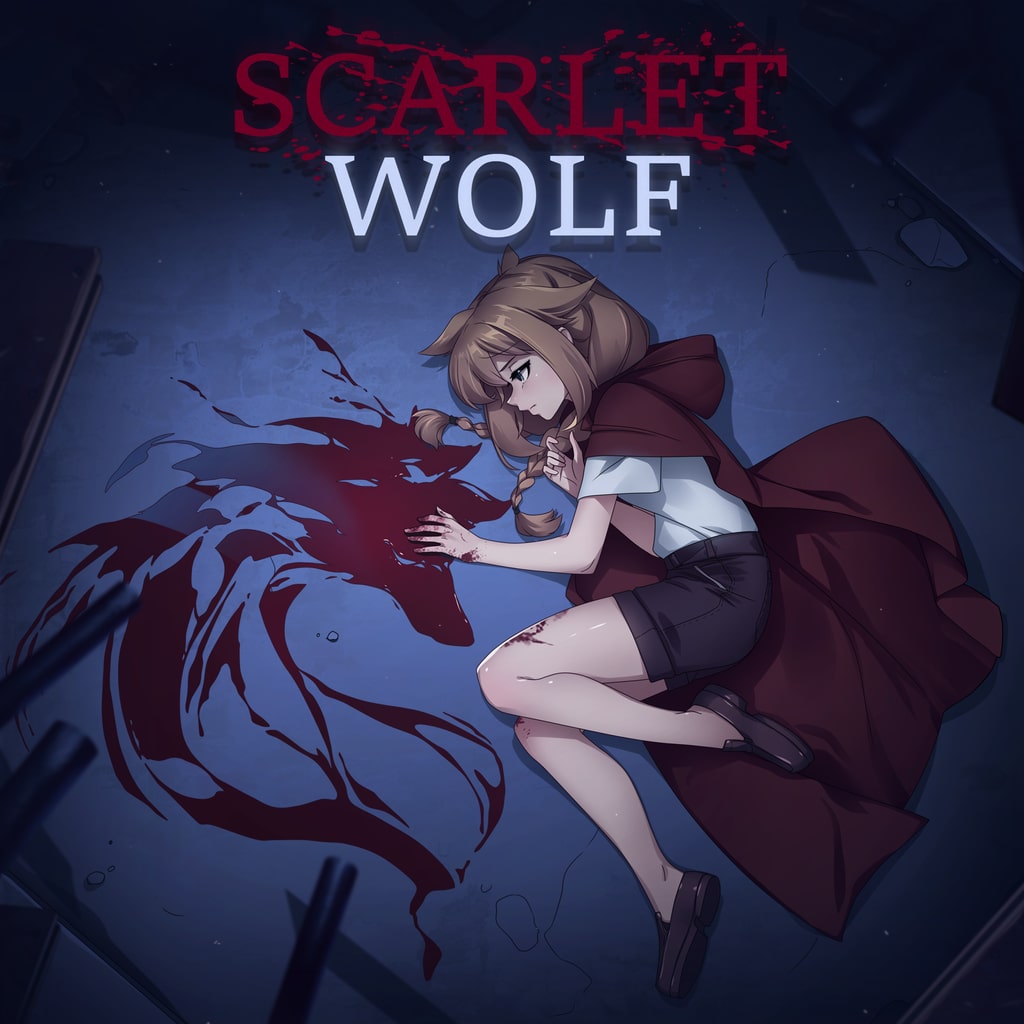
Psychological horror often succeeds or fails based on one simple question: is it frightening because of what lurks in the darkness, or because of what hides inside the protagonist? Scarlet Wolf firmly plants itself in the latter category. Rather than relying on cheap shocks or endless streams of grotesque creatures, developer Graven Visual Novels builds its horror around personal trauma, fractured memories, and the scars that refuse to heal.
The result is an experience that feels less like a traditional horror game and more like a descent into a wounded mind. It is not always subtle, and it occasionally leans heavily into familiar genre conventions, but there is genuine emotional weight beneath its nightmare imagery. Scarlet Wolf wants players to understand why its monsters exist, not simply fear them. That approach gives the game a sense of purpose that many independent horror titles struggle to achieve.
Entering the Nightmare
The story follows Alex, a young man plagued by recurring nightmares that have haunted him for months. Unable to find answers on his own, he seeks help from psychologist Dr Amanda Silk. What follows is a journey deep into Alex’s subconscious, where forgotten memories, buried emotions, and long-hidden truths manifest as physical spaces and terrifying creatures.
The setup may sound familiar on paper, but Scarlet Wolf finds strength in its presentation. Rather than throwing players into a haunted mansion or abandoned asylum, the game transforms Alex’s inner world into a labyrinth of decaying corridors, locked doors, and impossible spaces. Every location feels like a distorted memory struggling to remain hidden.
The relationship between Alex, Dr Silk, and an old friend who joins the journey provides the emotional backbone of the narrative. While some dialogue occasionally feels a little direct, the characters remain believable enough to keep the story grounded amid the surreal horror unfolding around them.
Most importantly, Scarlet Wolf never loses sight of its central themes. The monsters are frightening, but they are also symbolic. Every chase, every disturbing encounter, and every unsettling revelation ties back to Alex’s personal struggles. That connection gives the horror far more impact than a simple collection of jump scares ever could.
Lost in the Mind’s Maze
Gameplay combines exploration, puzzle solving, and survival horror elements. Much of your time is spent navigating twisting corridors, searching for keys, uncovering clues, and piecing together fragments of Alex’s past.
The environments are intentionally oppressive. Hallways seem endless, rooms shift unexpectedly, and familiar spaces become distorted beyond recognition. There is a constant feeling that the world itself is working against you. That uncertainty keeps tension high even during quieter moments when no immediate threat is present.
Puzzle design remains fairly straightforward throughout most of the adventure. Players will collect items, unlock new areas, and solve environmental challenges that gradually reveal more of the story. While none of the puzzles are particularly complex, they serve their purpose well enough and rarely interrupt the game’s pacing.
What keeps exploration engaging is the sense of discovery. Every new area feels like uncovering another hidden layer of Alex’s psyche. The game excels at making seemingly ordinary objects feel significant, turning environmental details into pieces of a larger emotional puzzle.
Run, Hide, Survive
When Scarlet Wolf shifts into survival horror territory, it becomes considerably more intense. Alex is not a fighter. There are no weapons, no heroic last stands, and no opportunities to fight back against the horrors pursuing him.
Instead, survival depends on observation, quick thinking, and maintaining composure under pressure. When one of the game’s twisted creatures appears, panic often sets in immediately. Players must navigate confusing corridors, break line of sight, and locate safe hiding spots before the monster catches up.
These sequences are genuinely effective because they create vulnerability. You never feel powerful. Every encounter carries real tension because failure is always a possibility.
That said, the controls occasionally undermine these moments. Movement can feel somewhat stiff during high-pressure chases, particularly when attempting sharp turns through narrow hallways. There were several moments where frustration briefly replaced fear as collision issues or awkward navigation led to avoidable deaths.
Fortunately, these issues are relatively minor and do not derail the overall experience, though they do prevent some chase sequences from reaching their full potential.
Atmosphere Above All Else
If there is one area where Scarlet Wolf consistently excels, it is atmosphere. From the moment the game begins, an overwhelming sense of dread hangs over every scene. The visual design is filled with unsettling details that make even simple environments feel threatening. Rotting walls, dim lighting, and impossible architectural layouts combine to create locations that feel deeply uncomfortable to inhabit.
The creature designs deserve particular praise. Many independent horror games rely on familiar monsters or generic ghosts. Scarlet Wolf takes a more imaginative route. Its enemies feel unique, disturbing, and often difficult to forget. They look less like traditional monsters and more like manifestations of emotional wounds given physical form.
Sound design elevates the experience even further. This is absolutely a game best experienced with headphones. Distant footsteps, muffled whispers, metallic groans, and sudden shrieks constantly play tricks on your senses. The audio creates an almost physical sense of unease, making players question whether a threat is nearby or simply imagined.
The soundtrack complements this perfectly. Rather than overwhelming scenes with dramatic music, it often relies on subtle, melancholic compositions that quietly reinforce the game’s emotional themes. When the score does rise during moments of danger, the effect is powerful.
A Story That Wants to Say Something
What ultimately separates Scarlet Wolf from many indie horror releases is its willingness to engage with meaningful themes. Beneath the monsters and nightmares lies a story about trauma, healing, and confronting painful truths.
The game approaches these topics with more maturity than expected. It avoids sensationalising mental health struggles and instead treats them as genuine challenges that shape Alex’s reality. Not every narrative beat lands perfectly, but the sincerity behind the storytelling is evident throughout.
There are moments when the symbolism becomes somewhat heavy-handed. Players who prefer ambiguity may find certain revelations overly explicit. Even so, the emotional core remains effective because it feels honest.
By the time the credits roll, Scarlet Wolf leaves players with more than memories of frightening encounters. It leaves them reflecting on the emotional journey that brought those horrors into existence.
Final Verdict
Scarlet Wolf is not the most polished psychological horror game released this year, nor is it the most mechanically ambitious. Its movement can occasionally feel awkward, and some of its gameplay systems remain fairly traditional. Yet those shortcomings become easier to overlook once the game’s strengths reveal themselves.
This is a horror experience built on atmosphere, emotional storytelling, and genuine thematic purpose. The monsters may be terrifying, but it is the human pain behind them that ultimately leaves the strongest impression. Graven Visual Novels has crafted a journey that feels deeply personal while still delivering plenty of tension and fear.
Players seeking fast-paced action horror may find Scarlet Wolf too methodical. Those willing to immerse themselves in its unsettling world, however, will discover a thoughtful and emotionally resonant descent into the darker corners of the human mind. It may not reinvent psychological horror, but it understands exactly why the genre works and uses those strengths to tell a story worth experiencing.