
Puzzle games centred on observation and quick thinking have always thrived on simple ideas. The concept is usually easy to explain but surprisingly difficult to master: spot the difference, recognise a pattern, or find a hidden object before time runs out. These types of games don’t rely on complex mechanics or expansive worlds—they depend on the brain’s ability to process visual information rapidly.
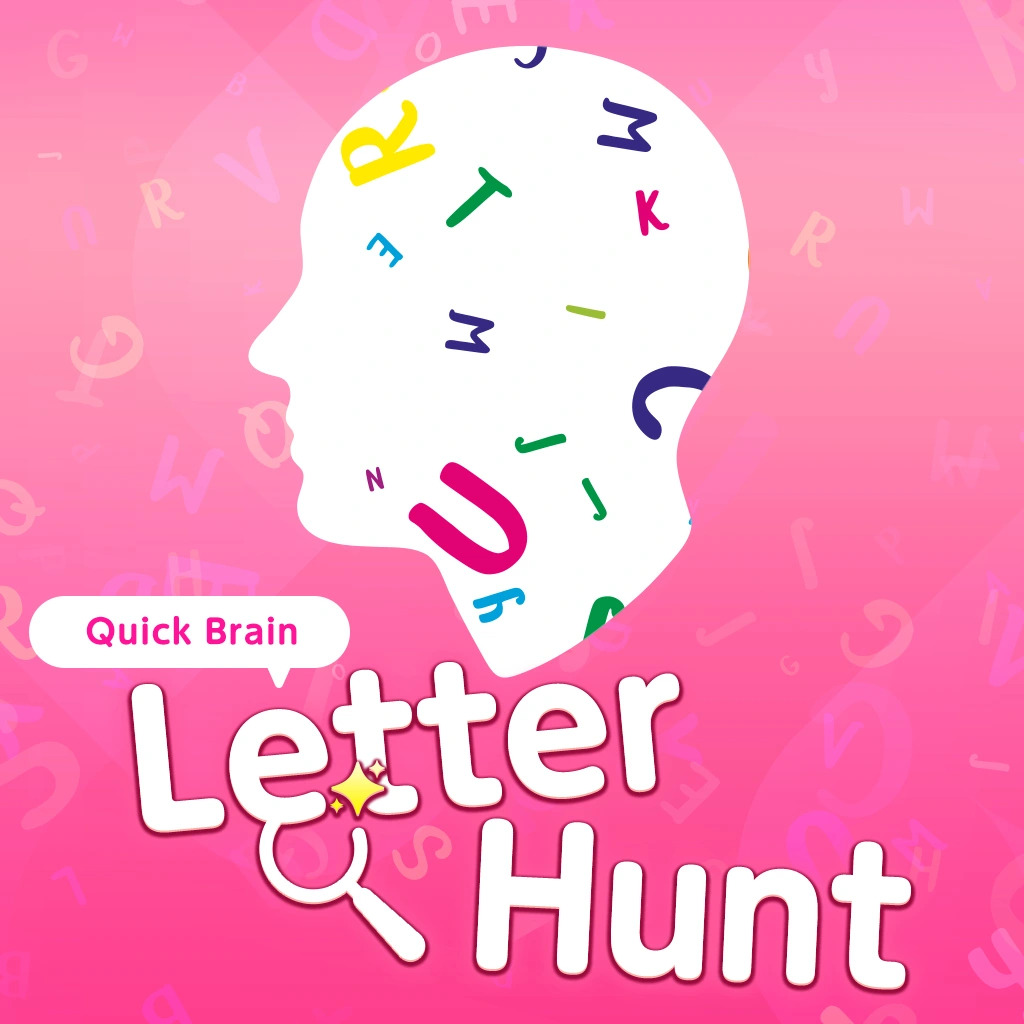
Quick Brain: Letter Hunt, developed and published by Tokyo Tsushin Group, follows this philosophy closely. Released on Nintendo Switch alongside its companion title Quick Brain: Number Hunt, the game builds on the same rapid-fire brain-training format but introduces a clever twist: instead of searching for numbers, players must locate specific letters or characters hidden within a chaotic grid of symbols from multiple writing systems.
At first glance, the concept appears extremely straightforward—perhaps even simplistic. But once the game begins mixing English letters with Hiragana, Hangul, and Traditional Chinese characters, the task becomes far more challenging than expected.
What emerges is a deceptively difficult puzzle experience designed for quick bursts of mental exercise.
A Simple Concept With a Multilingual Twist
The core gameplay of Quick Brain: Letter Hunt is straightforward to understand.
Each stage displays a target character at the top of the screen. Below it is a large grid filled with letters and symbols. Your task is to find the correct character somewhere within the grid before the timer runs out.
The challenge is that the characters are surrounded by visual distractions designed to mislead your perception.
Letters appear in various:
- Sizes
- Colours
- Fonts
- Orientations
Some characters slightly overlap, while others are grouped in dense clusters that make it hard to distinguish individual symbols.
What makes Letter Hunt unique among many observation puzzles is its multilingual design.
Instead of focusing only on the English alphabet, the game includes characters from various writing systems.
- English letters (A–Z)
- Japanese Hiragana
- Korean Hangul
- Traditional Chinese characters
For players unfamiliar with these scripts, the challenge becomes significantly greater. Even if you’re confident in recognising English letters swiftly, encountering unfamiliar characters compels you to slow down and scrutinise each symbol carefully.
This mix of familiarity and confusion creates an intriguing puzzle dynamic that continually tests your concentration.
Designed as a “Brain Warming” Exercise
Like other titles in the Quick Brain series, Letter Hunt positions itself as a brief mental workout rather than a full-length puzzle adventure.
The developers describe the game as a “brain warming” exercise, designed to be played in short sessions lasting five to ten minutes.
In practice, this approach works very well.
Each stage lasts only a few seconds to a minute, meaning players can jump in for a quick round without committing to a lengthy gaming session. The Nintendo Switch’s portability makes this format particularly convenient in handheld mode.
Whether you’re waiting for a bus, taking a quick break between tasks, or simply seeking a light mental challenge before bed, Letter Hunt fits neatly into those small pockets of time.
Despite the brief rounds, the game manages to feel surprisingly addictive. Clearing a stage quickly encourages players to dive straight into the next challenge, creating a satisfying loop of rapid-fire puzzles.
The Psychology of Distraction
One of the most intriguing aspects of Quick Brain: Letter Hunt is how it intentionally influences the player’s visual perception.
Human brains are naturally designed to identify familiar patterns swiftly. This is why detecting a common English letter like “A” amid random shapes typically requires just a moment.
However, when that letter is surrounded by unfamiliar characters—especially ones that resemble similar shapes—the task becomes considerably more challenging.
For example:
- A Hiragana character might resemble a rotated Latin letter.
- A Hangul symbol might look similar to a blocky “H” or “T”.
- Chinese characters can contain smaller shapes that resemble familiar letters.
When these symbols appear in mixed grids, your brain constantly questions itself.
The game intensifies this confusion through its distraction mechanics, such as altering font sizes or adding bright colours that divert your attention away from the correct answer.
The result is a puzzle experience that feels like a struggle between instinct and concentration.
Minimalist Presentation That Serves the Gameplay
Quick Brain: Letter Hunt features a clean, minimalist visual style.
The interface avoids unnecessary clutter, allowing players to focus solely on the characters displayed on screen. Bright colours and clear fonts ensure each symbol remains legible, even during the most chaotic stages.
Menus are simple and intuitive, making it easy to start a new round or continue progressing through the game’s stage list.
The audio design takes a similarly understated approach. Gentle background music plays during gameplay, accompanied by light sound effects that confirm correct answers or signal time pressure.
This subtle presentation helps maintain focus without overwhelming players with unnecessary sensory input.
Where the Experience Feels Limited
While Letter Hunt works well as a quick puzzle experience, its simplicity also brings some limitations.
The main mechanic—finding a character in a grid—stays the same throughout the game. Though the character combinations and layouts change, the gameplay itself does not develop significantly.
For players who enjoy complex puzzle mechanics or layered systems, the experience might become somewhat repetitive over time.
Additionally, the game could have benefited from extra modes such as:
- Competitive time challenges
- Multiplayer comparisons
- Endless difficulty scaling
These additions could have prolonged the game’s lifespan.
However, it’s worth noting that Letter Hunt is deliberately designed for short bursts of play rather than long sessions.
Within that framework, the game functions exactly as intended.
Pros
- Simple and accessible puzzle concept
- Multilingual character sets add unique challenge
- Perfect for short play sessions
- Clean and easy-to-read visual design
Cons
- Limited gameplay variety
- Can feel repetitive during long sessions
- Few additional modes beyond the core challenge
Final Verdict
Quick Brain: Letter Hunt is a compact yet engaging brain-training puzzle that follows the same fast-paced formula as Quick Brain: Number Hunt. Developed and published by Tokyo Tsushin Group, the game introduces an inventive twist by blending multiple writing systems into its observation challenges.
The result is a deceptively tricky experience that constantly tests the player’s ability to filter out distractions and concentrate on the correct character.
While the gameplay remains straightforward and somewhat repetitive during extended sessions, the game excels at offering quick, satisfying mental challenges that are ideal for short breaks.
Players who enjoy observation puzzles or brain-training games will likely find Letter Hunt to be an entertaining way to sharpen their focus—even if only for a few minutes at a time.







[…] articleMLB The Show 26 ReviewNext articleQuick Brain Letter Hunt Review SirLagALothttp://www.gamecritix.co.uk […]