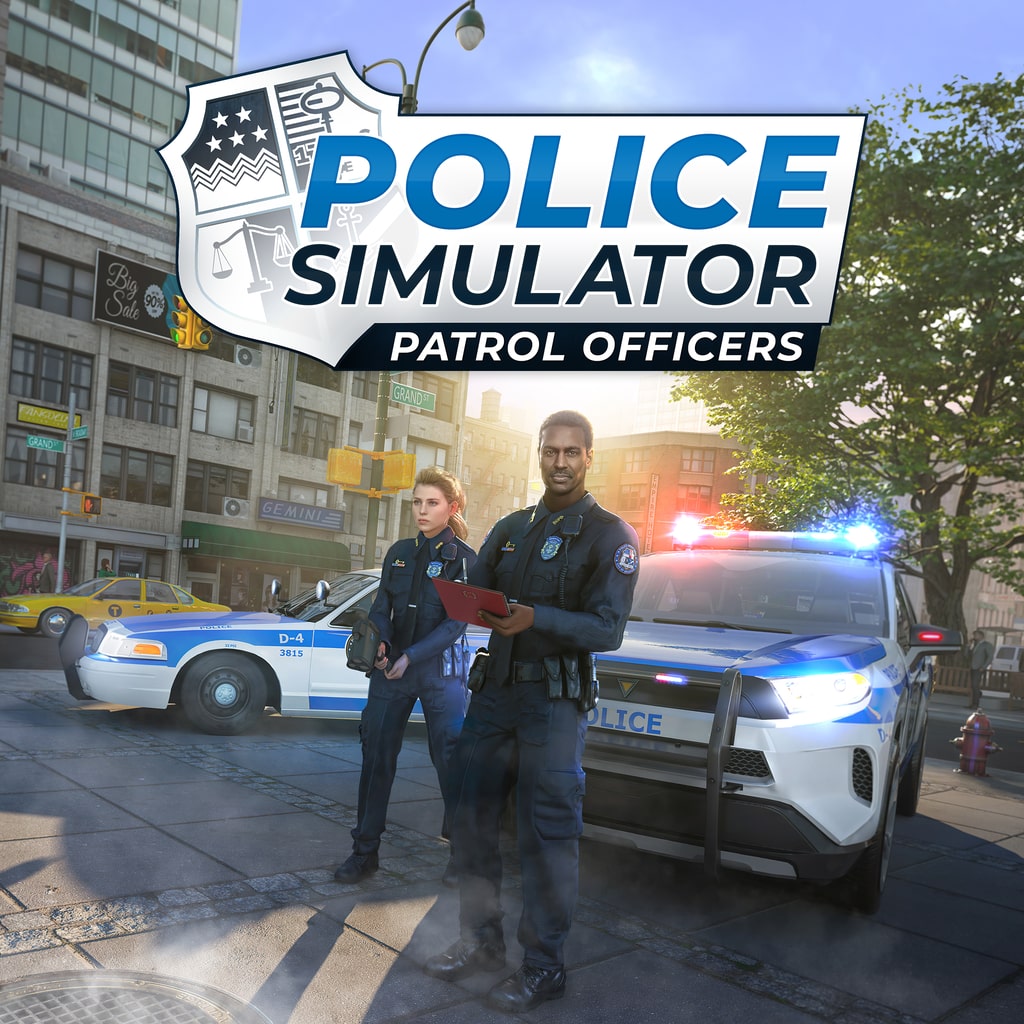
Police Simulator: Patrol Officers is the kind of game that sounds mundane on paper. Issuing parking tickets, checking licences, investigating traffic accidents, and handing out fines hardly scream excitement in a medium often obsessed with explosions and endless firefights. Yet Aesir Interactive has spent years refining a formula that finds genuine satisfaction in routine, and the result is one of the most distinctive simulation experiences available today.
Set in the fictional American city of Brighton, players begin their careers at the very bottom of the law enforcement ladder. Early shifts revolve around relatively minor responsibilities. You patrol neighbourhoods on foot, identify parking violations, deal with littering offences, and keep an eye out for suspicious behaviour. It is a humble beginning, but it immediately establishes the game’s central philosophy. Police Simulator is not interested in making you an action hero. It wants you to understand the rhythm of the job.
That approach will immediately divide players. Anyone expecting something closer to Grand Theft Auto from the opposite side of the law may struggle with the slower pace. Those willing to embrace the simulation, however, will discover a surprisingly engrossing experience built around observation, procedure, and decision-making.
Brighton Feels Alive
One of the game’s greatest strengths is its open world. Brighton is not the largest city ever created in a simulation title, but it feels busy and believable. Pedestrians wander the streets, traffic flows through intersections, and incidents arise organically throughout your patrols. You might start your shift checking expired parking meters only to find yourself directing traffic around a major accident fifteen minutes later.
The city’s three districts each have their own personality and atmosphere. Some areas feel calm and residential, while others see more frequent incidents and criminal activity. As you gain experience and unlock additional neighbourhoods, the city gradually reveals itself, giving progression a tangible sense of reward beyond simply earning new equipment.
What makes these patrols engaging is the unpredictability. The game constantly presents situations that require judgement rather than simple button presses. Deciding whether a suspect is intoxicated, identifying forged documentation, or deciding when to conduct a search creates a level of involvement that many simulation games never achieve. You are not simply following instructions. You are actively evaluating situations.
Procedure Over Action
The heart of Police Simulator lies in its commitment to procedure. Every action carries consequences, and success depends on understanding the rules governing your authority. Pull over the wrong driver, conduct an unlawful search, or issue an incorrect citation, and your conduct rating suffers. Too many mistakes can even end your shift prematurely.
This emphasis on proper procedure creates tension in situations that would otherwise seem routine. Checking identification becomes meaningful because errors matter. Arresting a suspect feels rewarding because it requires careful observation and evidence gathering. The game consistently reinforces the idea that good police work depends on patience rather than aggression.
The procedural depth becomes even more impressive as new responsibilities unlock. Drug investigations, accident reconstruction, suspect pursuits, and roadside checks add variety while remaining grounded in the simulation’s core design philosophy. There is always something new to learn, and the steady expansion of duties helps maintain interest across dozens of hours.
Not every mechanic is equally polished, however. Certain investigations occasionally feel overly simplified, and some systems reveal their limitations after extended play. Even so, the overall package remains remarkably detailed for a game operating within this niche genre.
The Joy of the Daily Shift
There is something oddly relaxing about Police Simulator. Each patrol feels like a self-contained story. One evening might involve helping stranded motorists and issuing parking tickets. The next could see you chasing a fleeing suspect through busy city streets before processing their arrest at the station.
The shift structure is a major part of this appeal. Sessions can be relatively short, making the game easy to enjoy in manageable bursts. Completing a successful patrol provides a satisfying sense of accomplishment, especially when every citation, arrest, and report has been handled correctly.
This sense of progression extends beyond unlocking new equipment and districts. Players gradually become more confident in their ability to read situations and identify offences. Early mistakes become learning experiences, and over time the game’s systems begin to feel second nature. Few simulation games create such a strong connection between player knowledge and character advancement.
Better Together
The cooperative mode deserves special mention. Police Simulator becomes significantly more entertaining when played with a friend. Dividing responsibilities during major incidents adds an enjoyable layer of teamwork, while coordinating traffic stops and investigations creates memorable moments that rarely arise in solo play.
The co-op implementation is impressively seamless. Players can join one another’s patrols without excessive hassle, and the shared responsibilities complement the game’s existing mechanics. Some of the most enjoyable experiences come from handling chaotic situations together, communicating plans, and responding to unexpected developments.
While the single-player experience remains perfectly enjoyable, co-op elevates the game considerably. It transforms routine duties into collaborative problem-solving exercises and adds a welcome social element to longer patrol sessions.
The Remaining Rough Edges
Despite years of updates and improvements, Police Simulator has not entirely overcome its technical issues. Bugs occur less often than before, but they remain part of the experience. Pedestrians occasionally behave oddly, vehicles sometimes react unpredictably, and visual glitches can appear during extended sessions.
Most of these problems are minor annoyances rather than game-breaking disasters, but they prevent the simulation from reaching its full potential. The Nintendo Switch 2 version performs admirably overall, yet occasional moments of awkward AI behaviour still remind you that this is an ambitious simulation operating within complex systems.
Some players may also find the lack of high-intensity criminal scenarios disappointing. The focus remains firmly on civic policing and traffic enforcement. While that commitment to realism deserves respect, it can occasionally make later stages feel repetitive. Those hoping for dramatic SWAT operations or large-scale tactical encounters will not find them here.
The extensive catalogue of downloadable content may also frustrate some players. Although the major expansions add meaningful content, the sheer volume of cosmetic packs and vehicle add-ons can feel excessive when browsing storefront listings.
Final Verdict
Police Simulator: Patrol Officers succeeds because it knows exactly what it wants to be. Rather than chasing action-heavy spectacle, it embraces the often-overlooked realities of police work and turns them into a surprisingly engaging gameplay loop. Issuing tickets, investigating accidents, and following proper procedures should not be this compelling, yet Aesir Interactive consistently makes routine responsibilities rewarding.
Its open world feels alive, its progression systems are satisfying, and its dedication to procedural authenticity creates a level of immersion rarely seen in the simulation genre. The occasional bug and repetitive late-game structure prevent it from achieving greatness, but they do little to undermine its unique appeal.
For players willing to trade gunfights for paperwork and procedure, Police Simulator: Patrol Officers delivers one of the most distinctive and rewarding simulation experiences currently available. It may not always be glamorous, but much like the job it portrays, there is real satisfaction in simply doing the work well.