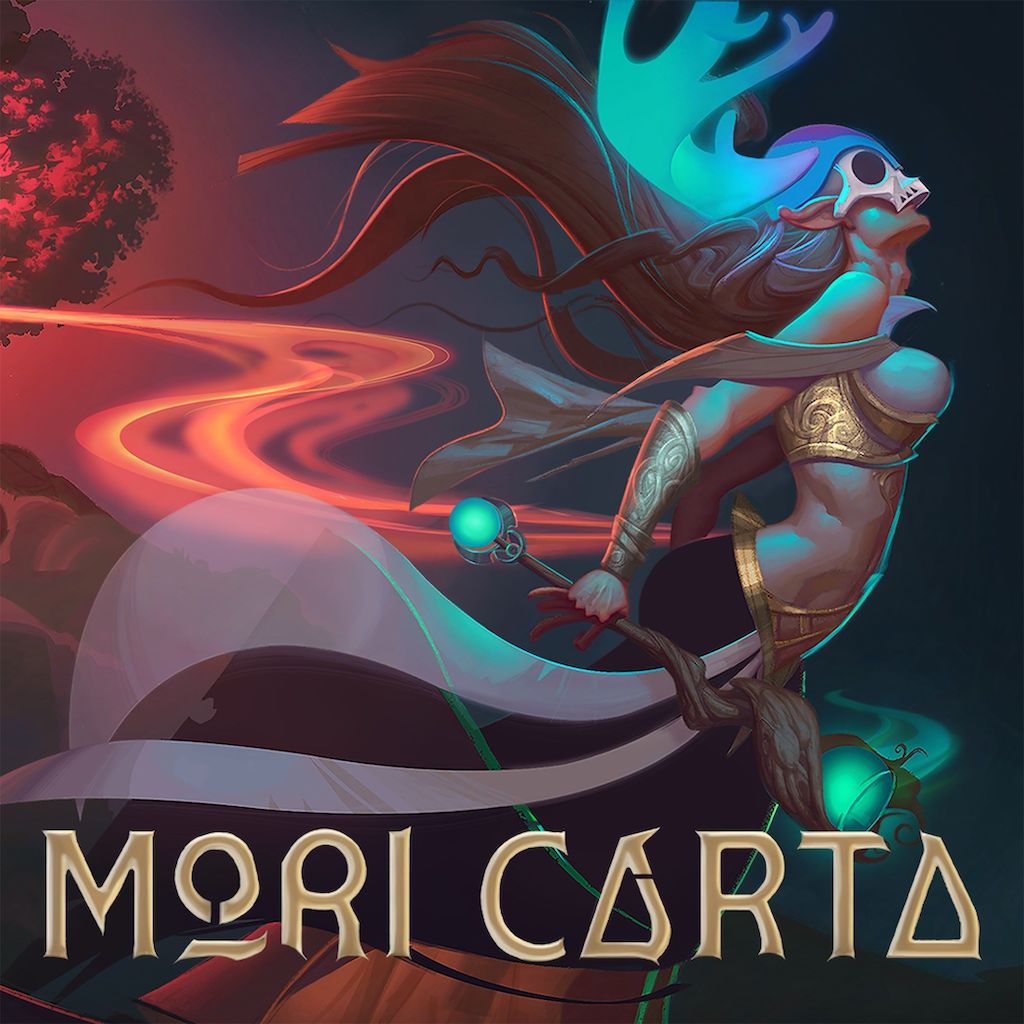
Deckbuilding roguelikes have become one of gaming’s busiest genres. Every year brings another challenger hoping to capture the lightning that games like Slay the Spire bottled so effectively. Most newcomers succeed by adding more cards, more systems, or more layers of complexity. Mori Carta takes the opposite approach. Instead of piling mechanics on top of one another, developer Nevergreen Games strips the formula down to its bare essentials and asks a simple question: what happens if players never hold a hand of cards at all? The answer is one of the most intriguing strategy games released this year.
Mori Carta immediately stands apart from its peers with a deceptively simple premise. Rather than drawing a hand and carefully planning each turn from several available options, cards appear one at a time. Each card presents a binary decision. Choose left or right. Attack or conserve. Spend resources or generate them. The entire game revolves around these seemingly straightforward choices. What sounds restrictive on paper quickly reveals itself as a surprisingly rich strategic framework.
Simplicity Hiding Remarkable Depth
The genius of Mori Carta lies in how much tension it extracts from every card draw. Because you only ever see a single card at a time, there is no opportunity to formulate elaborate multi-card combinations several turns in advance. Instead, every decision becomes immediate and meaningful.
A powerful attack card might deal tremendous damage if played to the left, but doing so could leave you dangerously low on mana. Sending that same card to the right may instead generate resources or defensive benefits. Every draw asks you to weigh short-term survival against long-term planning.
What makes these decisions so compelling is that there is rarely an obvious answer. The game constantly places players in situations where both choices have merit. Success comes from understanding the broader shape of your deck and making decisions that support your overall strategy rather than simply reacting to the current situation. The result is a pace that feels far quicker than many traditional deckbuilders, while retaining much of their tactical depth.
Four Heroes, Four Different Perspectives
The game’s four playable characters help keep the experience fresh across repeated runs. Each character brings a distinctive card pool and strategic identity, forcing players to rethink their approach with every new adventure.
The Hunter feels aggressive and rewards calculated offensive pressure. The Monk leans towards a more measured, defensive style. Other characters introduce entirely different priorities and resource-management considerations that dramatically alter how cards are evaluated.
This variety is essential because Mori Carta lives and dies on replayability. With more than 1,000 playable cards spread across its systems, the game constantly finds new ways to surprise you. Runs rarely unfold the same way twice, and experimentation becomes part of the fun. Even after dozens of hours, there remains a sense that another clever combination or unexpected interaction is waiting to be discovered.
Enemies Become Part of the Problem
One of Mori Carta’s smartest ideas is how it handles enemy attacks. Rather than existing separately from your deck, enemy actions are shuffled directly into it. Suddenly, your carefully constructed strategy is contaminated by hostile cards that demand immediate attention. Drawing one of these cards forces a reaction, often disrupting the plans you hoped to execute.
This mechanic creates a fascinating relationship between player and enemy. Combat feels less like taking turns against an opponent and more like struggling to maintain control of a constantly shifting machine.
Every battle becomes a balancing act between advancing your strategy and dealing with the chaos injected into your deck. It is a wonderfully elegant solution that feels completely unique within the genre.
The system also reinforces the game’s central theme of adaptation. No plan survives intact for long, and flexibility becomes as important as preparation.
A Different Approach to Deckbuilding
Veterans of the genre will likely need time to adjust to some of Mori Carta’s unusual design philosophies. Perhaps the most surprising is how defensive resources function. Unlike many deckbuilders, where blocks disappear at the end of a turn, defensive bonuses here remain active until the deck cycles and reshuffles. This seemingly small change dramatically alters deck construction priorities.
Suddenly, larger decks become attractive rather than undesirable. Traditional wisdom in deckbuilders often encourages players to trim excess cards and keep decks lean for maximum consistency. Mori Carta frequently rewards the opposite approach.
Building a thicker deck can extend the lifespan of valuable defensive resources and create new strategic opportunities. It cleverly inverts familiar conventions and forces experienced players to abandon assumptions they may have carried over from other games. These design choices help Mori Carta establish its own identity rather than feel like another variation on an established formula.
A Beautifully Strange World
While mechanics take centre stage, the game’s presentation deserves recognition as well. Its dark fantasy setting has a mysterious, dreamlike quality that suits the gameplay perfectly. The visual style embraces minimalism without feeling empty, creating a world that feels both inviting and unsettling. Character art and enemy designs have plenty of personality despite the game’s relatively modest presentation.
The writing is another pleasant surprise. Narrative encounters scattered throughout the runs add texture and atmosphere without slowing the pace. These moments help transform the adventure from a simple sequence of battles into a journey through a living world filled with strange characters and unexpected discoveries. There is a quiet confidence to the presentation that complements the gameplay beautifully.
When Randomness Fights Back
For all its creativity, Mori Carta is not without flaws. The game’s greatest strength can occasionally become its greatest weakness. Because players have no control over draw order, randomness can sometimes feel overwhelmingly influential. Certain runs can begin with brutal sequences of enemy cards arriving before you have the tools to respond effectively.
In those moments, frustration can creep in. Losses do not always feel entirely earned. Sometimes it genuinely feels as though fate dealt you an unwinnable hand before the run had a chance to develop.
This issue becomes particularly noticeable during some of the tougher late-game encounters. Certain bosses seem specifically designed to punish narrow strategies, and a few build archetypes can feel vulnerable to sudden collapse if key cards fail to appear when needed.
Thankfully, the game includes progression systems that soften the sting of defeat. Carrying a valuable card forward into future runs provides a sense of momentum even after failure. It encourages experimentation while ensuring that time invested never feels completely wasted.
One More Run
Despite occasional frustrations, Mori Carta possesses that elusive quality shared by the best roguelikes: an irresistible urge to try again. A failed run rarely sparks anger. More often, it sparks curiosity. What if that card had been upgraded differently? What if a larger deck had been built? What if another character’s toolkit could solve the problem more effectively?
The game constantly encourages players to explore new possibilities. Every defeat feels like another piece of a larger puzzle rather than a dead end. That quality is difficult to manufacture, yet Mori Carta achieves it consistently.
Final Verdict
Mori Carta is among the most inventive deckbuilding roguelikes in recent years. By removing the traditional hand mechanic entirely, Nevergreen Games has created something that feels genuinely fresh in a genre crowded with familiar ideas.
Its binary choice system turns every card draw into a meaningful decision. The enemy card mechanics are brilliantly conceived, the character variety substantial, and the dark fantasy world provides a compelling backdrop for countless runs. While occasional bouts of harsh randomness can undermine the sense of fairness, they never completely overshadow the brilliance of the core design.
This is not a game that follows established rules. It challenges assumptions, rewards experimentation, and finds surprising depth in remarkable simplicity. For players willing to embrace its unusual ideas, Mori Carta delivers a memorable and highly addictive strategic adventure.