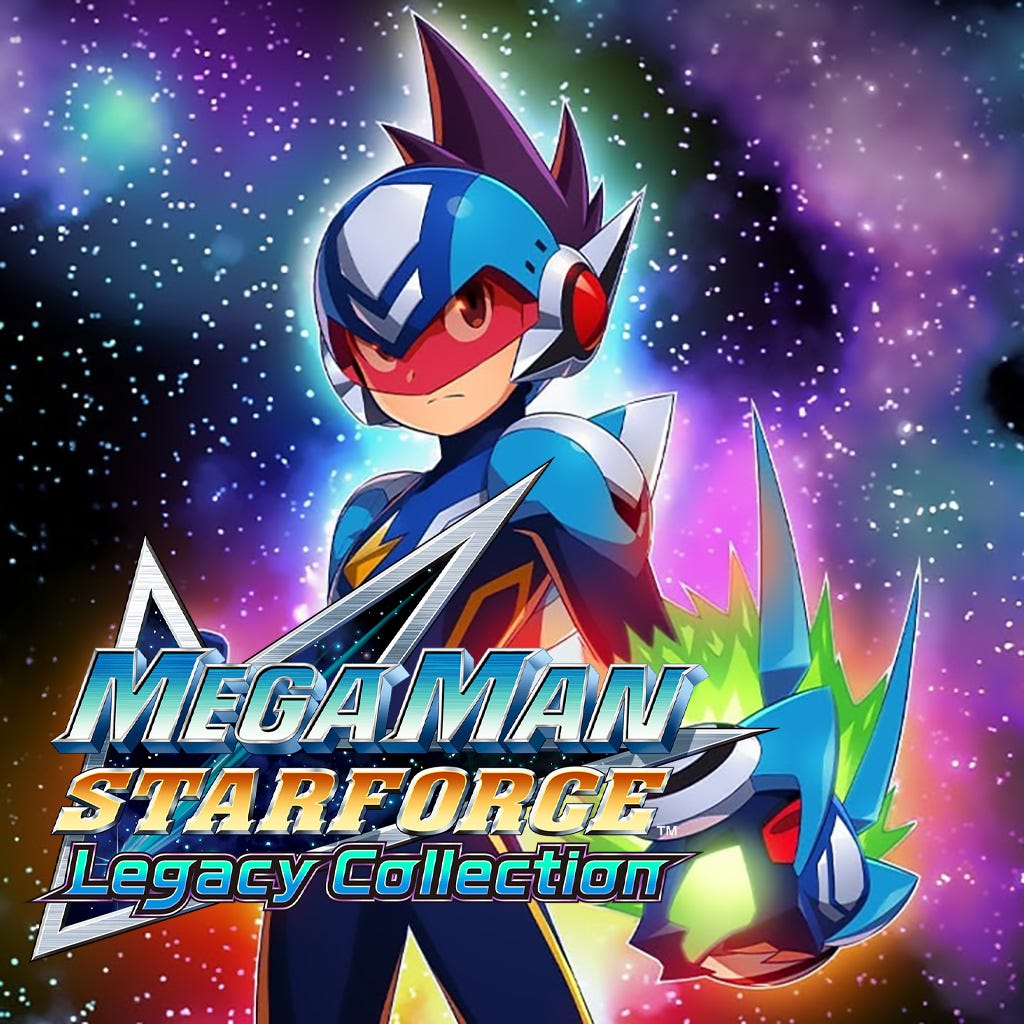
There’s a kind of nostalgia that not only takes you back to earlier times but also gives you a new perspective on them. The Mega Man Star Force Legacy Collection isn’t just a collection of games; it’s a tribute to a fascinating, often overlooked part of the Mega Man story. Originally released on the Nintendo DS between 2006 and 2009, the Star Force trilogy followed Battle Network but made its own mark with 3D graphics, a more thoughtful hero, and a combat system that combined familiar mechanics with bold new ideas.
Now, with all seven titles gathered in a sleek, modern package, the question isn’t only whether these games have stood the test of time but also whether they still feel fresh and unique in a gaming landscape that has evolved so much since then. As you might expect, the answer isn’t quite so simple.
A Different Kind of Mega Man
Unlike the traditional side-scrolling roots of the franchise, the Star Force series fully embraces RPG elements, bringing a fresh perspective to the universe. You follow Geo Stelar, a quiet boy grappling with his father’s disappearance, whose world is turned upside down after meeting the alien Omega-Xis. Together, they become Mega Man, not just as a robot, but as a remarkable fusion of human emotions and electromagnetic power. From the very beginning, this premise sets a contemplative tone. Star Force feels more introspective than many other entries, exploring deep themes of grief, loneliness, and the yearning for connection. Geo isn’t your typical hero. He’s shy, reserved, and carefully guards his feelings, making his journey all the more human and relatable.
Over the course of the three games, his character development shines as one of the series’ most compelling aspects. What starts as a story about avoiding conflict gradually transforms into a journey of acceptance and personal growth, with each sequel enriching that foundation. For newcomers, the story may feel surprisingly heartfelt. For long-time fans, it’s a poignant reminder of just how deeply this sub-series is driven by its characters.
Combat: Evolution and Experimentation
At the core of Star Force lies its combat system, offering a fresh spin on the grid battles familiar from Battle Network. Instead of the traditional side view, the camera shifts behind the character, with movement restricted to a 3×3 grid while enemies stand off on the opposite side. At first, this setup can feel a bit limiting, but it quickly establishes its own rhythm. Positioning gains significance and timing becomes a crucial factor, transforming the flow of battle. The Battle Cards—your abilities and attacks—are fundamental to combat, allowing you to craft decks that mirror your unique playstyle.
Over the course of the trilogy, this system undergoes significant evolution. The first game sets the foundation, the second introduces new transformations and mechanics, and by the third, everything is fine-tuned into a smoother, more balanced experience. By the time you reach Mega Man Star Force 3, the combat feels confident, layered with depth, and genuinely rewarding for players who enjoy experimenting and strategizing.
That said, the earlier titles may come across as rough around the edges. Progression can feel slow, and the systems lack polish. Playing through the series highlights how much the gameplay has improved over time, though it might test the patience of newcomers at the start.
Seven Versions, One Collection
This collection truly stands out because it features all seven versions of the trilogy. Like in Pokémon, each version offers its own unique twists—different forms, abilities, and content—making each one special in its own way. While there seem to be many options at first glance, in reality, the differences are so subtle that trying every version can become repetitive. Most players will probably pick their favorite and stick with it, moving forward from there.
Nevertheless, it’s worthwhile to keep all versions preserved because they carry historical significance. They show us how things have evolved over time and help ensure that none of those original nuances are lost as years go by.
Modern Enhancements
As a remastered collection, Mega Man Star Force Legacy Collection brings a touch of modern polish to a beloved classic. The high-resolution filter enhances visuals beautifully, preserving the charm of character sprites and environments while making them clearer on today’s screens. The addition of auto-save makes gameplay smoother and much less frustrating, especially during those longer, more intense sessions.
Then there’s “Buster MAX’ mode, a fun feature that significantly boosts your damage, helping you power through battles more easily. It’s perfect for players who are more interested in experiencing the story and having fun than facing a tough challenge. While it might slightly reduce the game’s strategic depth, it’s an optional feature that adds a layer of enjoyment to the experience.
Online features are another welcome addition. While the original DS versions depended on local connections, this collection updates that for the modern gaming world. It’s a valuable upgrade, though its success will really hinge on how many players are actively using it over time.
Presentation and Extras
Beyond just the games, this collection beautifully showcases a gallery of artwork and music that offers fans a heartfelt glimpse into the series’ creative journey and distinctive style. It feels like a personal invitation to truly appreciate the intricate design and sound that made the trilogy special.
The little touch of having an interactive 3D Mega Man on the main menu adds a charming, personal feel. It reminds us that this isn’t just a straightforward port; it’s a passion project crafted with care and love.
Where It Shows Its Age
Despite all its upgrades, Mega Man Star Force Legacy Collection still feels rooted in its origins. It retains a sense of nostalgia that shines through, even as new elements are added. Exploring the first two games can sometimes feel a bit repetitive, especially when traversing the “Wave World,” where the environments often look quite similar, and the objectives lack much variety. This can make the journey feel a little monotonous.
The pacing also tends to be uneven. Some story sections tend to drag, and the overall flow doesn’t always match what modern players might expect. Additionally, missing features like the toy link mechanics leave a sense of incompleteness. While understandable given the hardware constraints at the time, it does create a noticeable gap that impacts the overall experience.
A Legacy Worth Revisiting
What truly sets the Mega Man Star Force Legacy Collection apart is its distinct sense of identity. These games aren’t trying to replace Battle Network; instead, they offer a fresh take on its concepts. They feel more subdued, more driven by characters, and occasionally more daring in their experimentation. Not every idea works perfectly, but the passion and drive behind them are unmistakable.
For long-time fans, this collection feels like a heartfelt return to a cherished sub-series. Newcomers are given a chance to explore a unique chapter in Mega Man’s story—a chapter that stands out as both different and memorable.
Final Verdict
Mega Man Star Force Legacy Collection feels like both a heartfelt tribute and a nostalgic trip back in time. It’s a collection that honors a trilogy truly worth recognizing while also revealing the quirks and limitations of its era. The combat system, especially in the later games, continues to feel exciting and engaging. The story explores emotional depths that give it a unique edge among Mega Man titles. Plus, the modern improvements make it easier and more enjoyable for new players to jump in and experience the magic.
Of course, it’s not without imperfections. Repetitive elements, uneven pacing, and the redundancy of having multiple versions might turn some people away. Still, there’s something special about Star Force—an undeniable charm that keeps drawing players back again and again, inviting them into its world and making it hard to leave.