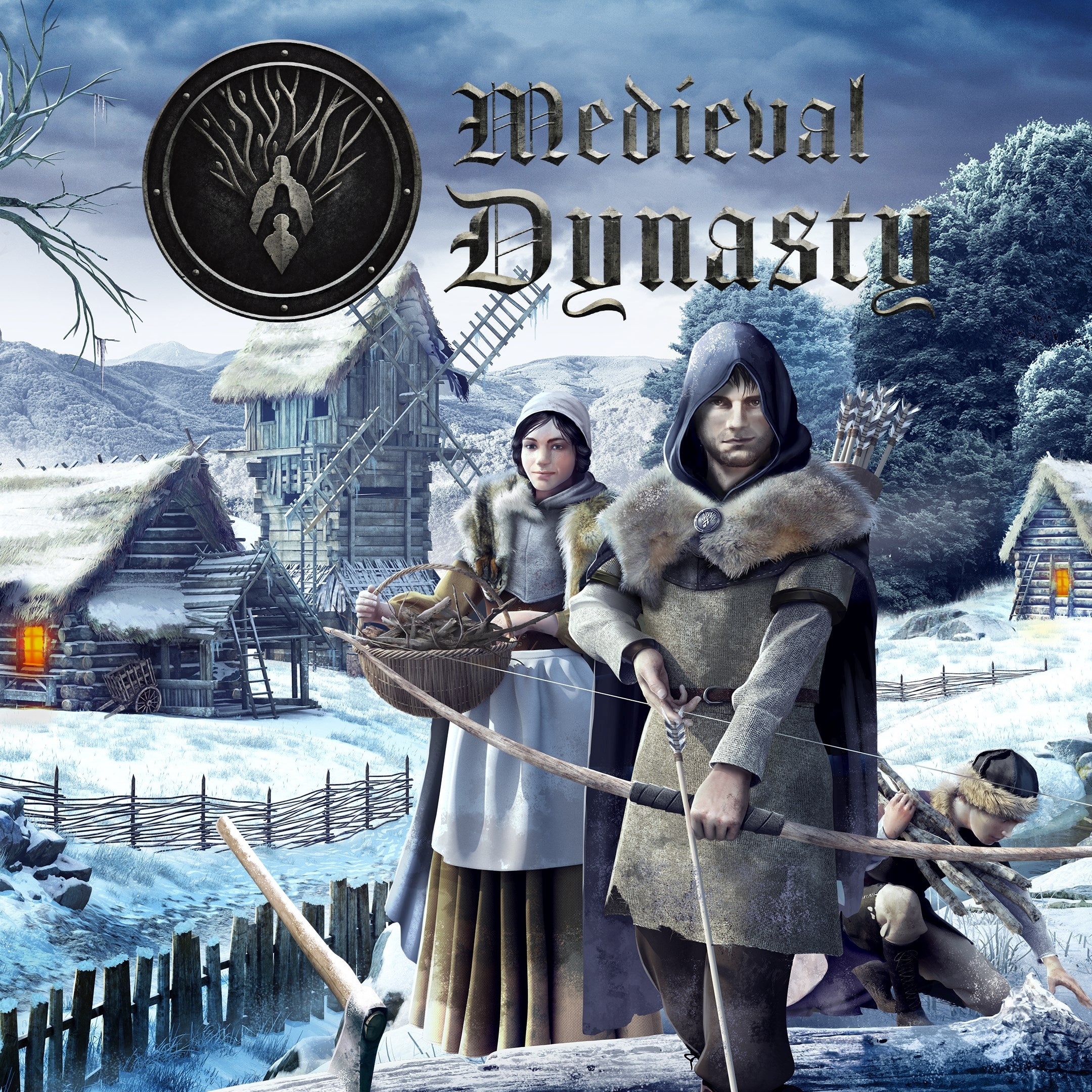
Medieval Dynasty – Complete Edition represents the most complete expression of a game that has always been more interested in persistence than spectacle. Blending survival mechanics, life simulation, and village management, it offers a long-form experience defined by routine, planning, and gradual growth. Rather than pushing players toward constant escalation, Medieval Dynasty asks them to settle in, learn systems over time, and think in generational terms.
The Complete Edition consolidates content and refinements into a cohesive package, presenting the game as it was always intended to be played: not as a short-term survival challenge, but as a sustained medieval life simulation where progress is measured in years rather than hours.
A World Built for Endurance
The game’s open world is expansive but deliberately restrained. Rolling hills, forests, rivers, and small settlements create a believable medieval landscape that feels functional rather than fantastical. There are no towering monuments or dramatic set-pieces designed to impress instantly. Instead, the world reveals its character slowly through familiarity.
Visually, Medieval Dynasty favours realism over embellishment. Environments are detailed enough to support immersion, but rarely dramatic. Seasonal changes provide the most striking variation, subtly altering both atmosphere and gameplay. Winter, in particular, reinforces the game’s survival roots, transforming routine tasks into logistical challenges.
This understated presentation supports the game’s central theme: survival is not heroic, it is practical.
Survival Mechanics and Daily Routine
At its foundation, Medieval Dynasty is a survival game. Hunger, thirst, stamina, and temperature must be managed constantly, particularly in the early hours. Gathering food, crafting tools, and finding shelter are essential, and the game offers little early leniency.
However, survival here is not about constant threat. Once basic systems are understood, danger recedes into the background, replaced by routine. This shift is intentional. Medieval Dynasty is not interested in punishing players indefinitely; it wants survival to become sustainable.
That transition—from vulnerability to stability—is one of the game’s most satisfying arcs. It gives weight to early hardship and reinforces the value of long-term planning.
Building a Settlement, One Structure at a Time
Village building is the heart of Medieval Dynasty. Players start alone, constructing basic shelters and workstations, before gradually expanding into a functioning settlement with homes, production buildings, and infrastructure.
Construction is deliberate and hands-on. Resources must be gathered manually, blueprints placed thoughtfully, and buildings upgraded over time. There is no instant gratification; every structure represents time, labour, and foresight.
The Complete Edition benefits from refinements that smooth this process, but the core philosophy remains unchanged. Growth is slow, and mistakes are costly. Poor layout decisions or resource mismanagement can create inefficiencies that linger for hours of play.
This methodical approach gives the settlement a sense of authenticity. It feels earned rather than assembled.
NPCs, Population, and Management
As the village grows, NPCs become central to progression. Villagers can be recruited, assigned jobs, and housed, transforming the player’s role from sole survivor to manager and leader.
NPC systems are functional but not especially expressive. Villagers operate primarily as production units, with limited personality beyond basic needs and skills. While relationships and family mechanics exist, they rarely reach the depth suggested by the game’s generational framing.
Nevertheless, managing villagers introduces meaningful complexity. Balancing food supply, production chains, and population growth requires foresight. Overexpansion can strain resources, while underutilisation slows progress.
The Complete Edition integrates these systems cleanly, reinforcing the game’s emphasis on sustainable growth rather than rapid expansion.
Crafting, Economy, and Progression
Crafting systems in Medieval Dynasty are extensive but grounded. Tools degrade, materials are finite, and production chains must be planned carefully. There is a strong emphasis on self-sufficiency, particularly in the early and mid-game.
The economy is similarly restrained. Trading exists, but wealth accumulates slowly. Money is a tool, not a solution, and many problems can only be solved through labour and organisation rather than purchase.
Progression is tied closely to skill development and technology unlocks. Advancements feel meaningful, but they arrive gradually. This pacing reinforces the game’s long-term identity, but it can also test player patience.
Combat and Threats
Combat is present, but it is not the focus. Encounters with wildlife and bandits provide occasional danger, but they are infrequent and mechanically simple. Combat systems lack the depth or polish found in dedicated action titles, but they serve their purpose without dominating the experience.
Importantly, Medieval Dynasty never frames combat as the primary path to progression. Violence is a risk to be managed, not a tool for advancement.
Audio, Atmosphere, and Immersion
Sound design is understated but effective. Environmental audio—wind, wildlife, footsteps—grounds the experience and reinforces isolation during early play. Music is sparse, often fading into the background to allow ambience to dominate.
This restraint supports immersion but contributes to a subdued emotional tone. There are few moments of musical or dramatic emphasis. The game rarely celebrates success, instead allowing accomplishment to feel quietly earned.
Pacing and Long-Term Commitment
Medieval Dynasty demands time. Systems unfold slowly, progression is incremental, and the full experience spans dozens of hours. This is not a game designed for short-term engagement.
For players willing to commit, this slow pace becomes a strength. The sense of ownership over the settlement, the familiarity with routines, and the gradual accumulation of stability create a uniquely absorbing experience.
For others, the repetition and lack of dramatic variation may feel monotonous. The game does not actively refresh its systems once they are established.
Final Verdict
Medieval Dynasty – Complete Edition is a patient, methodical simulation that prioritises sustainability, routine, and long-term thinking over spectacle or constant challenge. It offers a deeply coherent experience for players interested in survival and settlement building grounded in realism.
While its combat is underdeveloped, NPC interactions are limited, and pacing demands significant commitment, these limitations are inseparable from its identity. Medieval Dynasty is not about moments—it is about continuity.
For players drawn to slow-burn simulations and the satisfaction of building something that lasts, Medieval Dynasty delivers a compelling and quietly rewarding journey.