There is something immediately striking about Magin. Before you even grasp its systems, before the cards start piling in your hand, the tone settles. This is a cold, uneasy world, one that feels perpetually on the brink of collapse.
Set in a dark fantasy world teetering between medieval tradition and industrial progress, Magin introduces the concept of “Essence” early on. It is not merely magic in the traditional sense. It is emotion made tangible. Fear, anger, hope, despair. All of it fuels the world and, more importantly, the people within it.
That idea alone carries the experience. It gives everything a certain weight. Conversations feel loaded. Decisions feel personal. Even small interactions carry the sense that something larger is shifting beneath the surface.
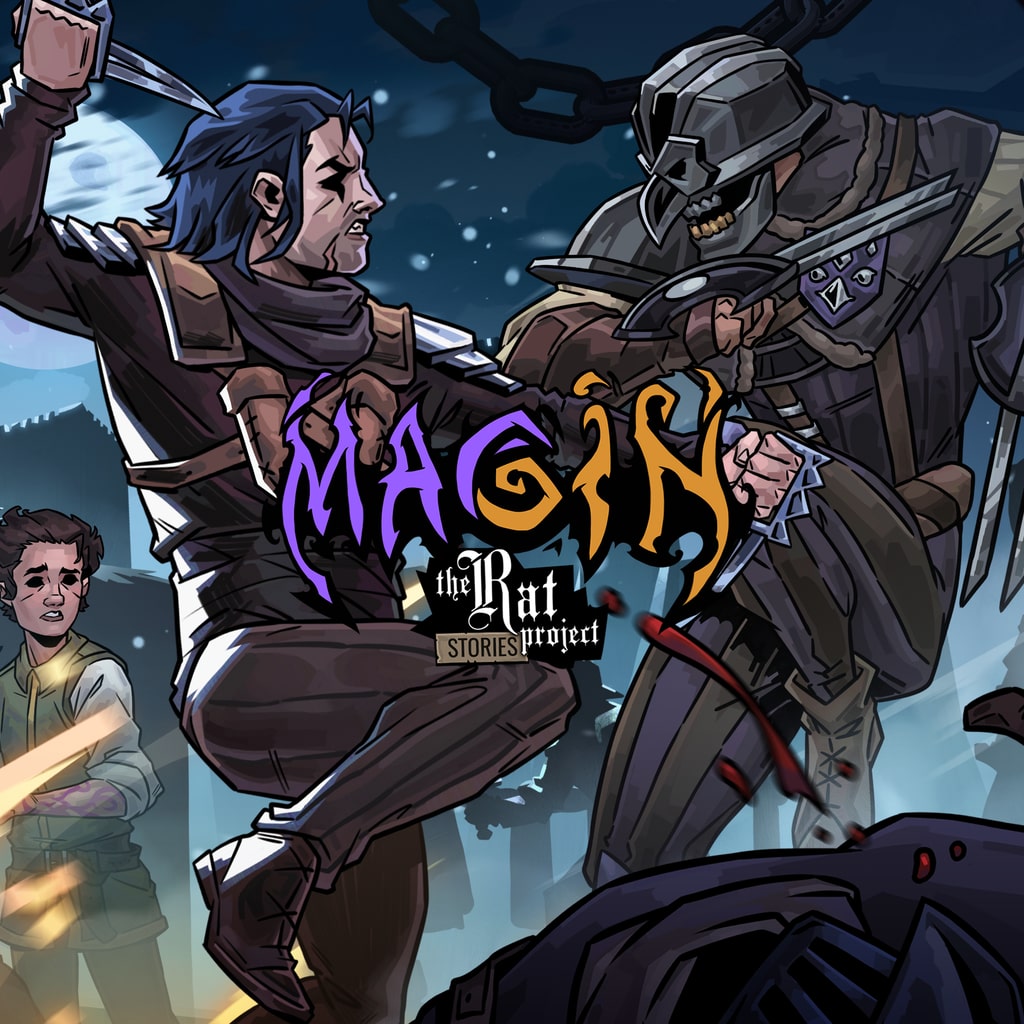
You follow two central characters, Elester, a hardened Magin tied to a shadowy underworld, and Tolen, a younger figure only beginning to understand his place in this fractured world. Their stories unfold in parallel, sometimes intersecting, always reflecting different sides of the same reality.
It is not a loud narrative. It does not rush to explain itself. Instead, it lingers. It lets you sit with its themes, even when they are uncomfortable.
Choices That Shape More Than the Story
Many narrative games promise meaningful choices. Fewer actually deliver on that promise mechanically. Magin takes a different approach. Your decisions do not just alter dialogue or determine endings. They shape your deck. This is where the game finds its identity.
Rather than collecting cards through traditional means, you earn them through your actions in the world. How you respond to characters, how you approach situations, and even how you interpret emotional moments all feed into the cards you receive. This creates a direct link between narrative and gameplay that feels refreshingly intentional. You are not just building a strategy. You are building a reflection of your decisions.
That connection adds tension to every choice. You are not simply asking what feels right in the moment. You are asking what kind of tools you want to carry forward.
Combat as an Extension of Feeling
Combat in Magin is turn-based and card-driven, yet it rarely feels detached from the narrative. Each card is tied to Essence, which in turn is tied to emotion. That link carries through every encounter. You are not just playing attacks or defences. You are expressing states of mind.
The double-sided card system adds a layer of tactical depth. Cards can shift depending on how they are used, forcing you to think ahead rather than rely on a fixed strategy. It keeps encounters dynamic, even when the structure itself is familiar.
There is a satisfying rhythm to battles once everything clicks. You begin to see how your earlier choices ripple into your current options. A decision made hours ago might now define how you approach a difficult fight.
That said, the system is not without its flaws. Deck management can feel restrictive at times. Because cards are so closely tied to narrative choices, there are moments when you may feel boxed into a particular playstyle. The game encourages commitment, but it does not always offer the flexibility to experiment freely. For some players, that will be part of the appeal. For others, it may feel limiting.
A Comic Book Come to Life
Visually, Magin leans heavily into a comic-book aesthetic, and it works. Scenes unfold in illustrated panels that give the story a distinct rhythm. It feels deliberate, almost theatrical at times. The art direction has a rough, textured quality that suits the tone perfectly.
Characters are expressive without being exaggerated. Environments feel worn and lived-in. There is a sense of history in every location, even when the game does not spell it out.
The presentation is not flashy, but it is cohesive. Everything serves the mood.
The soundtrack deserves mention as well. It sits quietly in the background, rarely drawing attention to itself, yet always reinforcing the atmosphere. It is the kind of score you notice more when it is gone.
The Weight of Its World
What lingers most after playing Magin is its tone. This is not an easy game to sit with. Its themes are heavy, its world unforgiving, and its characters often inhabit shades of grey. There are no clean victories here. Even your successes carry a cost. That emotional weight is both its greatest strength and its biggest barrier. It asks for patience. It asks for attention. It expects you to engage with it on its terms.
When it works, it is deeply affecting. There are moments that stay with you, not because they are dramatic, but because they feel honest within the world the game has built.
Essence Edition and Added Value
The Essence Edition rounds out the package with additional content that feels tailored to those who connect with the game’s world.
The digital artbook offers insight into the visual direction, while the comic and soundtrack deepen the experience beyond the core game. These are not essential additions, but they complement the tone well. It feels like a celebration of the game’s identity rather than a simple collection of extras.
Where It Falters
For all its ambition, Magin stumbles in a few key areas. Pacing can be uneven. Some sections feel drawn out, particularly when the narrative slows without introducing new mechanical ideas. The balance between story and gameplay is generally strong, though not always consistent.
The deckbuilding limitations, while intentional, can also be frustrating. Players who enjoy experimenting with builds may find the system too rigid over time. There is also a sense that the game occasionally holds back. It introduces compelling ideas but does not always explore them as deeply as it could.
The Final Word
Magin: The Rat Project Stories is not trying to be everything to everyone. It is focused. Intentional. Willing to prioritise theme over accessibility. That will not work for every player. But for those willing to meet it where it stands, there is something here that feels genuinely different.
It is a game about emotion in the truest sense, not just in its story but in how it plays. Every decision carries weight. Every card tells part of that story. It may not always be comfortable, and it may not always be flexible, but it has a voice. More importantly, it has something to say.