A cozy fantasy twist on the shop simulator boom
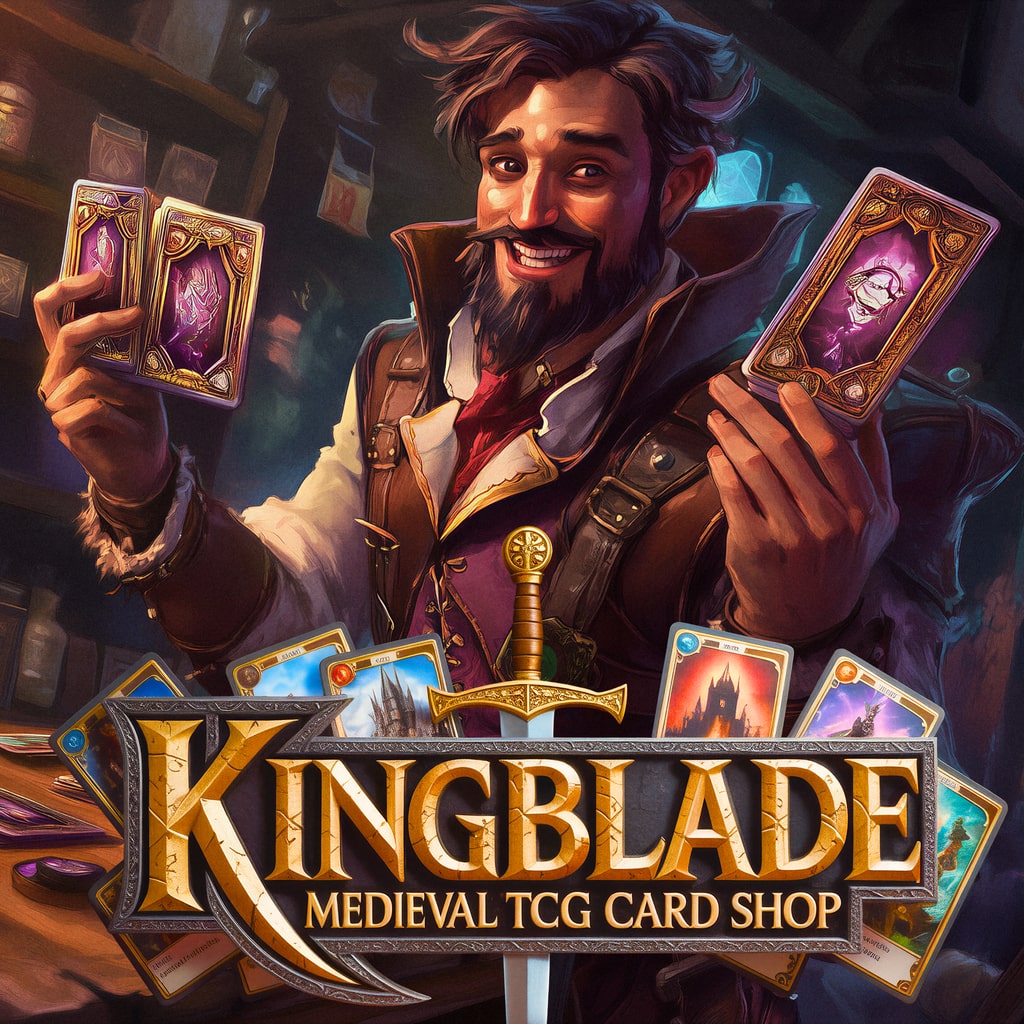
Over the past few years, simulation games built around running niche businesses have quietly exploded in popularity. From supermarkets to gas stations — and most recently trading card stores — players have discovered a surprising joy in managing small digital livelihoods. Kingblade: Medieval TCG Card Shop, developed and published by Revolt Games, arrives on PlayStation 5 following a successful PC debut, attempting to evolve that formula by swapping fluorescent retail lighting for candlelit fantasy charm.
Released on February 23, 2026, this medieval shop simulator trades modern collectibles for enchanted relics, mythical creatures, and spellbound trading cards. The result is a game that feels instantly familiar yet refreshingly themed — a cozy management experience wrapped in high-fantasy aesthetics.
It doesn’t reinvent the genre, but it understands exactly why players love it.
A Card Shop in a Living Fantasy World
Kingblade places you behind the counter of a humble medieval storefront, tasked with building the kingdom’s most renowned trading card shop. Instead of customers browsing Pokémon-style packs or sci-fi collectibles, your clientele consists of armored knights, wandering mages, merchants, and curious villagers seeking legendary cards tied to mythical factions.
The premise works immediately because it commits fully to its setting. Wooden shelves replace glass cabinets, parchment menus substitute digital price tags, and soft lute melodies replace modern background music. The game’s cozy tone becomes its strongest hook within minutes.
The core gameplay loop will feel familiar to anyone who has touched a shop simulator:
- Order inventory
- Open packs
- Price cards strategically
- Sell to customers
- Expand and decorate your store
Yet the medieval framing gives each action personality. Even mundane tasks like stocking shelves feel slightly magical when you’re arranging dragon cards beside glowing enchanted displays.
The Joy of Pack Opening
At the heart of Kingblade lies its most addictive mechanic: opening card packs.
Players can purchase themed “Faction Packs,” each tied to fantasy archetypes such as Dragons, Knights, Spirits, and Mages. Opening packs yourself becomes a genuine strategic decision rather than simple flavor.
Do you:
- sell sealed packs for guaranteed income, or
- gamble on opening them in hopes of uncovering rare holographic cards?
This risk-reward loop quickly becomes the game’s defining rhythm. Pulling a legendary Hero card delivers a satisfying dopamine hit, amplified by subtle visual flourishes and celebratory audio cues that never feel excessive.
Importantly, rare cards aren’t just collectibles — they’re economic tools. Some customers will pay enormous sums depending on market demand, creating a light but engaging trading meta.
Kingdom Economics and Smart Pricing
Rather than relying purely on static pricing, Kingblade introduces a clever mechanic called Kingdom Demand.
Weekly events influence card values across factions. A Dragon Festival might cause dragon cards to skyrocket in price, while arcane celebrations boost mage collectibles. This encourages players to think ahead, stockpile strategically, and treat inventory like an investment portfolio rather than simple merchandise.
It’s not deep economic simulation, but it adds enough decision-making to prevent the experience from becoming passive.
Moments where you hold onto a rare card only to sell it later at double value create genuine satisfaction — the kind management games thrive on.
Growth, Staff, and Expansion
As profits increase, your tiny shop gradually evolves into a bustling hub.
Expansion unlocks include:
- Larger floor layouts
- Decorative fantasy furniture
- Display cases for premium cards
- Staff hiring systems
Hiring employees shifts gameplay in a welcome way. Once assistants handle restocking and customer checkout, players transition from clerk to manager, focusing on optimization, collection building, and high-value trades.
This progression feels natural and well-paced. Early hours emphasize hands-on tasks, while later gameplay leans into strategic oversight.
The sense of growth — both visually and mechanically — keeps motivation high.
Cozy Design Done Right
Kingblade clearly aims to be a relaxation game, and for the most part, it succeeds beautifully.
There are:
- no fail states
- no harsh penalties
- no overwhelming time pressure
You can pause and save at any time, making it perfect for short sessions or late-night unwinding.
The soundtrack deserves special praise. Soft fantasy instrumentation reinforces the comforting atmosphere without becoming repetitive. Combined with warm lighting and gentle environmental sounds, the shop feels like a peaceful retreat.
This is very much a “podcast game” — something you play while relaxing rather than intensely focusing.
PlayStation 5 Performance
Technically, the PS5 version runs smoothly with fast load times and stable performance throughout. The game isn’t visually demanding, but higher resolution textures and responsive controls help it feel polished on console.
Accessibility options such as UI scaling and sprint toggles are welcome inclusions, especially for a management title where readability matters.
The transition from PC to console feels natural, with controls adapted well to a controller layout.
Where the Experience Falls Short
While charming, Kingblade does show limitations common to smaller simulation projects.
Customer behavior lacks long-term variety. After several hours, interactions become predictable, and dialogue repetition becomes noticeable. A deeper personality system or dynamic customer quests could have elevated immersion significantly.
Additionally, while decorating options exist, customization depth remains somewhat surface-level. Players hoping for extensive creative freedom may find expansion choices slightly limited.
Finally, progression eventually settles into a comfortable but repetitive loop. The game thrives on routine — which is either its greatest strength or biggest weakness depending on player preference.
A Fantasy Spin That Works
What Kingblade understands better than many simulators is tone. It isn’t trying to overwhelm players with complexity; instead, it builds a calming, rewarding rhythm built around small victories.
Opening packs. Serving customers. Rearranging shelves. Watching profits rise.
These simple pleasures combine into a surprisingly absorbing experience.
By blending cozy management mechanics with a medieval fantasy identity, Revolt Games has created something that feels distinct within an increasingly crowded genre.
Pros & Cons
Pros
- Addictive pack-opening mechanics
- Cozy fantasy atmosphere
- Smart demand-based economy system
- Relaxing, low-pressure gameplay
- Smooth PS5 performance
Cons
- Repetitive customer interactions
- Limited long-term customization depth
- Progression plateaus after extended play
Final Verdict
Kingblade: Medieval TCG Card Shop doesn’t revolutionize the shop simulator formula, but it delivers exactly what its audience wants — a relaxing, satisfying management experience wrapped in charming fantasy presentation.
Its addictive pack-opening system, gentle progression, and atmospheric world make it easy to lose hours inside its candlelit storefront. While repetition and limited late-game depth prevent it from reaching genre-defining heights, the core loop remains consistently enjoyable.
For players who enjoy cozy simulations or collectible-driven progression, this is an easy recommendation — especially at its budget-friendly price point.
Sometimes running a small shop in a magical kingdom is exactly the adventure you need.