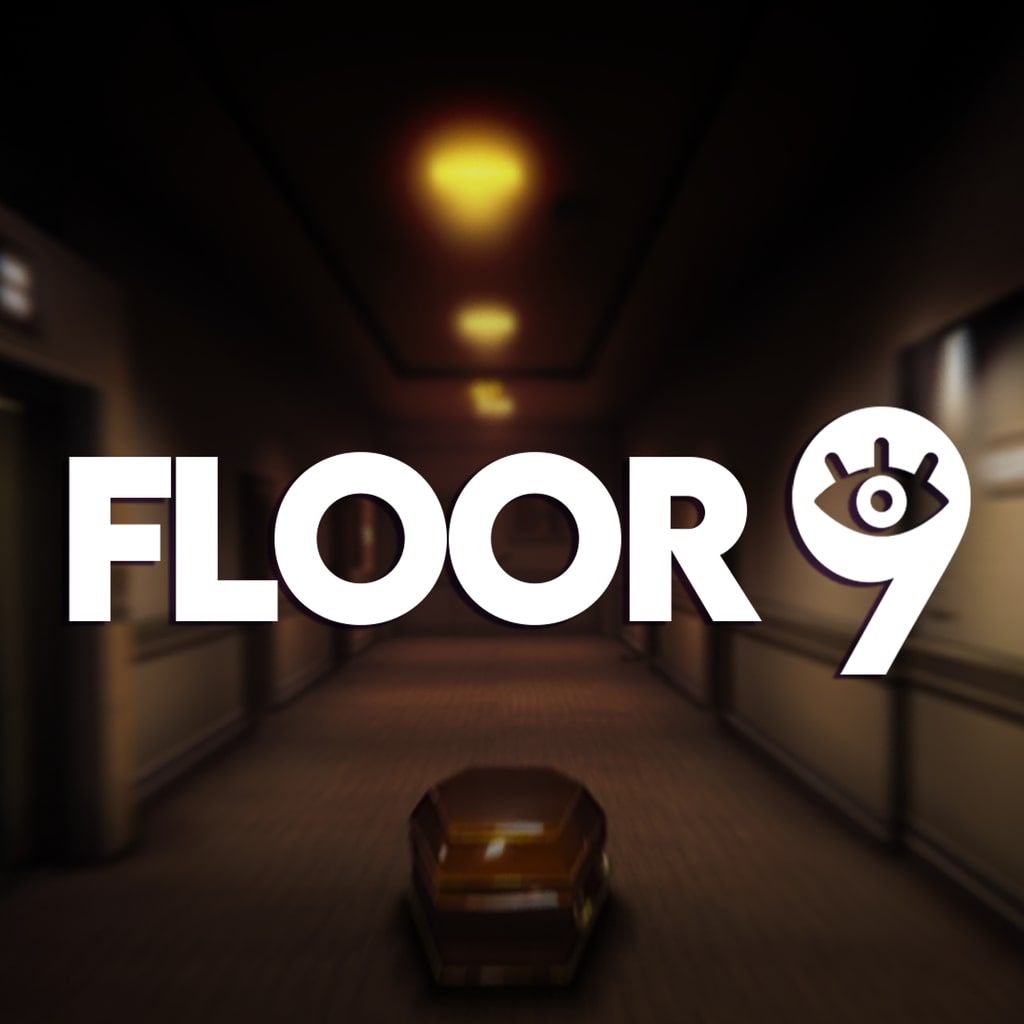
There is a strangely universal fear attached to hotels. Not luxury or comfort, but the unsettling sameness of them. Endless corridors with identical carpets. Doors that all look alike. The low hum of fluorescent lights at two in the morning, when everyone else seems asleep. Hotels exist in a strange space between public and private, familiar and temporary, comforting and deeply lonely. Floor 9 understands that discomfort perfectly.
Developed by Room Games and published by Dolores Entertainment, Floor 9 arrived on consoles this spring after first appearing in a smaller form in 2024. Heavily inspired by the growing “anomaly-spotting” horror subgenre, the game traps players inside Hotel Liminal, a looping nightmare where survival depends entirely on observation.
At first glance, the premise seems almost absurdly simple. Walk down a hallway. Observe carefully. If nothing has changed, proceed. If something feels wrong, turn back immediately. Miss even the smallest anomaly, and you are sent all the way back to the beginning. What follows is less a traditional horror game and more an exercise in sustained psychological tension.
Horror Built on Doubt
The genius of Floor 9 lies in how quickly it teaches you to distrust your own memory. Early loops feel manageable. A painting shifts slightly on the wall. A lamp flickers unexpectedly. A chair appears where there was none before. The game introduces its rules carefully, giving players confidence in their ability to spot changes. Then it begins to play with perception itself.
Suddenly, the anomalies become far more subtle. A carpet pattern shifts slightly. A door number looks just a little off. A shadow lingers where it did not before. You start second-guessing every object in the hallway, wondering whether something has actually changed or whether paranoia is simply taking hold. That constant uncertainty becomes the real source of fear.
Unlike many horror games that rely on monsters or scripted scares, Floor 9 weaponises observation itself. It turns your attention span into a survival mechanic. The result is surprisingly effective.
Hotel Liminal as a Character
The setting deserves enormous credit for carrying the experience. Hotel Liminal feels sterile in the most deeply unsettling way. The corridors are clean but lifeless. The lighting is soft yet oppressive. Every hallway stretches with a dreamlike sameness that makes orientation feel impossible after enough loops. It captures the essence of “liminal horror” exceptionally well, creating spaces that feel recognisable yet wrong.
The environmental design understands restraint. Nothing is visually overwhelming. Instead, the horror emerges from tiny details buried within repetition. A fire extinguisher slightly out of place becomes terrifying because the rest of the environment is so rigidly consistent.
The lack of background music is also crucial. Floor 9 embraces silence with confidence. Your footsteps echo through empty corridors while faint ambient noises hum in the distance. Occasionally, you hear sounds that may or may not exist. It creates the feeling that the building itself is observing you. At times, simply walking down the hallway becomes genuinely stressful because the game has conditioned you to search obsessively for danger hidden within normality.
The Psychology of Repetition
Repetition is both Floor 9’s greatest strength and its greatest weakness. The looping structure creates a hypnotic rhythm that gradually erodes player confidence. Each successful floor increases tension as the consequences of failure become more frustrating. The further you progress, the more terrified you become of making a mistake. That emotional escalation works beautifully during the game’s strongest moments.
There were stretches when I caught myself staring at a single wall decoration for far too long, desperately trying to decide whether it had moved a few centimetres or whether my brain was inventing problems. Very few horror games manage to create tension from something so mechanically simple.
However, repetition also limits the experience over longer sessions. Once you fully understand the game’s structure, the formula can feel predictable. The fear of the unknown slowly gives way to procedural pattern recognition. The best anomaly-based horror games constantly reinvent their tricks. Floor 9 occasionally struggles to maintain that surprise deep into its runtime.
Subtle Variety Keeps Things Alive
To its credit, the game attempts to move beyond purely visual changes. Some anomalies involve sound cues, environmental interactions, or subtle mechanical alterations to the hallway itself. These moments stand out because they force players to engage with the environment differently. You stop simply looking and begin actively listening.
One particularly effective sequence featured an almost imperceptible shift in ambient sound that made the entire corridor suddenly feel hostile, despite looking nearly identical. Another moment introduced subtle movement in the distance, so slight that I initially questioned whether I had imagined it entirely. These variations help prevent the game from becoming too visually repetitive, even if the overall structure remains intentionally constrained.
Visual Simplicity With Strong Atmosphere
Technically, Floor 9 is not a visual showcase in the traditional sense, but its lighting and textural work are consistently strong. On the PlayStation 5, the enhanced lighting creates convincing environmental realism that makes spotting anomalies genuinely difficult. Soft reflections, subtle shadows, and muted colours all contribute to the oppressive atmosphere. The hotel feels believable enough that every inconsistency becomes immediately disturbing.
Importantly, the visuals avoid excessive horror clichés. There are no rivers of blood or grotesque monsters dominating every scene. The horror remains grounded in realism, which makes the occasional surreal anomaly far more impactful when it appears. The game trusts quiet discomfort more than spectacle. That confidence works strongly in its favour.
The Problem With the Genre Itself
Floor 9 also suffers slightly from arriving at a time when anomaly-based horror games are increasingly common. Comparisons to titles like The Exit 8 are inevitable, and Floor 9 does not always do enough mechanically to fully distinguish itself from those influences.
While the atmosphere is excellent, the core concept may feel overly familiar to players already experienced with the genre. Some anomalies are genuinely clever, but others rely on predictable tricks that seasoned players will anticipate quickly. The game’s relatively small scope also means there is limited long-term variety once the core systems reveal themselves. Still, there is value in focused execution. Floor 9 may not reinvent the subgenre, but it understands precisely the kind of tension it wants to create.
Final Verdict
Floor 9 succeeds because it recognises that true psychological horror often stems from uncertainty rather than spectacle. By turning minor environmental inconsistencies into genuine sources of dread, it creates an oppressive experience that lingers long after you stop playing.
Its atmosphere is superb, its sound design deeply unsettling, and its use of repetition psychologically effective. Yet the game also struggles to evolve beyond its central mechanic, leaving parts of the experience overly familiar in an increasingly crowded horror niche. Still, when the silence closes in and you begin to doubt your own memory, Floor 9 becomes remarkably effective at making ordinary spaces feel terrifying.