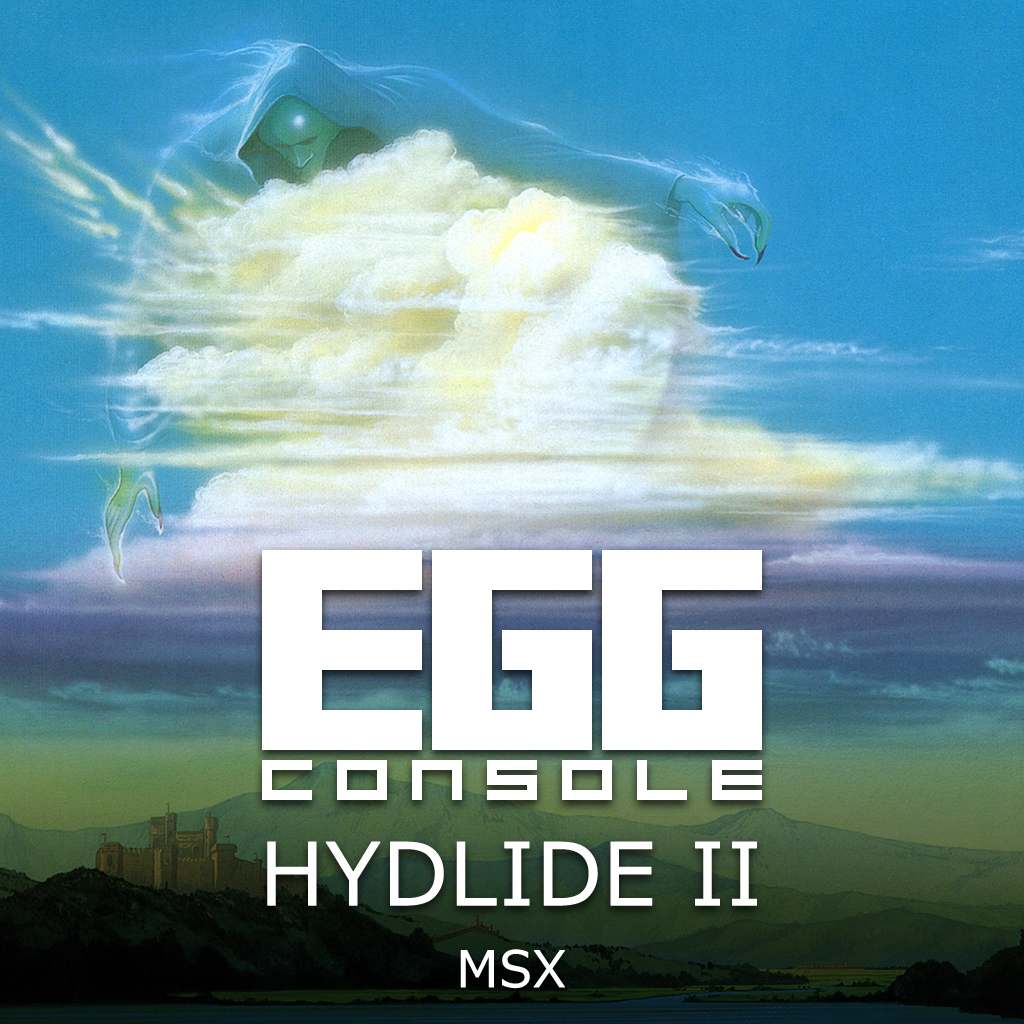
Few games carry the kind of historical weight—and baggage—that Hydlide does. With the release of EGGCONSOLE Hydlide MSX2 on Nintendo Switch, modern players are once again invited to experience one of the earliest “active RPGs,” a title that helped define a genre long before it was refined by later classics. But history alone doesn’t guarantee enjoyment, and this re-release walks a fine line between preservation and playability.
Originally developed by T&E Soft in 1985, Hydlide predates many of the conventions players now take for granted. You step into the boots of Jim, a young hero tasked with recovering sacred jewels and defeating the demon Varalys to restore peace to Fairyland. It’s a simple premise, but one that laid the groundwork for open-ended exploration, real-time combat, and character progression systems that would later become genre staples.
A Snapshot of Early Action-RPG Design
What immediately stands out in Hydlide MSX2 is its focus on real-time gameplay. At a time when turn-based systems were dominant, Hydlide’s “bump combat” felt innovative. Players switch between attack and defence modes and physically collide with enemies to deal or receive damage. It’s a system that, on paper, sounds basic—and in practise, it often is—but it remains intriguing as a piece of gaming history.
Combat relies less on reflexes and more on positioning and preparation. Approach an enemy from the wrong angle or in the wrong mode, and you’ll suffer disproportionate damage. There’s a certain rhythm to it that experienced players can learn, but it never quite sheds its awkward vibe. Modern players used to responsive hitboxes and smooth animations might find it frustratingly unclear.
And yet, there’s an undeniable charm in witnessing these early ideas in action. You can trace a direct lineage from Hydlide to later action-RPGs, even if those successors vastly refined the formula.
The MSX2 Advantage
This version—long regarded as the definitive 8-bit edition—takes advantage of the MSX2 hardware’s capabilities. Compared to earlier PC-88 or NES versions, the improvements are immediately evident. Scrolling is smoother, environments are more detailed, and character sprites are sharper. It remains unmistakably an 8-bit game, but one that showcases the upper limits of what that era could accomplish.
The world of Fairyland is surprisingly open, promoting exploration rather than strict linearity. There’s little guidance here; players are encouraged to experiment, explore, and sometimes fail. That sense of discovery is rewarding, but it can also feel painfully obscure. Objectives are rarely explicit, and progression often depends on obscure mechanics or hidden items.
Difficulty: A Feature or a Flaw?
Let’s address the elephant in the room: Hydlide is notoriously difficult. Not in the modern “challenging but fair” sense, but in a way that can feel arbitrary and unforgiving. Early enemies can overwhelm you if you’re not careful, and the game’s systems are rarely explained in detail.
Health regeneration—one of the game’s more innovative features—requires standing still on safe terrain. It’s a clever idea that adds a layer of strategy, but it also slows the pacing considerably. Combined with the need to grind for experience points, the game can feel like a test of patience as much as skill.
For some players, this difficulty will be part of the appeal. There’s a certain satisfaction in mastering a game that refuses to meet you halfway. For others, it will be a barrier that’s hard to overcome, especially without modern conveniences like detailed tutorials or quality-of-life enhancements.
The EGGCONSOLE Treatment
Handled by D4 Enterprise, the EGGCONSOLE release aims to faithfully preserve the original experience. This is both its greatest strength and its biggest limitation.
On the positive side, the emulation is smooth and stable. The inclusion of a gallery and supplementary materials adds value for enthusiasts interested in the game’s history. The “How to Play” menus in English are a welcome addition, helping to bridge the gap for newcomers.
However, the decision to keep the main game and gallery content in Japanese may be a sticking point for some players. While Hydlide isn’t a text-heavy RPG, the language barrier can still cause friction, especially when navigating menus or understanding certain elements.
More importantly, the lack of modern quality-of-life features—such as save states, rewind options, or gameplay tweaks—means players experience Hydlide almost exactly as it was in 1985. While this level of authenticity is commendable, it also highlights the game’s age in ways that may not be forgiving.
A Relic Worth Revisiting?
So, who is this release aimed at?
If you’re a retro enthusiast or a student of game design history, EGGCONSOLE Hydlide MSX2 is an intriguing piece of the puzzle. It provides a glimpse into a formative period of the action-RPG genre, showcasing ideas that were innovative at the time.
If you’re a casual player seeking a fun, accessible RPG experience, this might be harder to recommend. The game’s outdated mechanics, steep difficulty, and absence of modern conveniences make it difficult to suggest purely for enjoyment.
That said, there’s something captivating about its rawness. In an era where games are often polished to a mirror-like finish, Hydlide feels unapologetically rough around the edges. It doesn’t guide you — it dares you.
Final Verdict
Hydlide MSX2 is less a game you play purely for entertainment and more one you explore out of curiosity and respect for its legacy. It serves as a reminder of how far the medium has developed—and how experimental its early days were.