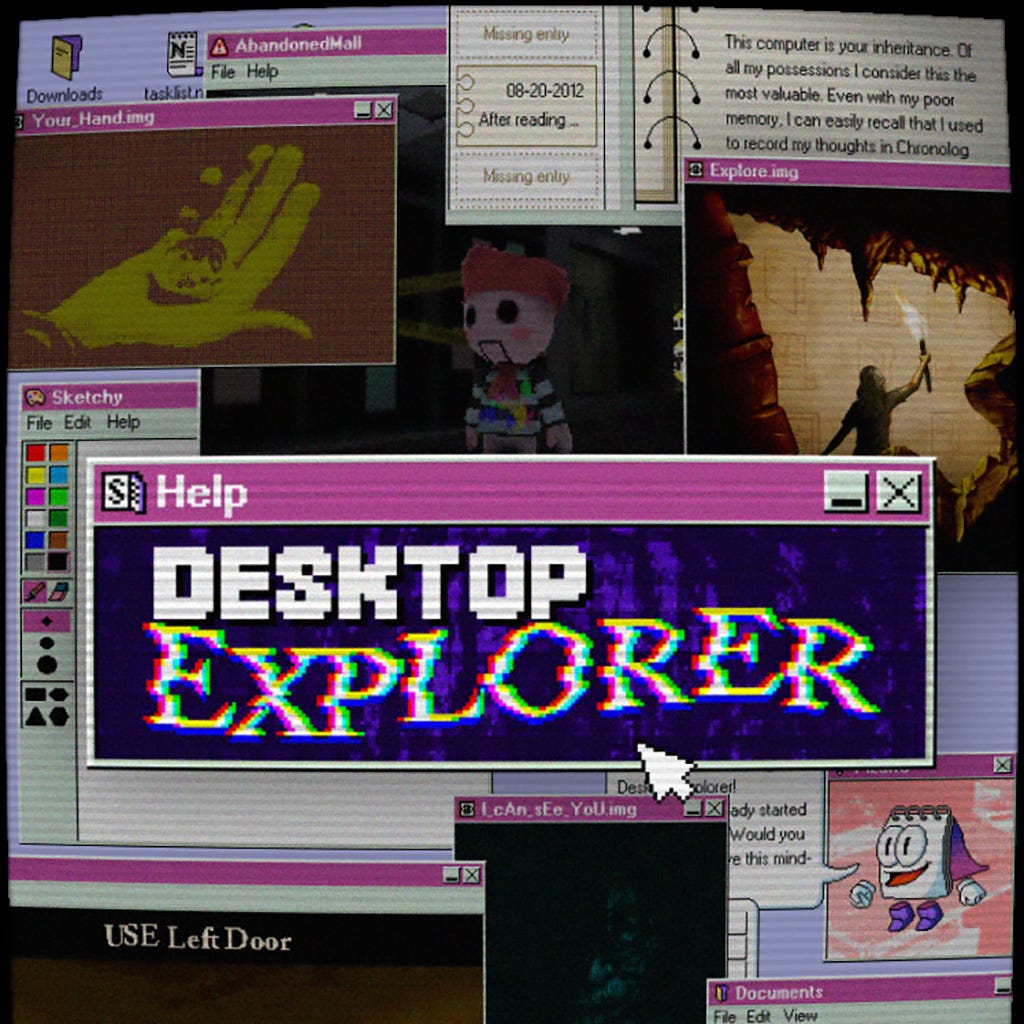
There is a certain magic to old computers. The hum of a bulky CRT monitor, the clunky clatter of a mechanical keyboard, and the ritual of waiting for a desktop to slowly load can instantly transport many players back to the 1990s. Desktop Explorer understands nostalgia remarkably well, but rather than simply using it as window dressing, it transforms a forgotten operating system into the setting for a psychological mystery that slowly creeps under your skin.
Developed by Recurring Dream, Desktop Explorer begins with an intriguing premise. Your uncle leaves you his ageing PC as part of his inheritance, and tucked away inside is a letter asking you to investigate a long-forgotten missing-persons case. Alongside the request sits a strange piece of software simply called Desktop Explorer. At first glance, it appears to be another forgotten program gathering digital dust, but it quickly becomes clear that this application is connected to something much larger and far more unsettling than anyone could have imagined.
What follows is less of a traditional adventure game and more of an archaeological dig through somebody else’s digital life. Every folder, every corrupted file and every forgotten conversation becomes another piece of a puzzle that refuses to reveal itself too easily. Instead of relying on jump scares or monsters, Desktop Explorer builds tension through uncertainty, making players question whether they are simply exploring an abandoned computer or uncovering something that should have remained buried forever.
The Desktop Becomes the World
The game’s greatest achievement is its complete commitment to its central idea. Nearly everything happens within a lovingly recreated 1990s operating system, and that system feels convincing from the moment the desktop appears on screen. File browsers, chat programs, media players, archived documents and forgotten applications all feel authentic, as though they genuinely belonged to someone who once lived their life through this machine.
Rather than feeling like menus, every application becomes another location to investigate. Opening folders carries the same sense of anticipation as entering a haunted mansion in another horror game. A forgotten text file might contain an innocent shopping list, or it could reveal an important clue that changes everything you believed about the investigation.
The attention to detail deserves particular praise. Desktop icons, loading sounds, outdated interface designs and nostalgic system effects recreate an era of computing that many players will immediately recognise. It never feels like parody. Instead, it feels like stepping back into a real machine that has simply been left untouched for decades.
That authenticity strengthens the horror considerably. Because everything initially appears so ordinary, the smallest abnormalities become genuinely unsettling. A corrupted image, an unexpected system message or an oddly written chat log carries far more weight than it otherwise might because the game has earned your trust before slowly beginning to break it.
Detective Work That Rewards Curiosity
Desktop Explorer refuses to hold the player’s hand, and that confidence is one of its greatest strengths. Rather than highlighting objectives or constantly pointing to the next clue, it expects players to think like genuine investigators. Progress comes from paying attention, experimenting with different software tools and noticing details that are easy to overlook.
Much of the gameplay revolves around interacting with the operating system itself. Players browse forgotten directories, examine archived conversations, recover damaged files and even manipulate aspects of the computer’s structure to uncover hidden information. Every successful discovery feels earned because it comes through observation rather than simple instruction.
The puzzles are cleverly integrated into the world. Solving them rarely feels like stepping away from the story to complete an arbitrary challenge. Instead, each solution represents another breakthrough in the investigation. Whether deciphering fragmented messages or discovering hidden files buried beneath layers of corruption, the process constantly reinforces the feeling of acting as a digital detective.
The downside is that Desktop Explorer demands patience. There is no generous hint system waiting to rescue players who become stuck, and some puzzles require leaps of logic that may frustrate those expecting a smoother experience. There were moments when progress slowed considerably, not because the puzzles were poorly designed, but because the game deliberately expects careful thinking and persistence.
Players willing to embrace that slower pace will likely find the challenge immensely satisfying. However, those seeking constant forward momentum may occasionally feel as though they are searching for a needle in a digital haystack.
Horror Through Atmosphere Rather Than Violence
One of Desktop Explorer’s most impressive aspects is its restraint. Modern horror games often rely on loud scares, chase sequences or grotesque monsters to sustain tension. Desktop Explorer opts for a quieter approach, letting atmosphere do almost all the heavy lifting.
The sense of isolation grows naturally as the investigation progresses. Sitting alone in front of an old computer becomes deeply unnerving. Reading conversations between people who vanished years ago creates an uncomfortable intimacy, while corrupted files hint at events that remain just out of reach. The game constantly suggests that something is watching without ever saying so outright.
The soundtrack plays a major role in sustaining this atmosphere. Gentle ambient music drifts beneath the operating system’s familiar mechanical clicks and notification sounds, creating an unusual blend of comfort and unease. At times, the silence itself proves more effective than any musical cue, allowing players to focus entirely on the unsettling information appearing on screen.
The visual presentation complements this perfectly. Retro-styled interfaces, subtle graphical glitches and occasional distortions slowly chip away at the desktop’s familiar appearance. The operating system begins to feel increasingly unstable, mirroring the player’s growing uncertainty about what is actually happening inside the machine.
Nostalgia Used With Purpose
Many games borrow retro computer aesthetics because they look stylish. Desktop Explorer uses them because they directly support the story. The entire experience depends on players believing this computer once belonged to real people with real histories.
Small details help create that illusion. Forgotten games remain installed alongside old utilities. Random personal documents sit beside work files. Casual conversations feel mundane until viewed with the benefit of hindsight. These seemingly insignificant touches gradually paint a believable picture of lives interrupted by something unknown.
Even the included mini-games serve a purpose beyond simple nostalgia. Rather than acting as distractions, they reinforce the feeling that this machine was genuinely used before eventually being abandoned. They become another layer of environmental storytelling that quietly enriches the world without demanding attention.
It is this commitment to authenticity that elevates Desktop Explorer above many other retro horror experiences. Every design decision feels intentional, creating an experience in which atmosphere grows naturally from the setting rather than being forced upon it.
Final Verdict
Desktop Explorer is an exceptionally thoughtful psychological mystery that transforms an ageing computer into one of the most memorable settings in recent indie horror. Its recreation of a 1990s operating system is nostalgic and convincing, while its investigative gameplay rewards patience, curiosity and close observation. Rather than relying on cheap scares, it slowly builds an atmosphere of unease that lingers long after the monitor powers down.
Its uncompromising puzzle design will not suit everyone. Some players may become frustrated when progress stalls, particularly without a built-in hint system to provide gentle guidance. Yet for those who enjoy carefully piecing together fragmented stories and solving mysteries through genuine detective work, these challenges become part of the appeal rather than an obstacle.
Desktop Explorer succeeds because it understands that fear often comes from what we discover ourselves. Every recovered file, every corrupted message and every hidden folder feels like opening a door that was meant to stay closed. By the time the truth finally begins to emerge, the old computer no longer feels like a collection of software. It feels haunted by memories that refuse to disappear.