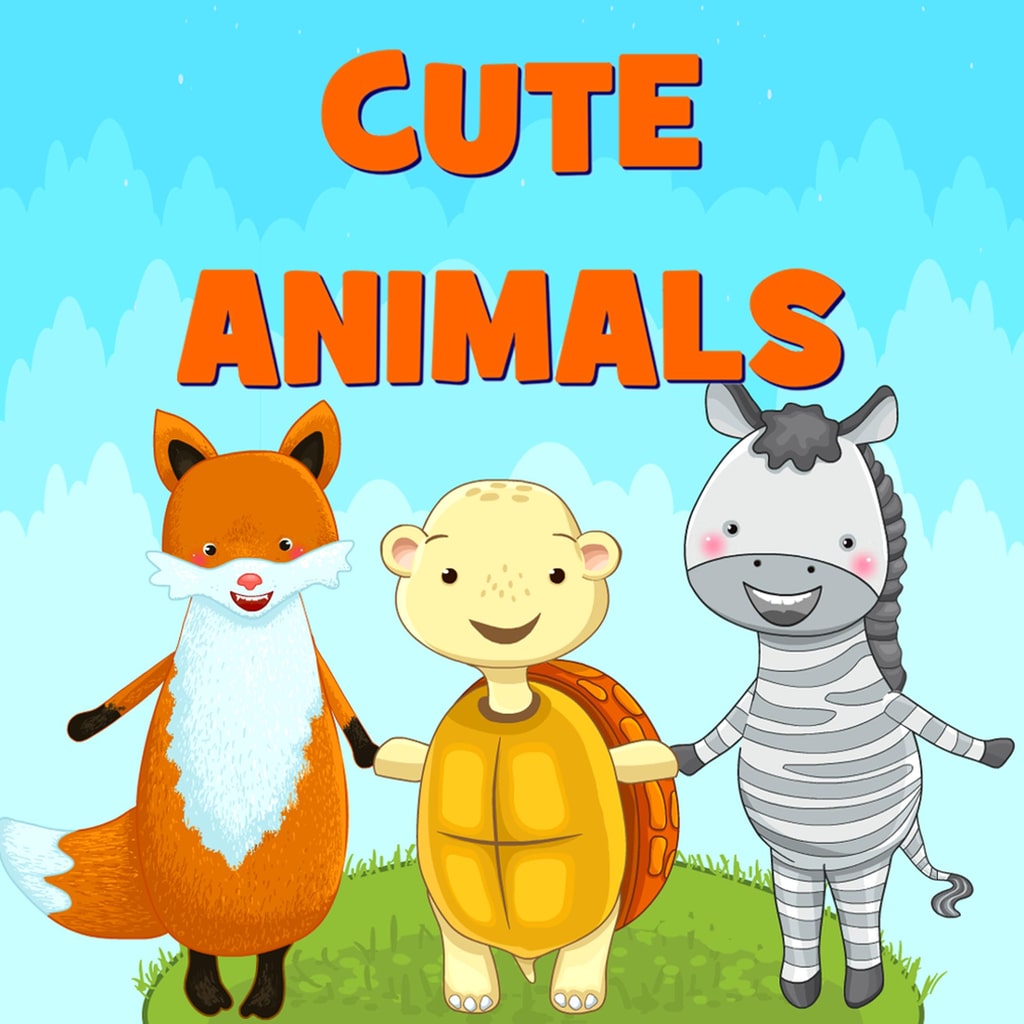
Educational games for young children often face a difficult balancing act. Lean too heavily into teaching, and they risk feeling like homework wrapped in bright colours. Focus only on entertainment, and the educational value quickly fades into the background. Cute Animals finds a comfortable middle ground, delivering an experience that genuinely teaches while never losing sight of the simple joy of play.
Developed by Inlogic Games, Cute Animals is a collection of twelve educational mini-games designed specifically for toddlers and pre-school children. Rather than overwhelming young players with complicated objectives or endless menus, it presents a colourful world filled with friendly animal characters, intuitive interactions and activities that encourage curiosity. There are no lengthy tutorials or walls of text. Instead, children learn naturally by tapping, dragging and experimenting at their own pace.
What immediately stands out is how carefully the game has been designed for its intended audience. Every activity feels approachable, every visual is welcoming and every success is rewarded with cheerful animations and satisfying sounds. It understands that for very young children, confidence is just as important as challenge. By removing unnecessary frustration, Cute Animals creates an environment where learning feels rewarding rather than intimidating.
Parents searching for something that is both entertaining and educational will likely appreciate the thought that has gone into its structure. This is not simply a bundle of unrelated mini-games thrown together. Each activity focuses on developing a specific early-learning skill while maintaining a consistent visual style and gentle atmosphere throughout.
A Playground Filled With Gentle Lessons
The twelve mini-games cover a surprisingly broad range of developmental skills. Shape recognition, counting, pattern matching, observation and logical thinking all receive attention without ever feeling repetitive. Each activity introduces its own colourful setting and friendly animal companions, giving children a constant sense of discovery as they move from one challenge to the next.
One of the stronger activities involves matching geometric shapes with the guidance of an energetic monkey exploring a bright forest. It is a straightforward concept, yet it teaches children to recognise different forms while improving hand-eye coordination through simple drag-and-drop controls. Success comes quickly, encouraging young players to keep experimenting without fear of failure.
Another enjoyable activity asks children to compare groups of flowers with the help of cheerful animals grazing across sunny meadows. Counting exercises are introduced naturally, helping children develop early mathematical awareness without making the experience feel like a formal lesson. Rather than presenting numbers in isolation, the game connects them to colourful environments and friendly characters that make each task feel playful.
Texture recognition also proves surprisingly engaging. Children are shown close-up views of animal fur, feathers or skin before identifying the matching creature. It is a clever exercise that encourages observation while introducing players to different animals in an entertaining way. Moments like these demonstrate that educational games do not need complicated mechanics to remain interesting.
The variety of activities helps maintain attention, particularly for younger children whose focus can shift quickly. Instead of repeating the same task with different graphics, Cute Animals regularly introduces fresh ideas that encourage different ways of thinking. This constant variety keeps the experience lively while reinforcing multiple learning skills.
Built For Little Hands
Perhaps the greatest strength of Cute Animals is its accessibility. The game contains no written text, making it instantly understandable regardless of language. Young players do not need reading skills to enjoy the experience, as every interaction is communicated visually through animation and simple prompts.
The touch controls are equally well implemented. Tapping and dragging feel responsive, and objects are large enough to be comfortably selected by small hands. There is little room for accidental mistakes caused by awkward controls, allowing children to concentrate on solving the activities rather than struggling with the interface.
Difficulty settings also deserve praise. Rather than overwhelming children with increasingly complex challenges too quickly, the game gradually introduces greater levels of difficulty that grow alongside the player’s abilities. This helps extend the game’s lifespan, ensuring children continue learning without becoming bored after only a few sessions.
Importantly, Cute Animals avoids punishing failure. Incorrect answers are gently encouraged rather than criticised, allowing children to try again without feeling discouraged. This positive reinforcement is particularly valuable for younger players who are still developing confidence in problem-solving.
Bright Colours And Friendly Faces
Visually, Cute Animals embraces a charming hand-drawn style that feels warm and inviting from beginning to end. Every environment bursts with colour without becoming visually overwhelming, creating a welcoming atmosphere that immediately captures attention. Forests, meadows and seasonal settings each possess their own personality while maintaining a consistent artistic direction.
The animal designs are equally delightful. From playful monkeys to cheerful zebras and fluffy woodland creatures, every character feels expressive and approachable. They are not simply decorative either. Each animal actively participates in the activities, helping reinforce the game’s educational themes through interaction rather than passive observation.
Animation plays an important role in keeping children engaged. Small celebrations accompany successful answers, while lively character reactions encourage experimentation. These moments of positive feedback provide satisfying rewards without relying on flashy distractions or excessive visual effects.
The seasonal backgrounds also add a welcome sense of variety. Autumn forests, sunny grasslands and colourful natural settings ensure each activity feels slightly different, encouraging curiosity as children continue exploring the collection.
Gentle Sounds That Encourage Exploration
Audio often goes unnoticed in educational games, but Cute Animals uses sound exceptionally well. Cheerful background music stays upbeat without becoming repetitive, creating a relaxing atmosphere suitable for younger audiences. The melodies never dominate the experience, instead complementing the colourful visuals and playful activities.
Natural animal sounds are another thoughtful inclusion. Hearing realistic noises strengthens the educational value while making interactions feel more immersive. Children naturally begin to associate animals with the sounds they make, adding another subtle learning opportunity beyond the visual activities.
Sound effects accompanying successful actions are equally effective. Rather than loud celebrations or exaggerated fanfare, the game rewards progress with pleasant audio cues that reinforce achievement without becoming overwhelming. This restrained approach keeps the experience calm and inviting during longer play sessions.
A Thoughtfully Designed Early Learning Experience
Cute Animals succeeds because it understands exactly who it is designed for. It never tries to entertain older players with unnecessary complexity or compete with larger family games packed with flashy mechanics. Instead, it remains focused on delivering a safe, welcoming and genuinely educational experience for toddlers and pre-school children.
Parents will appreciate the absence of stressful timers, competitive elements and frustrating failure states. Every activity encourages learning through exploration, allowing children to develop essential early skills in an environment built around positivity and curiosity. It is the kind of educational software that quietly teaches without children even realising they are learning.
The game is not intended to provide dozens of hours of content, and older children will naturally outgrow its simple activities. However, that is not a criticism so much as an acknowledgement of its clearly defined audience. For pre-school players taking their first steps into interactive learning, Cute Animals offers exactly the kind of gentle introduction that many educational games strive for but do not always achieve.
Cute Animals may not reinvent children’s educational software, but it does not need to. Its thoughtful design, charming presentation and carefully structured learning activities combine to create a delightful experience that feels both meaningful and enjoyable. It is colourful, welcoming and offers enough variety to keep young minds engaged while quietly helping them build valuable early skills.