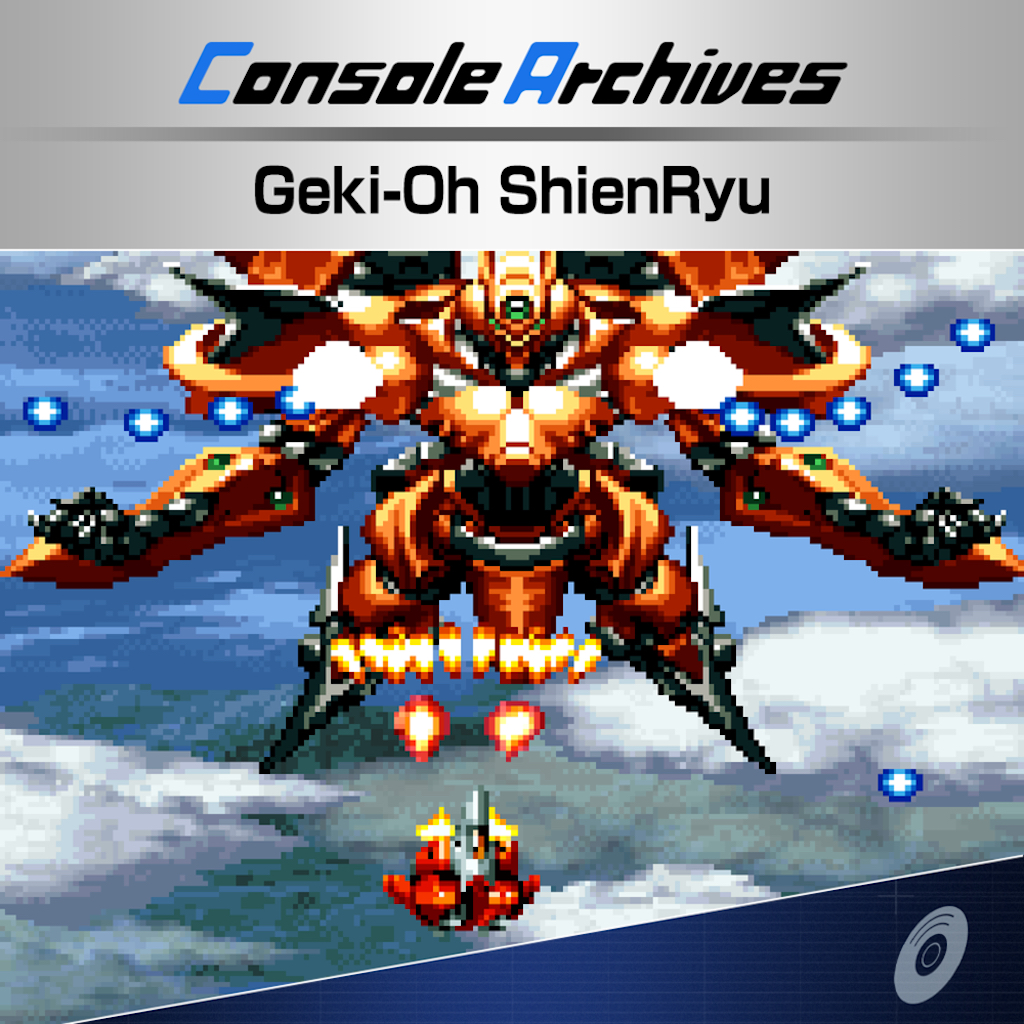
Originally released by Warashi in 1999, Geki-Oh ShienRyu arrives on modern systems not as a simple arcade revival but as a curated preservation of its PlayStation 1 home adaptation. This matters more than it might first appear. The PS1 version of Shienryu was already a reinterpretation of a 1997 arcade shooter, so what we are playing here is effectively a layered historical artefact. HAMSTER Corporation leans into that legacy rather than sanding it down, presenting the game as it existed, quirks and all. For genre purists, this approach feels almost archival in the truest sense, even when it occasionally highlights the limitations of its source material.
The premise remains classic shmup simplicity. You pilot a lone craft through eight stages of escalating mechanical warfare, facing waves of alien swarms and screen-filling war machines. There is no narrative clutter or cinematic distraction to soften the blow. Instead, the game speaks through bullets, patterns, and increasingly aggressive boss encounters that demand total focus. It is pure arcade philosophy translated into home console form, where survival is always temporary and mastery is always just out of reach.
Weapons, Chaos, and Controlled Panic
The heart of ShienRyu lies in its deceptively simple three-weapon system, which becomes far more strategic as enemy density ramps up. The Vulcan Cannon delivers wide, steady fire across the screen, ideal for managing chaotic drone clusters that swarm in unpredictable arcs. The Lightning Laser, meanwhile, trades mobility for raw destructive power, locking your ship into a devastating beam that melts bosses but leaves you momentarily committed to its path. The Missile system sits somewhere in between, offering structured forward pressure with homing support that becomes invaluable during mid-stage chaos.
This triad of weaponry encourages constant adaptation rather than static play. What begins as reactive shooting quickly evolves into deliberate rhythm management, where switching loadouts becomes a survival instinct rather than a tactical choice. There is a certain elegance to how quickly the game forces you to read its pacing. One moment you are clearing minor enemy craft with relaxed precision, and the next you are threading needle-thin bullet corridors while praying your chosen weapon holds the line long enough to escape.
The Rank System That Hates You Back
No discussion of Geki-Oh ShienRyu is complete without addressing its infamous hidden rank system. On paper, it sounds like a rewarding difficulty scaler that adjusts the challenge to player performance. In practice, it behaves more like an unseen adversary that punishes competence. Collecting power-ups, maintaining high-score chains, or even holding onto bombs too efficiently can trigger an internal escalation that ramps up enemy speed and bullet density to absurd levels.
This system creates a strange psychological tension. Do you play well and risk awakening the game’s full hostility, or do you intentionally hold back to survive longer? Veteran players often recommend avoiding certain high-value items entirely, a design quirk that feels both fascinating and slightly mischievous. It gives the game a meta-layer of self-regulation that borders on unintentionally comedic, yet it also ensures that no two runs ever feel entirely predictable.
Preservation with Modern Comforts
Where this release truly shines is in its Console Archives presentation suite. HAMSTER Corporation has equipped the game with the usual suite of modern conveniences that make retro preservation far more approachable. Instant rewind lets you correct fatal mistakes without restarting entire runs, while save states give you breathing room in a genre known for its punishing structure. Custom button mapping and rapid-fire toggles further smooth the experience, making even the most chaotic boss encounters manageable with enough patience.
The inclusion of display filters and CRT simulation modes also deserves mention. These options help restore the original arcade feel without locking players into outdated visuals. It is the kind of thoughtful enhancement that respects both newcomers and long-time shmup fans. Even when the game itself feels archaic in its design philosophy, the presentation tools ensure it remains readable, playable, and surprisingly welcoming.
A Flawed Preservation, But Honest
Of course, this is not a perfect restoration. Critics have long noted that the PS1 version used here is not the most refined iteration of ShienRyu. Compared with other home ports, it suffers from occasional slowdown, inconsistent audio looping, and missing visual effects that once made certain stages feel more dynamic and atmospheric. Some of the grander set pieces lose impact without their original layering, particularly in mid-game air battles, where the sense of scale feels slightly diminished.
Yet there is something oddly compelling about this imperfection. Rather than smoothing everything into a modern ideal, HAMSTER has preserved a version of ShienRyu that reflects its era’s technical limits. It is a reminder that arcade history is not always clean or consistent. Sometimes it is jagged, uneven, and held together by ambition rather than polish.
Final Verdict
Console Archives Geki-Oh ShienRyu is not the definitive version of Warashi’s shoot ‘em up legacy, but it may be one of the most honest. It offers a challenging, occasionally unforgiving experience that rewards reflexes, pattern recognition, and a willingness to accept chaos as part of the design. While its rank system can feel punitive and its PS1 roots introduce some rough edges, the core gameplay remains sharp, fast, and deeply satisfying once mastered.
HAMSTER’s preservation work ensures this is more than a nostalgic re-release. It is a playable time capsule, complete with all the brilliance and frustration that defined late-90s shmup design. For genre fans, it is an essential dive into a fascinating corner of arcade history. For newcomers, it is a harsh but rewarding introduction to a style of game design that refuses to compromise.