The horror genre often leans on familiar tricks. Jump scares, grotesque creatures, and relentless pursuit sequences have become standard tools for generating fear. Cannibal Tales takes a very different approach. Developed and published by Fantastico Studio, this interactive visual novel strips away action and spectacle in favour of something far more intimate. It places players in a room with another human being and asks them to listen. What unfolds is a psychological thriller that thrives on tension, moral ambiguity, and the uncomfortable realisation that curiosity can be as dangerous as violence.
Further weight is added by the involvement of the late Italian filmmaker Ruggero Deodato, whose work in cult horror continues to spark discussion decades after its release. Cannibal Tales serves as one of his final narrative contributions, and whether you are familiar with his filmography or not, that influence is felt throughout the experience. The game carries an unmistakable sense of unease that never relies on cheap theatrics. Instead, it steadily tightens its grip through conversation, implication, and difficult choices.
The Story Behind the Scoop
At the heart of Cannibal Tales is Helena, an ambitious journalist desperate to secure a career-defining story. She believes she has found it in the form of a young survivor linked to a notorious metropolitan cannibal case. The survivor’s story has fascinated the public for one simple reason: nobody understands why they were allowed to live.
What begins as a professional interview soon becomes something far more dangerous. Helena enters the conversation believing she is in control. She has the questions, the notebook, and the authority that comes with her profession. Yet as the interview progresses, certainty begins to crumble. Details emerge that challenge assumptions, motives grow increasingly unclear, and the psychological balance of power shifts in unexpected ways.
The writing deserves considerable praise for how effectively it draws players into this descent. Rather than overwhelming the audience with exposition, the narrative reveals itself piece by piece. Every answer raises new questions, and every revelation casts previous assumptions into doubt. The result is a story that constantly urges players to push forward, even when they suspect they may not like what they discover.
Perhaps most impressively, Cannibal Tales understands that horror often works best when it leaves room for interpretation. It rarely hands players neat explanations. Instead, it allows uncertainty to linger, creating an atmosphere where every conversation feels loaded with hidden meaning.
Choices That Actually Matter
Mechanically, Cannibal Tales is a straightforward visual novel, and its simplicity works in its favour. The game revolves almost entirely around dialogue choices and narrative decision-making. There are no action sequences, no inventory puzzles, and no elaborate gameplay systems vying for attention. The focus remains firmly on the characters and the ethical dilemmas placed before you.
What elevates the experience is how those choices are framed. The game constantly asks whether Helena’s pursuit of success justifies the methods she uses to achieve it. Do you push harder when someone is clearly uncomfortable? Do you exploit trauma if it leads to a better story? Do you prioritise truth, career advancement, or self-preservation?
These decisions rarely feel black and white. Most options exist in shades of grey, which makes their consequences all the more effective. There were multiple moments when I found myself pausing before making a selection, not because the game posed a difficult puzzle, but because I genuinely questioned what the right thing to do might be.
That sense of moral uncertainty becomes one of the game’s greatest strengths. It transforms a relatively simple visual novel into something far more engaging. Rather than simply observing Helena’s story, players become active participants in shaping the person she ultimately becomes.
An Atmosphere Thick with Dread
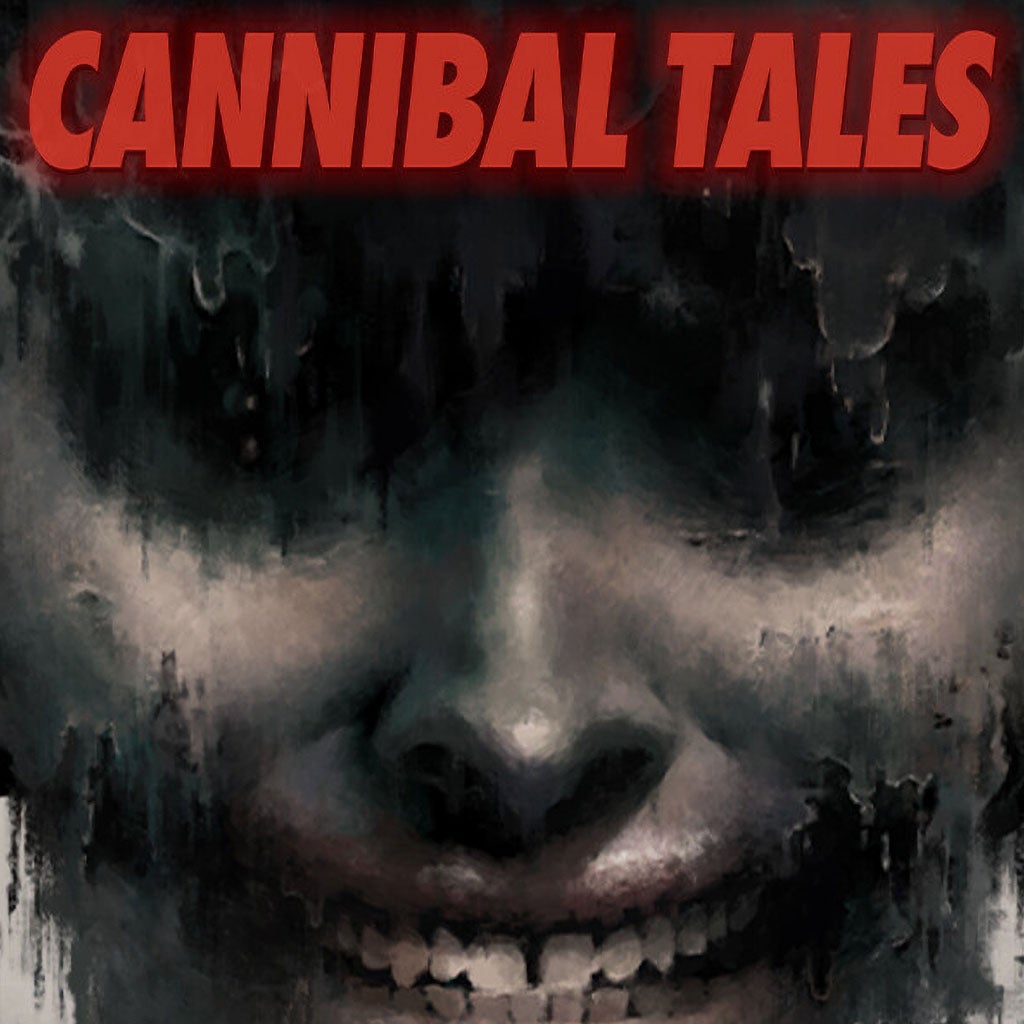
Visual novels live and die by presentation, and Cannibal Tales succeeds in establishing a striking visual identity. The artwork immediately grabs attention with its bold use of colour and unsettling character designs. Faces often seem slightly exaggerated, expressions linger just a little too long, and scenes carry a dreamlike quality that makes everything feel subtly off.
The pervasive use of deep reds throughout the game creates a constant sense of danger. Even in quieter moments, the colour palette keeps reminding players that something unpleasant lurks beneath the surface. The result is an atmosphere that feels oppressive without becoming overwhelming.
Character portraits do much of the heavy lifting in emotional storytelling. Small shifts in expression convey anxiety, confidence, fear, and manipulation with remarkable effectiveness. Since so much of the game unfolds during conversations, these visual cues become essential for understanding what remains unsaid.
The soundtrack deserves equal recognition. Drawing inspiration from classic horror synthesiser scores, it fills scenes with low, pulsing tension. The music rarely dominates a moment, but it consistently reinforces the feeling that something is building beneath the surface. Even during relatively calm exchanges, the audio creates a lingering sense of discomfort that never fully dissipates.
A Deliberately Focused Experience
Cannibal Tales knows exactly what kind of game it wants to be. That confidence is admirable, though it has its limitations. Players expecting traditional horror mechanics may be surprised by how little conventional gameplay there is. This is fundamentally an interactive story, and every design decision supports that objective.
The relatively short runtime also means the experience can be completed in a single sitting. While multiple endings encourage replayability, some repeated dialogue becomes noticeable when exploring alternative paths. Certain conversations must be revisited several times before reaching significantly different outcomes, which can occasionally slow the pacing.
There is also the reality that visual novels remain a niche genre. Players who struggle to engage with text-heavy experiences may find it difficult to connect with the game’s strengths. Cannibal Tales demands patience and attention. It asks players to absorb conversations carefully and consider the implications behind every choice. Fortunately, those willing to meet the game on its own terms will discover an experience that feels refreshingly committed to its vision.
Final Verdict
Cannibal Tales is not interested in easy entertainment. It aims to unsettle players, challenge their assumptions, and force them to confront difficult ethical questions. In that respect, it succeeds remarkably well. Its narrative is gripping, its atmosphere oppressive, and its moral dilemmas linger long after the credits roll.
While the limited gameplay and short runtime may not appeal to everyone, those elements are ultimately secondary to what the game is trying to accomplish. This is a visual novel that understands the power of conversation, using dialogue as both its primary storytelling tool and its greatest source of tension.
Fantastico Studio has crafted a disturbing psychological thriller that feels deeply personal and relentlessly unsettling. More importantly, it avoids relying on shock value alone. Instead, it builds fear through character, uncertainty, and the uncomfortable knowledge that sometimes the worst decisions are made for reasons that feel entirely understandable.
For fans of narrative-driven horror, interactive fiction, and morally complex storytelling, Cannibal Tales offers a memorable descent into darkness that is difficult to forget.