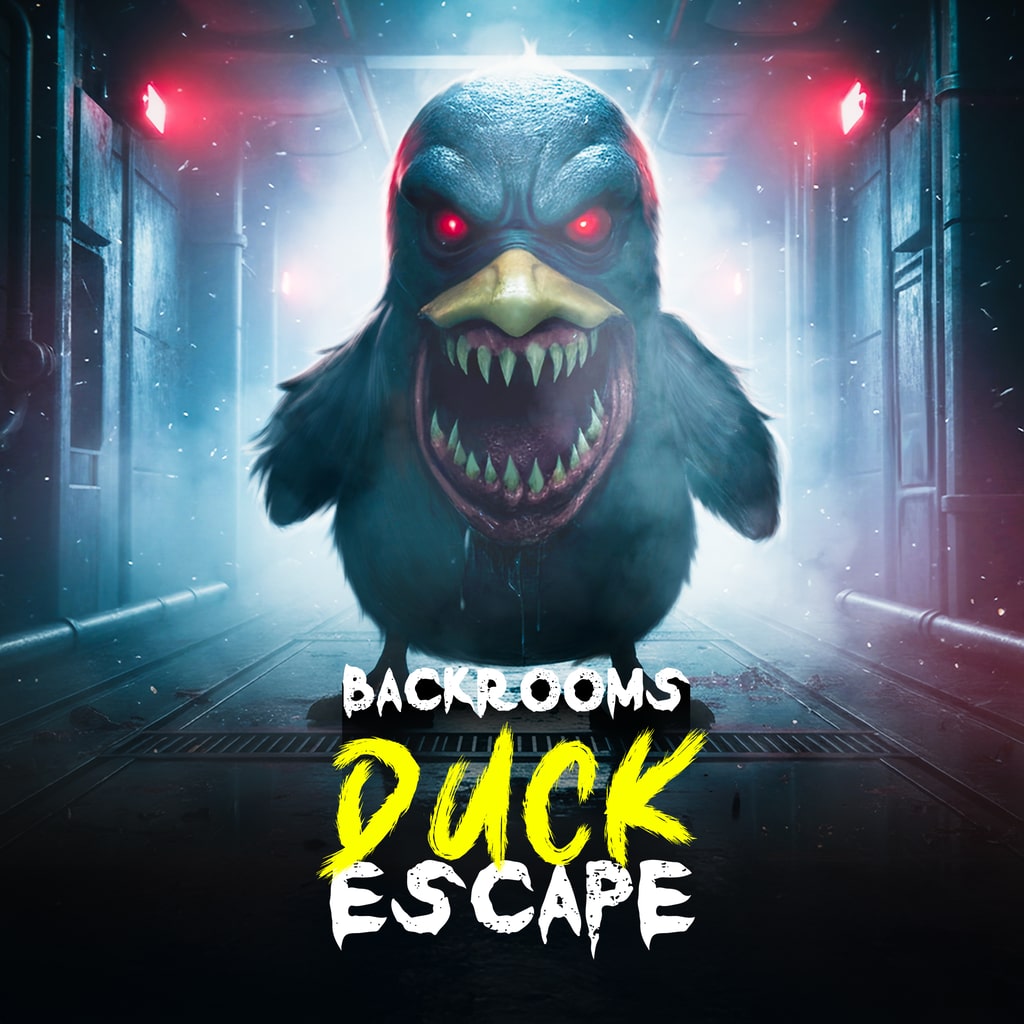
The “Backrooms” concept has become a familiar fixture in modern horror games: endless yellow corridors, humming lights, liminal dread, and the slow erosion of sanity through repetition and isolation. Backrooms: Duck Escape arrives wearing that visual language openly—but it does not treat it with reverence. Instead, it twists the formula into something deliberately absurd, blending low-stakes horror with surreal comedy and an unexpected commitment to chaos.
This is not a game that aims to terrify in traditional ways. Rather, it weaponises contrast: unsettling environments paired with ridiculous objectives, tension undercut by slapstick movement, and existential horror punctured by the presence of ducks. The result is a game that feels knowingly unhinged, and surprisingly confident in that identity.
Tone and First Impressions
From the opening moments, Backrooms: Duck Escape makes its intentions clear. The familiar yellow corridors are present, but they are framed less as oppressive spaces and more as a playground for unpredictability. The game leans into parody without fully abandoning horror, creating a tone that sits somewhere between unease and farce.
This tonal duality is the game’s defining characteristic. At times, the environment successfully evokes the unsettling emptiness associated with the Backrooms mythos. At others, the sheer absurdity of the objectives and mechanics dismantles that tension entirely. Rather than undermining the experience, this push-and-pull becomes the core appeal.
Players quickly learn that Backrooms: Duck Escape is not interested in sustaining dread. It is interested in keeping players uncertain—not just about what might happen next, but about how seriously they should take what is happening at all.
Gameplay and Core Loop
At its core, Backrooms: Duck Escape is a first-person exploration and escape game with light survival elements. The primary objective is simple: navigate maze-like environments, avoid threats, and progress toward escape. What complicates matters is the presence of ducks—often central to progression, puzzles, or outright chaos.
Movement is intentionally loose. Controls feel floaty rather than precise, which initially seems like a flaw but gradually reveals itself as a deliberate design choice. The lack of tight control contributes to unpredictability, turning even simple navigation into a source of tension or comedy, depending on the moment.
Threats exist, but they are rarely the focal point. Enemies or hazards are used sparingly, often appearing suddenly and disappearing just as quickly. This inconsistency reinforces the game’s unstable tone. You are never quite sure whether you are meant to be scared, amused, or mildly annoyed—and often it is all three at once.
Environmental Design and Liminal Space
Despite its comedic leanings, Backrooms: Duck Escape makes effective use of liminal space design. Corridors stretch endlessly, rooms repeat with slight variations, and landmarks are rare. This creates genuine disorientation, particularly during longer sessions.
Lighting and sound play key roles here. Fluorescent hums, distant echoes, and sudden audio cues maintain a baseline of unease, even when the visuals veer into absurdity. The game understands the power of the Backrooms aesthetic and uses it as a foundation, even as it actively undermines it.
However, environmental variety is limited. While this aligns with the Backrooms concept, it also means that visual fatigue sets in quickly. The game relies on mechanical oddities and surprise events to maintain interest, rather than evolving its spaces significantly.
Puzzles, Ducks, and Design Philosophy
Puzzles in Backrooms: Duck Escape are intentionally inconsistent. Some require light observation or environmental interaction, while others feel almost arbitrary. Ducks may act as keys, distractions, obstacles, or simply exist to disrupt expectations.
This design philosophy embraces unpredictability over logic. Players looking for carefully constructed puzzles may find the experience frustrating. Solutions are not always intuitive, and experimentation is often required. Failure rarely carries heavy penalties, reinforcing the idea that trial and error is part of the intended experience.
This approach contributes to the game’s chaotic charm, but it also limits satisfaction. Progress often feels accidental rather than earned, and moments of clarity are fleeting. The game prioritises surprise over coherence, which will divide players sharply.
Audio and Presentation
Sound design is one of the game’s stronger elements. Audio cues are used effectively to create tension, particularly in otherwise quiet environments. Sudden noises can genuinely startle, even when followed by something ridiculous.
Music, when present, is minimal and atmospheric. It rarely asserts itself, allowing environmental sounds to dominate. This restraint helps maintain immersion, even when the gameplay itself veers into parody.
Visually, the game is functional rather than polished. Textures are basic, animations are stiff, and visual fidelity is modest. However, this roughness arguably enhances the experience, giving the game a low-budget, experimental feel that suits its chaotic tone.
Pacing and Replayability
Backrooms: Duck Escape is best experienced in short sessions. Extended play highlights repetition and mechanical looseness, which can erode patience. The game is most effective when its unpredictability feels novel rather than exhausting.
Replayability exists primarily through randomness and emergent moments. No two runs feel exactly the same, but the overall structure remains unchanged. Players who enjoy unscripted chaos may find this appealing; others may feel there is little reason to return once the novelty fades.
Intentional Flaws or Missed Opportunities?
The biggest question surrounding Backrooms: Duck Escape is whether its rough edges are intentional. Many design choices—loose controls, inconsistent puzzles, tonal whiplash—could be read as either deliberate subversion or lack of refinement.
In practice, the answer is likely both. The game clearly understands the meme-driven nature of its concept and leans into that energy. At the same time, certain frustrations feel less like design statements and more like limitations.
Whether these elements are endearing or irritating will depend entirely on player mindset.
Final Verdict
Backrooms: Duck Escape is a strange, uneven, but undeniably distinctive experience. It takes a well-worn horror concept and gleefully dismantles it, replacing dread with absurdity and coherence with chaos. At its best, it is unpredictably funny and genuinely unsettling in brief bursts. At its worst, it is frustrating, repetitive, and mechanically loose.
This is not a game for players seeking polished horror or carefully structured design. It is a novelty experience that thrives on surprise, irony, and the joy of not knowing what the game will do next.
For players willing to embrace nonsense and tolerate rough edges, Backrooms: Duck Escape offers a memorable, if fleeting, escape from convention. For others, it may feel like a joke that overstays its welcome.