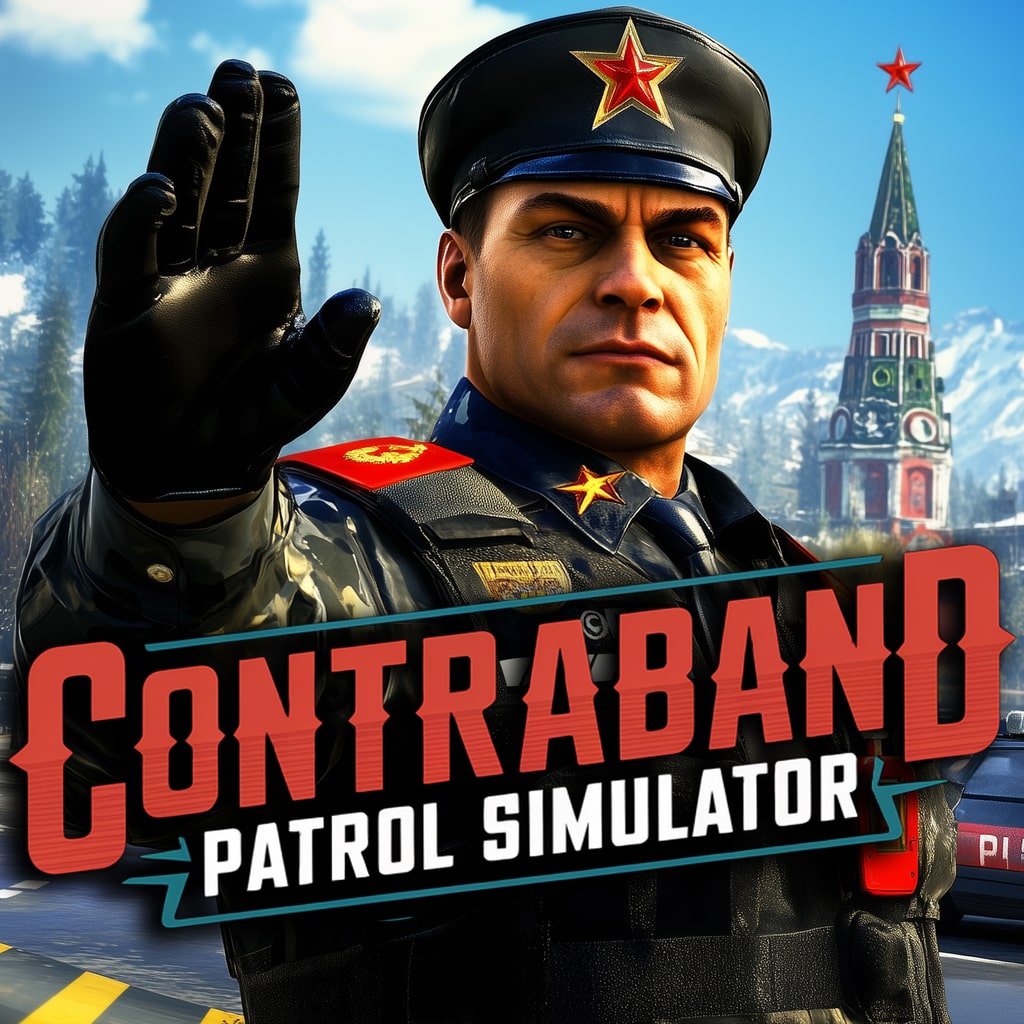
In a gaming landscape increasingly dominated by sprawling open worlds and spectacle‑driven narratives, Contraband Patrol Simulator stakes its claim with endurance, attention to detail, and a singular focus: make the everyday work of customs enforcement engaging, challenging, and deeply strategic. Rather than high‑octane action or explosive set pieces, this title invites players into the calm but tense rhythm of patrols, inspections, paperwork, and decision‑making under pressure.
What unfolds is not a typical “police simulator,” but a layered simulation where money, morality, suspicion, and consequence intersect. It’s a game for players who enjoy careful thinking and micromanagement — and who don’t mind that excitement here comes from clever deductions and procedural mastery rather than dramatic combat.
Premise & World
Set in a fictional border region with a mix of urban hubs, rural crossings, and sprawling checkpoints, Contraband Patrol Simulator places you in command of a small unit responsible for intercepting illicit goods. Your posting varies from remote mountain crossings to bustling shipping ports, each with its own set of unique challenges, traffic flows, suspicious behaviours, and economic pressures.
You’ll scan incoming vehicles, interrogate travellers, inspect cargo manifests, and balance the risk of letting contraband slip through against the costs of unnecessary harassment and delays. Decisions have consequence: let a drug shipment go unchallenged and crime spikes in your jurisdiction; detain a legitimate delivery for too long and time‑sensitive goods spoil, irritating local businesses and eroding public trust.
The narrative unfolds not through cutscenes, but through emergent storytelling — every inspection, every encounter with a nervous trucker, and every intercepted illegal item contributes to an overarching sense that the border is a living, breathing ecosystem that responds to your choices.
Core Gameplay & Mechanics
At its core, Contraband Patrol Simulator is a game about risk assessment, procedural precision, and dynamic systems management.
Inspections & Interrogations
Every day begins with a briefing: incoming shipments, intelligence reports, local crime trends, and priorities (e.g., weapons interdiction, agricultural safety, currency smuggling). Patrol zones each carry distinct risk profiles, and over time you learn where certain contraband types tend to appear.
When a vehicle pulls up, you have a suite of tools to evaluate it:
- Manifest Analysis: Is the declared cargo consistent with the vehicle type, destination, and regional trade patterns?
- Behaviour Indicators: Does the driver’s behaviour or speech pattern trigger suspicion?
- Physical Inspection: Open cargo holds and probe suspicious packages — but be mindful, invasive checks cost time and can escalate tensions.
The interface here is accessible yet detailed; blueprints of cargo, annotated manifests, and behavioural cues present information players must synthesise quickly and accurately.
Dynamic Systems
Rather than a simple “right/wrong” mechanic, the game’s systems are interlinked:
- Economy: Your region relies on legitimate trade. Excessive delays or false positives hurt local business.
- Public Trust: Overzealous enforcement lowers trust, leading to protests or intelligence unreliability.
- Criminal Networks: Every interdiction weakens contraband operations — but criminals adapt, shifting smuggling routes or tactics.
This dynamic web means there’s no single correct way to play. If you favour caution, crime may fall but economic fallout may rise. Lean toward leniency and you might speed up commerce — but at what cost?
Visuals & Audio
Contraband Patrol Simulator isn’t a visual powerhouse in the style of open‑world AAA titles, but it doesn’t need to be. Its art direction prioritises clarity and functional detail over flair, which suits its simulation ethos. Interfaces are clean and legible, cargo inspections present clear indicators, and environment design — from dusty checkpoints to bustling border plazas — reinforce the tone without overwhelming the player.
Audio design is similarly utilitarian. Ambient sounds — engines idling, announcements over PA systems, murmured conversations, and distant traffic — contribute to the sense of place without distracting from the task at hand. Music is minimal and mood‑setting, surfacing most during tense moments like high‑risk inspections or critical incident responses.
The aesthetic choices collectively underline the game’s intent: this is about systems, judgement, and consequence — not sensory overload.
Strengths
1. Deep Systems & Emergent Gameplay
The interplay of economic pressure, criminal adaptation, and public trust dynamics ensures that each play session feels unique. There are no rigid scripts — only evolving patterns that demand strategic thinking.
2. Thoughtful Risk Mechanics
Rather than portraying contraband interception in binary terms, the game forces players to weigh trade‑offs, making each decision feel significant and often morally ambiguous.
3. Accessible Yet Detailed Interface
Veteran sim players will appreciate the layers of information available, while newcomers can engage thanks to clear menus and on‑screen guidance.
4. Emergent Storytelling
Narrative isn’t spoon‑fed. Instead, the story arises from the consequences of your strategies, fostering a personal investment in every patrol decision.
Weaknesses
1. Pacing Can Be Slow
For players accustomed to faster‑paced gameplay, the methodical tempo here can feel plodding. Long inspection queues and bureaucratic screens may test patience.
2. Repetitive Loops
After long sessions, the core loop — evaluate manifest → inspect cargo → make judgment — can start to feel mechanical, especially if criminal patterns haven’t shifted dramatically.
3. Visual Restraint
While functional, the lack of visual flair may not appeal to players who prefer more cinematic or stylised presentation.
4. Limited Narrative Beats
Because storytelling is emergent, players seeking scripted drama, character arcs, or story missions may feel the experience leans too heavily on systems rather than narrative events.
Overall Experience
Contraband Patrol Simulator thrives not on spectacle, but on thoughtful engagement with complex systems. It rewards players who enjoy careful calculation, pattern recognition, and strategic adaptation. Each inspection carries the weight of consequence — not just whether you catch illegal goods, but how your choices ripple through the economy, public trust, and criminal behaviour.
This is a title that invites quiet reflection and careful planning. There’s satisfaction to be found in refining your inspection strategies, anticipating smuggler tactics, and watching dynamic systems respond to your leadership. It’s not flashy. It’s not loud. But for those who enjoy simulation games with depth and emergent complexity, this is an experience that rewards patience and strategic curiosity.
In a genre where action and spectacle often dominate, Contraband Patrol Simulator stands apart by making the mundane feel meaningful — and by reminding us that sometimes the most compelling stories arise not from explosions, but from the subtle dance of choices and consequences.
Final Verdict
Contraband Patrol Simulator is a smart, engaging simulation that turns routine border enforcement into a nuanced and rewarding strategic challenge. Its layered systems, emergent narrative potential, and thoughtful risk mechanics deliver hours of contemplative gameplay. While its deliberate pacing and procedural focus may not suit all players, those who enjoy cerebral sims and strategy will find a rich, thoughtful experience here.