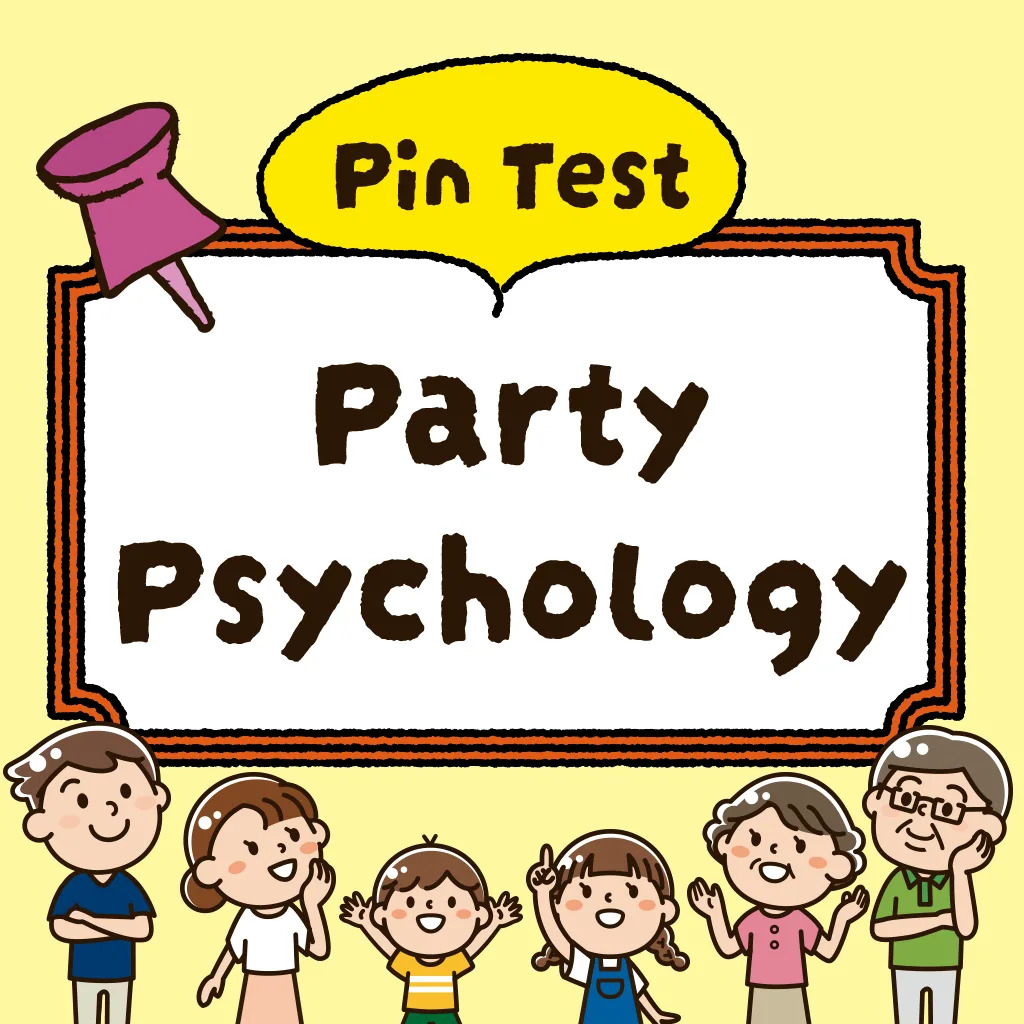
In an age where party games often default to frantic button-mashing and wildly exaggerated minigames, Pin Test Party Psychology arrives like a breath of analytical fresh air — a social experiment masquerading as a multiplayer party title. At its core, this game isn’t about high scores or reflex challenges; it’s about people, patterns, perception, and the delightful chaos that emerges when players begin to understand — and outwit — one another.
A far cry from the manic antics of Mario Party or the slapstick chaos of Jackbox Games, Pin Test Party Psychology is an introspective, interactive experience that uses psychological principles as its main playground. What results is one of the most original and thought-provoking party games to hit the digital tabletop in years.
A Game Built Around Us
From the outset, Pin Test Party Psychology makes a bold promise: this isn’t just a game — it’s an exploration of human behaviour. Whether you’re sitting on the sofa with friends, playing locally on one screen, or connecting online with distant companions, the core loop centers around questions, predictions, and interpretative challenges. Rather than competing to “win” in the traditional sense, players compete to understand each other better.
At the heart of the game are rounds based on psychological prompts, group inference, and behavioural prediction. Each player receives questions about personality types, choices in hypothetical scenarios, or subtle tendencies. Then, players are asked to predict how others will answer, or to match patterns between themselves and the group. Correct predictions earn points, but the real joy comes from watching alliances form — and occasionally explode — when assumptions fall apart.
This structure generates its own kind of tension: not the frantic pressure of timed reactions, but the social pressure of will I interpret them right?. Pin Test doesn’t just ask you to answer questions — it asks you to know the people sitting beside you.
Psychology With a Party Twist
The prompts themselves draw from familiar psychological constructs: preference tests, moral dilemmas, pattern recognition, and even basic cognitive fallacies. One round might ask players to choose their most likely reaction to a quirky scenario; another might test quick judgment with ambiguous images. Later, you’re scored not only on your own answer, but on how well you predict others’ reactions.
Unlike personality quizzes that live or die by ambiguous wording, Pin Test Party Psychology cleverly designs its questions to be accessible, engaging, and fun. They aren’t diagnosic tools; they’re conversation starters, structured to reveal quirks — or contradictions — in the group’s assumptions.
The “party” aspect isn’t an afterthought, either. Between question rounds, minigames test memory recall, emotional inference, and even physical coordination — but always with a psychological twist. A “mirror dance” challenge, for example, requires two players to mimic each other’s motion patterns as precisely as possible, while a “stare contest” reads micro-reactions to sudden visual stimuli. These moments provide a necessary break from the cognitive pace, injecting moments of pure, gleeful chaos.
Social Interaction: The Real Winner
Where Pin Test Party Psychology truly thrives is in social setting. It’s built to turn friends into anthropologists and rivals into collaborators. One game, played casually over drinks and laughs, might spark intense debates over why a friend chose A instead of B in a morally ambiguous question. Another session could erupt in collective guffaws as someone’s bold prediction spectacularly fails.
Unlike games that hinge on a single performance metric, Pin Test rewards nuance, insight, and even genuine empathy. It cultivates those rare moments where players lean back, consider their friends’ personalities, and get it right — or spectacularly wrong. Either outcome feels memorable.
The game’s pacing is thoughtful. Most sessions run 30–60 minutes, which feels just right: long enough to deepen interaction, short enough to keep attention lively. There’s generous room for customization too, allowing groups to tailor question sets, difficulty levels, and round themes to suit mood, age, or familiarity with one another.
Presentation and Personality
Visually, Pin Test Party Psychology adopts a bold, clean aesthetic that mirrors its conceptual underpinnings. Characters are represented by simple, charming avatars; interfaces are clear and legible; animations are subtle but expressive. Tone throughout the game lands squarely between playful and cerebral — never too cute to be taken seriously, and never too serious to feel intimidating.
The soundtrack complements this balance with light, ambient tunes that fade into silence during thoughtful moments, and rise playfully during interactive rounds. Sound effects are minimal but effective, avoiding the cacophony that plagues many party titles.
One particularly thoughtful touch is the game’s use of expressive visual feedback after rounds. Animations display how closely players aligned with group averages, who surprised the group most, and where outliers emerged. These aren’t just statistical readouts — they become conversation catalysts, inviting laughter, teasing, and genuine reflection.
Accessibility and Inclusivity
While the game’s psychological premise could easily feel niche or intimidating, the developers have been careful to keep mechanics accessible. Questions are phrased in everyday language, with visual examples that avoid dense academic terminology. There are adjustable options for age appropriateness, language difficulty, and session length, making Pin Test suitable for a wide variety of players — casual gamers, non-gamers, families, and seasoned strategists alike.
Importantly, the game avoids any implication of “judgment.” It embraces personality as difference, not deficiency. There’s no correct “psychological profile”; there are only patterns, predictions, and revelations that reveal how people think — not how they should think. This design philosophy makes it feel like the most welcoming social party game released in years.
Replay Value and Customisation
Unlike many party titles where replay value diminishes once questions or minigames are exhausted, Pin Test Party Psychology includes procedurally generated question sets and regular thematic updates. Seasonal packs, mood packs (e.g. “Mystery”, “Ethics”, “Pop Culture”), and user-generated content support keep sessions fresh.
Session templates let groups tailor experiences: “Deep Thinker Mode” emphasises introspection, “Quick Fun Mode” prioritises short, silly questions and rapid minigames, and “Gallup Night” mimics personality test formats reminiscent of real-world assessments. This adaptability means players can return again and again without feeling like the pool of content has been drained.
Where It Stumbles
For all its creativity and heart, Pin Test Party Psychology isn’t perfect. The very premise that makes it stand out — a focus on psychology over reflex — also means that more competitive players seeking traditional party chaos might feel underwhelmed. There’s no frantic button mashing or edge-of-your-seat objective racing here; it’s a game of minds, not speed.
Additionally, while the question design is strong, a few prompts occasionally veer into vague territory that can lead to confusion rather than insight. Most players will laugh these off; a few might wish for tighter wording or clearer context.
Finally, split-screen play on handheld devices can feel cramped when multiple avatars and question text clutter the display. The experience is still smooth and functional, but larger screens — TV output or PC — showcase the game’s design more comfortably.
Verdict
Pin Test Party Psychology is one of those rare party games with a genuine identity. It doesn’t copy formulas that came before it; it builds its own foundation — one grounded in human behaviour, social insight, and the joyful surprises that emerge when you predict (or mispredict) your friends’ minds. Thoughtful, clever, and endlessly engaging in the right social settings, this game elevates party gaming into something more reflective without ever losing fun.
For groups who relish laughter, insight, and shared discovery, Pin Test Party Psychology is a must-play.