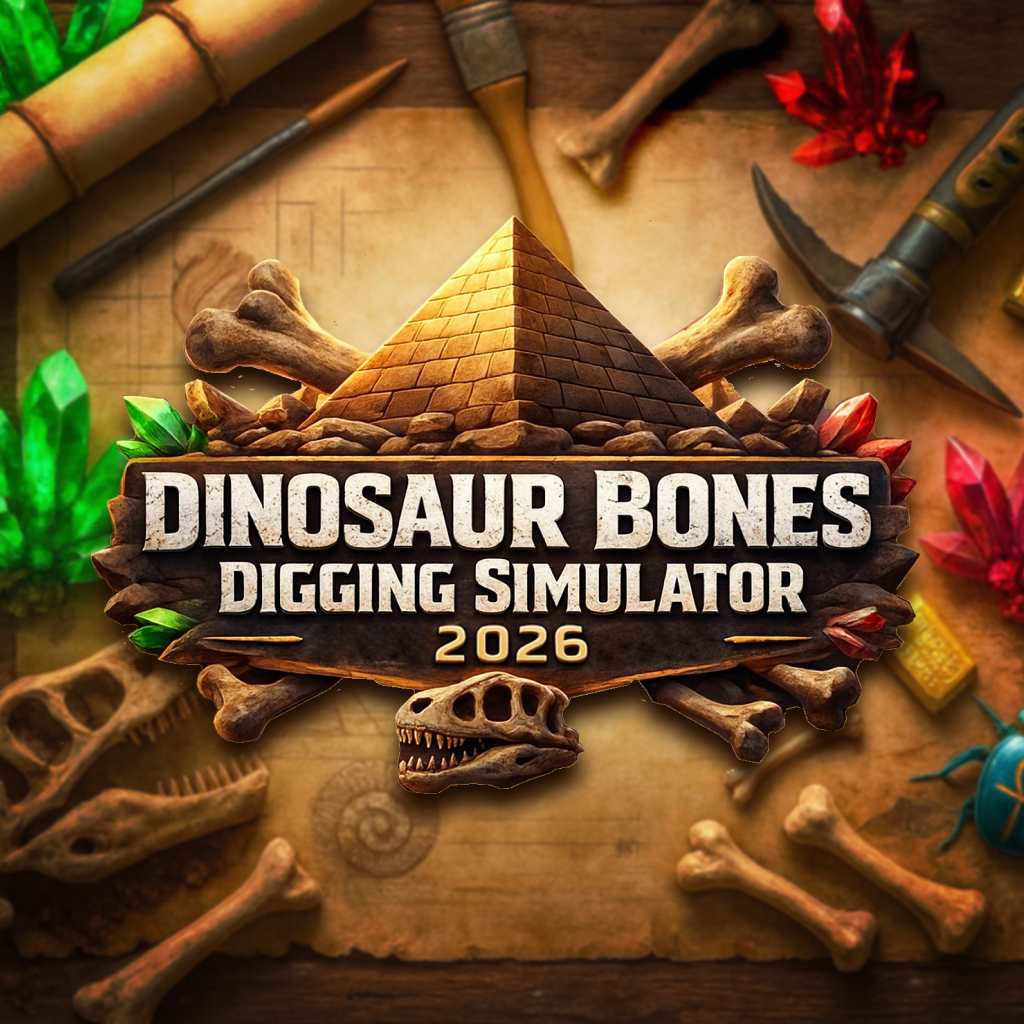
There’s something inherently captivating about the idea of unearthing relics from Earth’s prehistoric past. We watch documentaries, visit museums, and marvel at enormous skeletons — but few games have fully embraced the thrill and detail of archaeological excavation as more than a side-activity. Dinosaur Bones Digging Simulator 2026 makes that dream its entire premise. It asks you to don the hat of a palaeontologist, grab a trowel, and work meticulously to uncover ancient fossils and reconstruct millennia-old giants.
In a market often dominated by high-octane action and glossy spectacle, this unassuming simulator stands out for its patient pace, surprising depth, and respect for scientific process. It’s a thoughtful, surprisingly tactile experience that thrives on curiosity and careful planning. That said, it isn’t perfect — and your enjoyment will depend heavily on your appetite for slow-burn discovery and strategic resource management.
Dig In — The Core Experience
At its simplest, Dinosaur Bones Digging Simulator 2026 asks you to excavate dinosaur fossils from various dig sites around the globe. Each session starts with a location choice — arid badlands, dense jungle plateaus, frozen tundra plains — and a limited budget to deploy your team, tools, and resources. From there, you explore grids of earth and rock, uncover fragments, and ultimately piece them together into full skeletal reconstructions.
The mechanics are elegant in their simplicity: survey, dig, uncover, clean, analyse and preserve. These steps echo real palaeontological workflow, turning what could easily have been a mindless click-fest into a methodical, satisfying process. You’ll find yourself studying soil compositions, selecting appropriate tools, and deciding when to dig deeper or back off to conserve precious time and resources.
This isn’t a game about speed; it’s about doing things right. Patience is rewarded, not penalised. There’s a gentle rhythm to uncovering buried bones, dusting away sediment, and watching a fossil come into view piece by piece — an almost meditative pleasure that more intense games rarely attempt.
Tools, Team and Strategy
Digging without structure quickly becomes chaotic, which is why the game’s management layer is just as important as the excavation itself. In Dinosaur Bones Digging Simulator 2026 you aren’t working alone: you recruit and assign specialists, each with their own strengths and skill trees. Do you send your best diggers into hazardous terrain, or keep them reserved for delicate fossil extraction? Do you invest in upgraded brushes and microscopes, or new ground-penetrating radar to survey larger swathes of land?
These choices matter. With limited funds and an ever-clocking seasonal timer, strategising becomes as engaging as the digging itself. One misallocation — too few scanners, too many diggers in the wrong zone — can turn what should’ve been a stunning Tyrannosaurus discovery into a disappointing partial skeleton and depleted funds.
There’s also a satisfying progression loop: successful digs unlock research points, which in turn unlock new tools, better equipment, and access to more promising dig sites. Over time, you feel yourself becoming a more efficient, more strategic palaeontologist rather than just a player repeating the same excavation tasks.
Environmental Variety and Worldbuilding
One of Dinosaur Bones Digging Simulator 2026’s most impressive achievements is how each dig site feels distinct. Sweeping plains in Argentina offer vast open grids with deep sediment layers. Jungle-clad plateaus in Southeast Asia hide bones beneath thick roots and foliage. The icy wastes of Siberia present their own challenges — like frozen ground that requires thermal drills and extra preparation.
This environmental variety does more than decorate the experience: it changes how you play. Soil types affect digging speed and fragility; climate affects tool wear and team stamina; even the flora and fauna pose subtle impediments to progress. These diversifications give each site a unique identity and keep longer play sessions from devolving into monotony.
Worldbuilding is enriched through scattered research logs, ancient inscriptions, and contextual lore that hint at prehistoric ecosystems and the cultures that once surrounded them. These narrative threads encourage players to care not just about the bones, but about the wider story of life on Earth.
Pacing — Patient Reward vs. Waiting Game
The deliberate pace of Dinosaur Bones Digging Simulator 2026 is a double-edged sword. On its best days, the slow rhythm feels meditative, compelling, and deeply satisfying. Uncovering a rare bone fragment and watching the skeleton reconnect like puzzle pieces is a moment of genuine joy.
However, there are stretches that lean too far into tedium. Long periods of surveying and preparatory steps, especially on harder difficulty settings, can feel repetitive if not balanced with genuine progress. Players who favour brisk mechanical feedback and constant sensory rewards may find the simulator’s cadence trying at times.
It helps that the game rarely feels unfair — challenging, yes, but fair. Still, there’s a noticeable divide between the enthralling thrill of discovery and the more mundane grind of preparation work. This isn’t a flaw so much as a design choice — one that will absolutely appeal to fans of slow-paced simulation and strategy, but might test the patience of others.
Visuals and Audio — Subtle but Effective
Visually, Dinosaur Bones Digging Simulator 2026 isn’t aiming to dazzle with high-octane graphics or flashy effects. Its strength lies in clarity, and in giving players precisely what they need to assess terrain, spot potential fossil contours, and appreciate environmental details without distraction. Terrain textures vary nicely between regions, bones have a satisfying weight and surface detail when uncovered, and UI elements are clean and informative.
Sound design complements this visual clarity. Ambient noises — wind over grasslands, insects in the jungle, distant cracking ice — give each site a distinct atmosphere. Tool sounds are understated but tactile, with brushes on stone and chisels tapping at sediment providing satisfying audio feedback. There’s a minimalist soundtrack that stays quiet during play, allowing the environment and your own thoughts to take centre stage.
The result is an immersive soundscape that reinforces the game’s contemplative mood while avoiding overstimulation.
Where It Could Improve
While Dinosaur Bones Digging Simulator 2026 largely nails its vision, a few areas could use refinement. Deeper character development — even minor personal quirks, team morale events, or background stories — would give greater emotional weight to the crew you manage. More dynamic events during digs — like sudden weather changes, unexpected fossil discoveries, or rival teams — could also heighten tension and variety.
A clearer in-game tutorial or onboarding sequence would help beginners transition from casual interest to effective strategy more smoothly. Some quality-of-life upgrades like map annotations or easier navigation between sites could also reduce friction in longer playthroughs.
Final Verdict
Dinosaur Bones Digging Simulator 2026 triumphs by embracing curiosity over chaos and precision over spectacle. It’s a thoughtful, methodical simulator that rewards careful planning, observational acuity, and strategic resource allocation. Its pacing won’t satisfy every gamer, but for those who enjoy slow-burn progression and the simple joy of discovery, this is one of the most satisfying digging sims in recent memory.