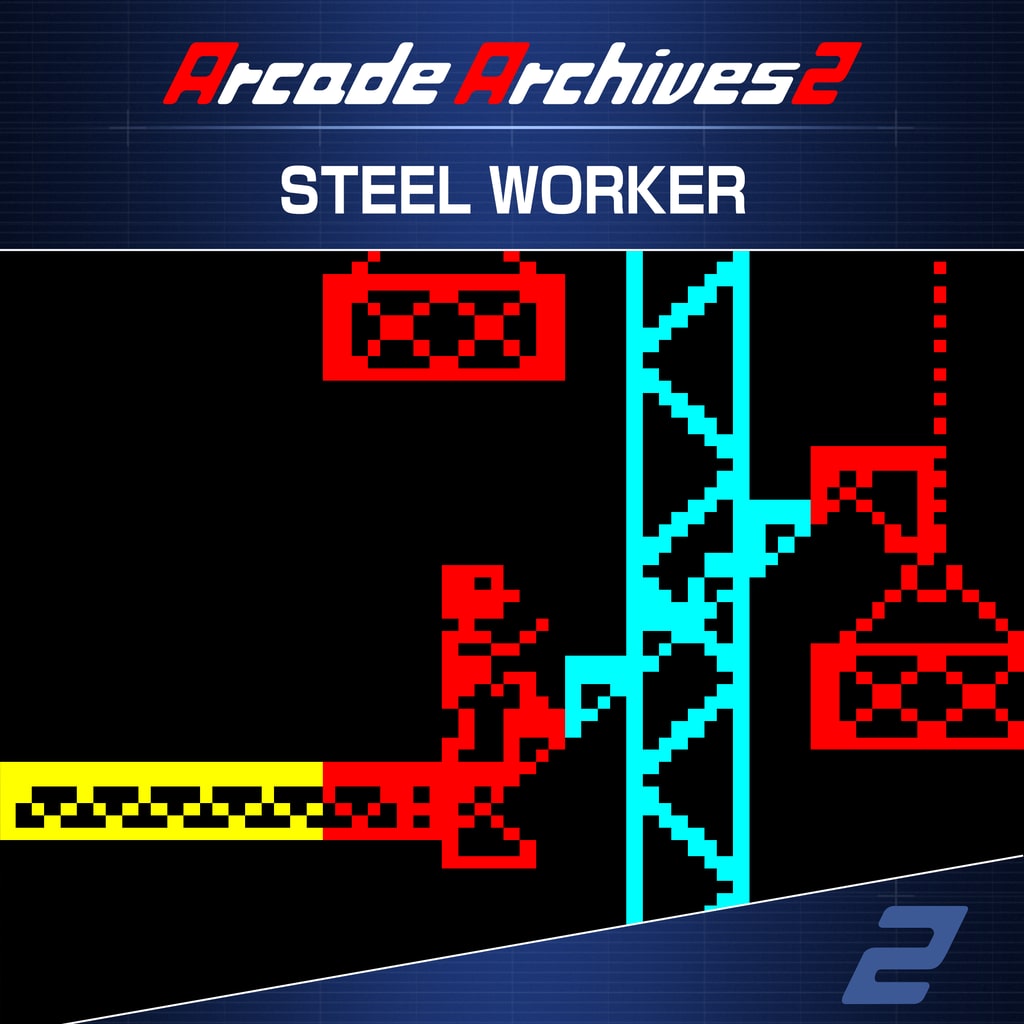
In the vast history of arcade gaming, not every title chased spectacle. Some instead focused on tension, spatial awareness, and the slow burn of mastery. STEEL WORKER, now revived as part of Arcade Archives 2, is one of those games. It’s a title that may initially appear modest or even obscure, but beneath its industrial exterior lies a carefully constructed test of timing, nerve, and precision that speaks volumes about early arcade design philosophy.
STEEL WORKER isn’t flashy, loud, or instantly gratifying. Instead, it’s methodical, demanding, and quietly absorbing — a game that rewards patience just as much as reflexes. In many ways, it feels like a blueprint for the kind of deliberate challenge that modern games rarely attempt.
An Industrial Premise with Immediate Clarity
STEEL WORKER places players in control of a worker navigating hazardous industrial environments, filled with moving machinery, dangerous platforms, and unforgiving layouts. There’s no narrative framing beyond the implied setting, but none is needed. The premise is communicated instantly through visual language alone: this is a dangerous workplace, and one mistake can be fatal.
That immediacy is classic arcade design. From the moment you insert a credit, the game establishes its stakes. Survival is the goal, progress is the reward, and hesitation often leads to failure. STEEL WORKER doesn’t waste time explaining itself. It expects players to learn by doing.
Arcade Archives 2 presents the game exactly as intended, preserving that raw, no-nonsense introduction that defined the arcade era.
Gameplay Built Around Timing and Spatial Awareness
At its core, STEEL WORKER is about reading movement patterns and committing to actions at precisely the right moment. Conveyor belts, moving hazards, and shifting platforms force players to constantly assess their surroundings before acting.
Unlike many arcade games that emphasise speed, STEEL WORKER prioritises judgement. Moving too quickly can be just as dangerous as moving too slowly. The game teaches restraint, encouraging players to wait, observe, and then act decisively.
This creates a unique rhythm. Each screen feels like a puzzle in motion, where success depends on understanding how elements interact rather than reacting blindly. It’s a style of design that rewards concentration and punishes impatience — a combination that makes every successful manoeuvre feel earned.
Controls That Demand Precision
STEEL WORKER’s controls are responsive but deliberately strict. Inputs must be clean and intentional, as sloppy movement often leads to immediate consequences. There’s little room for recovery once a mistake is made, reinforcing the importance of careful positioning.
In the Arcade Archives 2 version, these controls feel accurate and faithful to the original hardware. There’s no artificial smoothing or modernisation that would undermine the challenge. What you experience is the game as it was meant to be played — uncompromising and exacting.
For modern players, this can be an adjustment, but it’s also where much of the game’s appeal lies. Mastery feels tangible because the game never bends its rules to accommodate you.
Difficulty That Feels Purposeful
STEEL WORKER’s difficulty curve is steep, but rarely unfair. Early sections introduce concepts gradually, giving players time to understand the mechanics and hazards. As the game progresses, those elements are layered in increasingly complex ways.
What stands out is how consistent the challenge feels. The game doesn’t rely on cheap tricks or sudden difficulty spikes. Instead, it tests whether you’ve truly internalised what it has taught you so far. Each new section feels like a natural escalation rather than an arbitrary punishment.
Failure, while frequent, almost always feels instructive. You know why you failed, and more importantly, what to do differently next time. This learning loop is central to STEEL WORKER’s enduring design strength.
Visual Design Focused on Function
Visually, STEEL WORKER embraces an industrial aesthetic that prioritises clarity over flair. Platforms, hazards, and interactive elements are clearly defined, making it easy to read the environment even under pressure.
The simplicity of the visuals serves the gameplay well. There’s little unnecessary detail to distract from the action, allowing players to focus entirely on timing and movement. In a game where a split-second decision can mean the difference between success and failure, this clarity is invaluable.
Arcade Archives 2 enhances the presentation through modern display options, ensuring the visuals remain sharp and readable without compromising authenticity.
Sound Design That Heightens Tension
The audio design in STEEL WORKER is subtle but effective. Mechanical sounds reinforce the industrial setting, while audio cues provide feedback on player actions and environmental changes.
Rather than overwhelming players with music, the game uses sound to build atmosphere and tension. The steady hum of machinery and the abrupt sounds of failure reinforce the sense that you’re navigating a hostile, unforgiving environment.
This restraint complements the game’s methodical pacing, keeping players focused and immersed.
A Testament to Skill-Based Design
STEEL WORKER exemplifies a design philosophy that places responsibility squarely on the player. There are no power-ups to mitigate mistakes, no checkpoints to soften losses, and no shortcuts to success. Progress comes only through improved understanding and execution.
This can feel harsh by modern standards, but it’s also deeply satisfying. Every screen cleared feels like a personal achievement, not something handed to you by the game. That sense of ownership over success is something many contemporary games struggle to replicate.
Within the Arcade Archives 2 lineup, STEEL WORKER stands out as a reminder of how compelling pure, uncompromising design can be.
Historical Significance and Modern Relevance
STEEL WORKER reflects a time when arcade games experimented with themes beyond fantasy and science fiction, grounding their challenges in recognisable environments. Its industrial setting and emphasis on precision foreshadow elements seen in later platformers and puzzle-action hybrids.
Playing it today offers insight into how early developers balanced challenge and readability, creating experiences that were tough but fair. It also highlights why preserving these games matters: they showcase ideas that still influence modern design.
Arcade Archives 2’s careful presentation ensures that STEEL WORKER remains accessible without losing its identity.
Who Will Appreciate STEEL WORKER?
STEEL WORKER is best suited to players who enjoy deliberate, skill-driven gameplay and aren’t afraid of repeated failure. It’s ideal for those who appreciate learning through repetition and value mastery over instant gratification.
Players seeking fast-paced action or constant variety may find it demanding, but those willing to engage with its systems will discover a rewarding, thoughtful arcade experience.
Final Verdict
Arcade Archives 2 STEEL WORKER is a challenging, methodical, and deeply satisfying example of early arcade design. Its focus on timing, precision, and player responsibility makes it feel as relevant today as it was decades ago.
While it may not have the instant appeal of more famous arcade titles, its depth and fairness ensure it leaves a lasting impression on those willing to meet its demands.