Kart racers live and die by feel. Precision drifting, responsive acceleration, and track design that balances chaos with clarity are what separate genre staples from forgettable novelty. Go Kart Island understands this on a surface level, delivering a colourful, welcoming racer that prioritises accessibility and charm. What it struggles with is longevity — while its bright presentation and breezy mechanics make for an enjoyable introduction, the experience rarely deepens beyond its initial appeal.
This is a game designed to be picked up easily, understood quickly, and enjoyed casually. For younger players or those seeking a relaxed arcade racer, Go Kart Island offers a pleasant enough getaway. But for genre veterans, its island paradise may feel a little too small.
An Island Built for Play
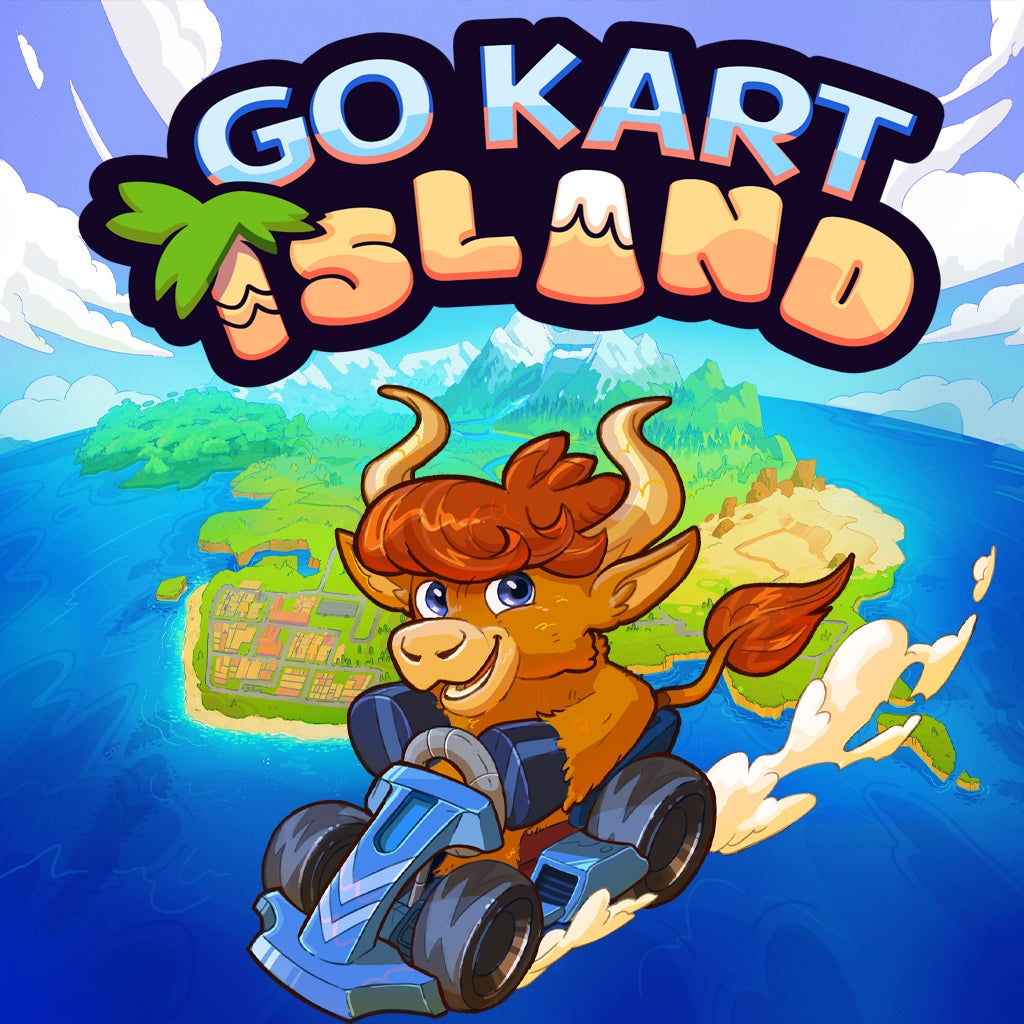
From the outset, Go Kart Island establishes a cheerful tone. Tracks wind through tropical beaches, jungles, seaside villages, and cliffside roads, all rendered in bold colours and simple geometry. The island theme gives the game a cohesive identity, and there’s an immediate sense of warmth and approachability in its design.
Visually, the game doesn’t push boundaries, but it doesn’t need to. Environments are clear and readable at high speed, hazards are easy to spot, and track layouts are rarely confusing. This clarity is one of the game’s strengths — you’re almost never unsure of where you’re meant to go or what’s about to happen.
That said, variety is limited. While the tracks are distinct enough in layout, they begin to blur together aesthetically after extended play. The island setting, though charming, isn’t pushed far enough to keep environments feeling fresh throughout the full roster of races.
Driving That’s Friendly, Not Fierce
The core driving mechanics in Go Kart Island are intentionally forgiving. Steering is smooth, drifting is easy to initiate, and collisions rarely feel punishing. This makes the game immediately approachable, especially for newcomers or younger players unfamiliar with kart racers.
Acceleration is snappy, and karts feel light and responsive. There’s satisfaction in chaining drifts through corners and timing boosts correctly, but the skill ceiling is fairly low. Advanced techniques like tight drift optimisation or risk-heavy shortcuts are largely absent, meaning races are often decided by consistency rather than mastery.
While this design choice supports accessibility, it also limits depth. Veteran players may find themselves craving tighter handling or more nuanced mechanics to reward practice and precision. Go Kart Island prioritises comfort over challenge, and that balance won’t suit everyone.
Items Without Impact
Items are a staple of kart racers, injecting unpredictability and excitement into otherwise straightforward races. In Go Kart Island, item pickups exist, but they feel restrained. Speed boosts, simple projectiles, and defensive items appear regularly, but their impact is muted.
There’s little sense of dramatic swing during races. Rarely does an item radically alter your position or force you to adapt on the fly. While this reduces frustration, it also dampens excitement. The chaos that defines the genre — the unexpected comeback, the last-second reversal — is largely missing.
This makes races feel stable, but also predictable. You generally know how a race will unfold after the first lap, and that predictability can sap tension, particularly during longer cups.
Modes That Do the Minimum
Go Kart Island includes the expected modes: single races, cups, time trials, and local multiplayer. Each functions as intended, but none add meaningful twists to the formula. There’s no career structure with evolving challenges, no dynamic events, and no progression system beyond unlocking tracks and karts.
Unlockables themselves are modest. New karts offer slight variations in handling but rarely change how races feel. Cosmetic rewards are sparse, and there’s little incentive to replay events once completed.
Multiplayer is where the game shines brightest, particularly in local play. Racing against friends adds a layer of unpredictability that the AI often lacks, and the game’s forgiving mechanics make it ideal for mixed-skill groups. However, without online multiplayer or deeper competitive hooks, its long-term appeal remains limited.
Sound and Style
Audio design complements the game’s relaxed tone. Music is upbeat and unobtrusive, leaning into tropical rhythms that match the island setting. It’s pleasant background noise rather than standout composition, but it does its job.
Sound effects are clear and readable — engine hums, item pickups, and collisions all communicate useful feedback without overwhelming the player. Like much of the game, audio design prioritises clarity over flair.
Character and kart designs are simple but charming. There’s a toy-like quality to everything, reinforcing the sense that Go Kart Island is meant to be friendly first and competitive second.
A Relaxed Pace That Sometimes Stalls
One of Go Kart Island’s defining qualities is its relaxed pacing. Races rarely feel frantic, and difficulty ramps up gently. For some players, this will be a welcome change of pace — a kart racer that can be enjoyed without stress or steep learning curves.
For others, that same gentleness may feel like a lack of ambition. The game rarely surprises, challenges, or demands adaptation. Once you’ve understood its systems, there’s little left to discover.
This isn’t necessarily a flaw, but it is a limitation. Go Kart Island knows what it wants to be, and it commits to that vision — even if it means leaving depth and complexity behind.
Final Thoughts
Go Kart Island is a pleasant, approachable kart racer that succeeds in delivering easygoing fun within a cheerful setting. Its controls are responsive, its presentation is welcoming, and its races are consistently enjoyable in short bursts. For families, casual players, or those seeking a low-pressure racing experience, it offers exactly what it promises.
However, its lack of depth, limited item impact, and modest progression systems prevent it from standing out in a genre defined by variety and competitive thrill. It’s a game that’s easy to enjoy — and just as easy to outgrow.
In the end, Go Kart Island is a sunny detour rather than a destination. Fun while it lasts, but unlikely to linger long once the vacation ends.