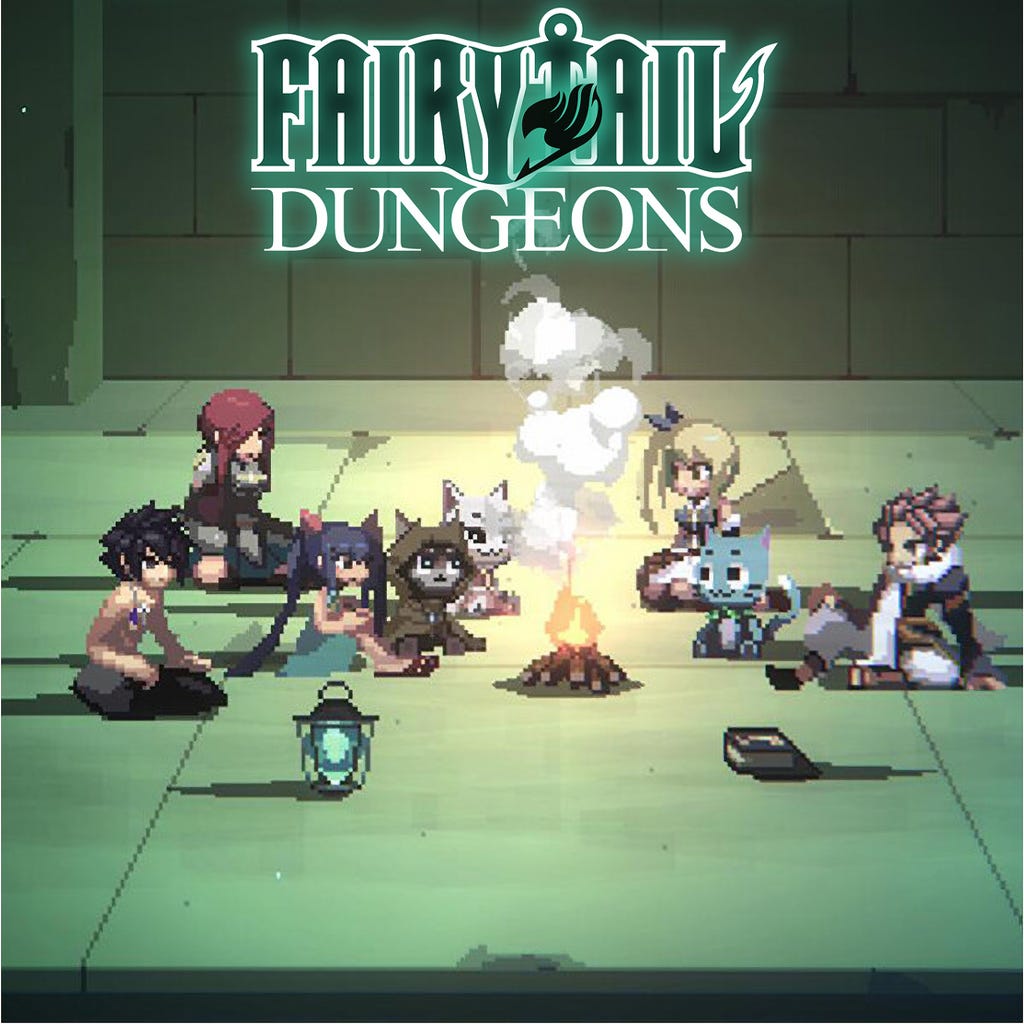
FAIRY TAIL: DUNGEONS is a roguelite deck-building adventure that reimagines the Fairy Tail universe through strategy rather than spectacle. Instead of retelling iconic anime arcs or leaning heavily on action combat, it reframes familiar characters into a card-driven dungeon crawler where planning, synergy, and risk management dictate success. It’s a bold pivot for the franchise, and while it won’t satisfy players looking for cinematic fan service, it delivers a thoughtful and surprisingly deep experience for those willing to engage with its systems.
At its core, FAIRY TAIL: DUNGEONS is less concerned with bombast and more interested in decision-making. It’s a game about understanding how characters work mechanically, how decks evolve across runs, and how small choices compound into victory or failure. For fans of roguelites and deck builders, it offers a compelling loop; for Fairy Tail fans, it provides a fresh lens on familiar characters.
A Familiar World, A Different Approach
The narrative framework is intentionally light. Rather than a sprawling story campaign, the game places a mysterious dungeon beneath the Fairy Tail guild hall and tasks its members with exploring it. Each descent into the dungeon strips characters down to a limited toolkit, forcing them to rebuild their strength through cards and relics discovered along the way.
This approach works well for the genre. The dungeon becomes a mechanical playground rather than a narrative space, allowing gameplay systems to take centre stage. Short dialogue exchanges and character interactions add flavour, but the story is largely functional, existing to justify progression rather than drive it. Importantly, this means players unfamiliar with Fairy Tail can still enjoy the game without feeling lost.
Deck-Building at the Heart of Combat
Combat in FAIRY TAIL: DUNGEONS is entirely card-driven. Each turn presents a limited hand, a finite pool of action points, and a set of enemies with distinct attack patterns. Success depends on how effectively you manage these resources, when you commit to offence, and when you prioritise defence or setup.
What elevates the system is the emphasis on card synergy. Certain cards interact in specific sequences to trigger enhanced effects, encouraging players to think in combinations rather than isolated actions. This creates moments of genuine tactical satisfaction when a well-built deck comes together and executes exactly as planned.
Each character has a distinct card identity that reflects their personality and combat role. Aggressive characters focus on damage chains and momentum, while support-oriented characters rely on buffs, control, and setup. This differentiation keeps runs feeling varied, even when exploring familiar dungeon layouts.
Progression and Meta Structure
One of the game’s strongest design choices is its layered progression system. Early on, players tackle dungeon runs with individual characters, learning their mechanics and refining decks through repeated attempts. Successful runs can then be saved, allowing those decks to be reused in later, more complex party-based dungeons.
This shift from solo to team play adds meaningful depth. Party dungeons require players to consider character order, inter-deck synergy, and long-term planning across multiple encounters. It’s here that FAIRY TAIL: DUNGEONS feels most rewarding, as individual mastery gives way to broader strategic thinking.
However, this progression structure can feel grind-heavy at times. Unlocking deeper layers often requires repeated early runs, and while each attempt offers incremental learning, the pacing may test players with limited tolerance for repetition. The systems are strong enough to sustain replayability, but a few quality-of-life shortcuts could have smoothed the journey.
Dungeon Design and Replayability
Dungeon layouts follow familiar roguelite conventions: branching paths, optional encounters, risk-reward decisions, and escalating difficulty. While the visual variety is limited, the mechanical variety comes from how encounters are structured and how decks evolve over time.
Randomised card rewards, relic effects, and enemy compositions ensure that no two runs play out identically. Some paths offer high risk but powerful rewards, while others prioritise safety and gradual improvement. Learning when to take risks—and when to preserve a run—is central to long-term success.
Boss encounters stand out as highlights, often demanding a clear understanding of enemy patterns and deck efficiency. These fights test whether your build is cohesive or merely functional, reinforcing the importance of intentional deck construction.
Presentation and Audio
Visually, FAIRY TAIL: DUNGEONS adopts a clean pixel-art style that prioritises readability. Cards, enemies, and status effects are easy to parse at a glance, which is crucial in a strategy-focused game. While environments can feel repetitive across long sessions, the clarity of presentation ensures that tactical decision-making is never obscured.
The audio design complements the experience well. Combat effects provide clear feedback, and the soundtrack maintains energy without becoming intrusive. While music tracks do repeat over extended play, they suit the game’s pacing and never distract from gameplay.
Accessibility and Learning Curve
The game does a commendable job introducing its mechanics. Tutorials are concise and integrated naturally into early runs, allowing players to learn by doing. New systems are layered in gradually, preventing information overload while still encouraging experimentation.
That said, the deeper mechanics—particularly synergy chains and advanced deck optimisation—require patience to master. Players new to deck builders may struggle initially, but the learning curve feels fair, rewarding observation and adaptation rather than rote memorisation.
Controller support is serviceable, though navigating cards and menus feels more precise with mouse and keyboard. This won’t be a deal-breaker for most, but it’s worth noting for players planning long sessions on console-style setups.
Verdict
FAIRY TAIL: DUNGEONS is a smart, systems-driven reinterpretation of a well-known franchise. By focusing on deck-building and roguelite progression, it delivers an experience that values strategy over spectacle and depth over nostalgia. While repetition and pacing issues occasionally surface, the core gameplay loop remains engaging and rewarding.
For fans of roguelite deck builders, this is an easy recommendation. For Fairy Tail fans, it’s a refreshing departure that treats the source material with respect while daring to do something different.