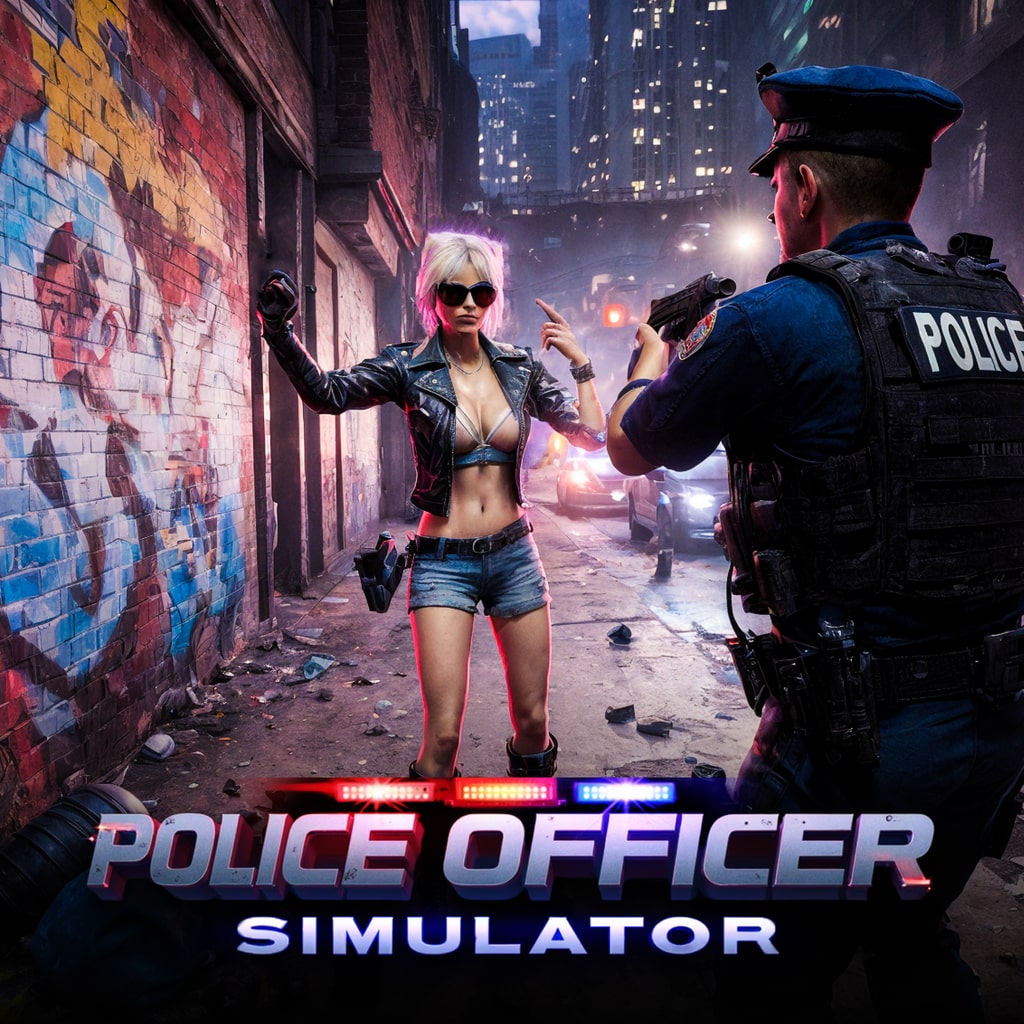
POLICE OFFICERS SIMULATOR arrives as one of the more earnest entries into the simulation genre in recent years—eschewing the high-octane spectacle of mainstream cop dramas for a grounded, methodical approach to law enforcement gameplay. Unlike many titles that dramatise policing into car chases, shootouts, and exaggerated heroism, this simulator opts to depict the day-to-day responsibilities, decision-making pressures, and procedural complexity of police work. The result is a distinct and often thoughtful experience that simultaneously challenges and frustrates by virtue of its ambitions.
However, this is not a simulator for everyone. Its pacing is slow compared to action-oriented titles, its mechanics are intricate rather than immediately gratifying, and its world doesn’t hold your hand. That said, for players who appreciate systemic depth, thoughtful engagement, and a simulation that prioritises authenticity over adrenaline, POLICE OFFICERS SIMULATOR offers a unique and worthwhile journey.
Premise and Narrative — Policing as Process, Not Drama
From the moment you begin, POLICE OFFICERS SIMULATOR establishes a clear thesis: this game is about police work, not police fantasies. There’s no overarching crime syndicate to topple or world-saving objective to fulfil. Instead, you are introduced to the routines, paperwork, interactions, and unpredictable human encounters that constitute much of real policing.
The narrative framework unfolds through a mix of procedural assignments and episodic encounters, following your officer through routine patrols, calls for assistance, traffic stops, reports, community interactions, and occasional higher-stakes situations. These events are grounded in a believable world where your decisions have measurable impact—not just mechanically, but socially. Even seemingly minor interactions, such as de-escalating a heated argument or responding to a welfare check, can ripple through to shape reputation, trust, and future outcomes.
Storylines are delivered with restraint. Characters do not speak in cliched monologues, nor are cutscenes exaggerated. Instead, dialogue and incident reports are used sparingly to focus attention on the moment-to-moment task at hand. The effect is a world that feels lived-in, where the emotional weight of your decisions is not manufactured by drama, but emerges from realistic interaction.
Mechanics — Decision-Making Under Realistic Constraints
Mechanically, POLICE OFFICERS SIMULATOR is built around choice, consequence, and consequence management. Your core tools are observation, communication, documentation, and tactical decision-making. Combat and violence exist on the periphery rather than the centre; escalation is not a foregone conclusion and is typically the result of poor decision-making rather than theatrical confrontation.
Each shift begins with a briefing and set of objectives: routine patrols, follow-up checks, specific calls, and sometimes optional community tasks. From there, players are left to manage their time, prioritise incidents, and balance enforcement with empathy.
One of the game’s strengths is how it models procedural complexity without turning it into tedium. Real-world tasks—such as issuing citations, taking witness statements, writing reports, and navigating legal thresholds for search and detainment—are presented through interactive systems that require attention to detail without saturating players in bureaucracy. Completing reports requires accuracy; cutting corners yields consequences. Traffic stops require you to balance officer safety with procedural correctness. The satisfaction of successfully de-escalating a situation or correctly identifying a suspect is real precisely because the game refuses to reduce these tasks to trivial button presses.
Patrols and Encounters — Unpredictability with Structure
Where POLICE OFFICERS SIMULATOR is most compelling is in its incidental encounters. While scripted calls offer clear objectives, random events and emergent situations give the game a lived-in feel. Driving a quiet neighbourhood might suddenly yield a disturbance call. A domestic dispute check-in might escalate because of prior unresolved tension. A welfare check could reveal more than you expected.
This mixture of structured events and unpredictable encounters keeps patrol gameplay dynamic. You can’t assume every shift will be calm, nor can you predict exactly when chaos will erupt. This tension—between routine and unpredictability—is not only thematic but mechanical. It forces players to balance preparedness with adaptability, and it underscores that policing is as much about judgement as it is about rules.
Progression and Systems — Growth Through Competence
Progression in POLICE OFFICERS SIMULATOR is not tied to levels or flashy unlocks, but to competence, reputation, community relationships, and procedural mastery. Positive outcomes—successful de-escalations, accurate reports, high satisfaction ratings from civilians—translate into trust metrics, commendations, and occasionally broader responsibilities.
This progression system reinforces the theme of authentic growth. You are not earning cosmetic unlocks or linear power boosts; you are earning credibility and the opportunity to handle more complex or sensitive assignments. This may feel slow to players accustomed to rapid progression systems, but for a game rooted in realism, it aligns well with tone.
Presentation — Atmosphere Over Bombast
Visually, POLICE OFFICERS SIMULATOR opts for restrained realism rather than cinematic polish. Environments are detailed in functional ways: street layouts are recognisable, interiors of homes and businesses feel lived-in, and character models express subtle emotional cues. Lighting and weather systems are used effectively to impact ambience and gameplay—night shifts reduce visibility, rain affects road handling, and dusk patrols alter foot traffic patterns.
Audio design is similarly purposeful. Sirens, radio chatter, civilian voices, footsteps, and environmental ambience contribute to immersion without ever overwhelming your attention. Background music is sparse but supportive, leaning into tension when escalation looms and receding during mundane interactions.
This approach ensures that the game feels grounded. It isn’t trying to be cinematic; it’s trying to feel significant, and it mostly succeeds.
Accessibility and Learning Curve — Realism with Guidance
New players might balk at the simulator’s initial depth, particularly if they expect action-oriented gameplay. However, the game’s onboarding is considerate and thorough. Early assignments function as both narrative progression and practical training, introducing core systems without drowning players in procedural minutiae.
Interactive guidance—contextual hints, tooltips, and accessible reference menus—helps reduce early overwhelm. That said, players unfamiliar with simulation titles may still need patience and repeated exposure to fully internalise best practices. The good news is that the game rewards attentiveness and thoughtful play far more than repetitive grinding or reflex-based skill grafting.
Limitations — Scope, Repetition, and Player Expectations
Despite its many strengths, POLICE OFFICERS SIMULATOR is not without limitations.
Firstly, pacing can feel uneven. Routine patrols and paperwork, while integral to the simulator’s identity, may feel slow or repetitive over extended play sessions. For some players, the realism that grants depth will feel like monotony.
Secondly, mission variety—while broader than one might expect—is ultimately bounded by the systems at hand. Domestic disputes, traffic stops, welfare checks, property calls, and occasional pursuit or search assignments form much of the gameplay bread and butter. Without emergent narrative events or dramatic set-pieces, the midgame can lose momentum for players expecting more varied pacing.
Thirdly, the simulator’s focus on realism may frustrate players coming from mainstream action games expecting high adrenaline or cinematic cop fantasy. Encounters rarely feel like Hollywood; moments of crisis are nuanced, and resolution often depends on strategy rather than aggression.
These aren’t flaws in design, per se, but they do limit appeal. POLICE OFFICERS SIMULATOR cannot satisfy those seeking blockbuster gameplay loops; it is best appreciated by players who enjoy process, reflection, and systemic engagement.
Verdict
POLICE OFFICERS SIMULATOR is a thoughtful, measured simulation that captures the procedural complexity and ethical complexity of police work in ways few games attempt. Its focus on communication, strategy, legal standards, and consequence-driven decision-making makes for a steady yet engaging experience. While its pacing and limited dramatic variety may not suit everyone, its strengths lie in its systemic depth and the emergent satisfaction of doing things the right way under pressure.
For players craving a thoughtful simulation of law enforcement that values nuance over spectacle, POLICE OFFICERS SIMULATOR is a rare and worthwhile experience.