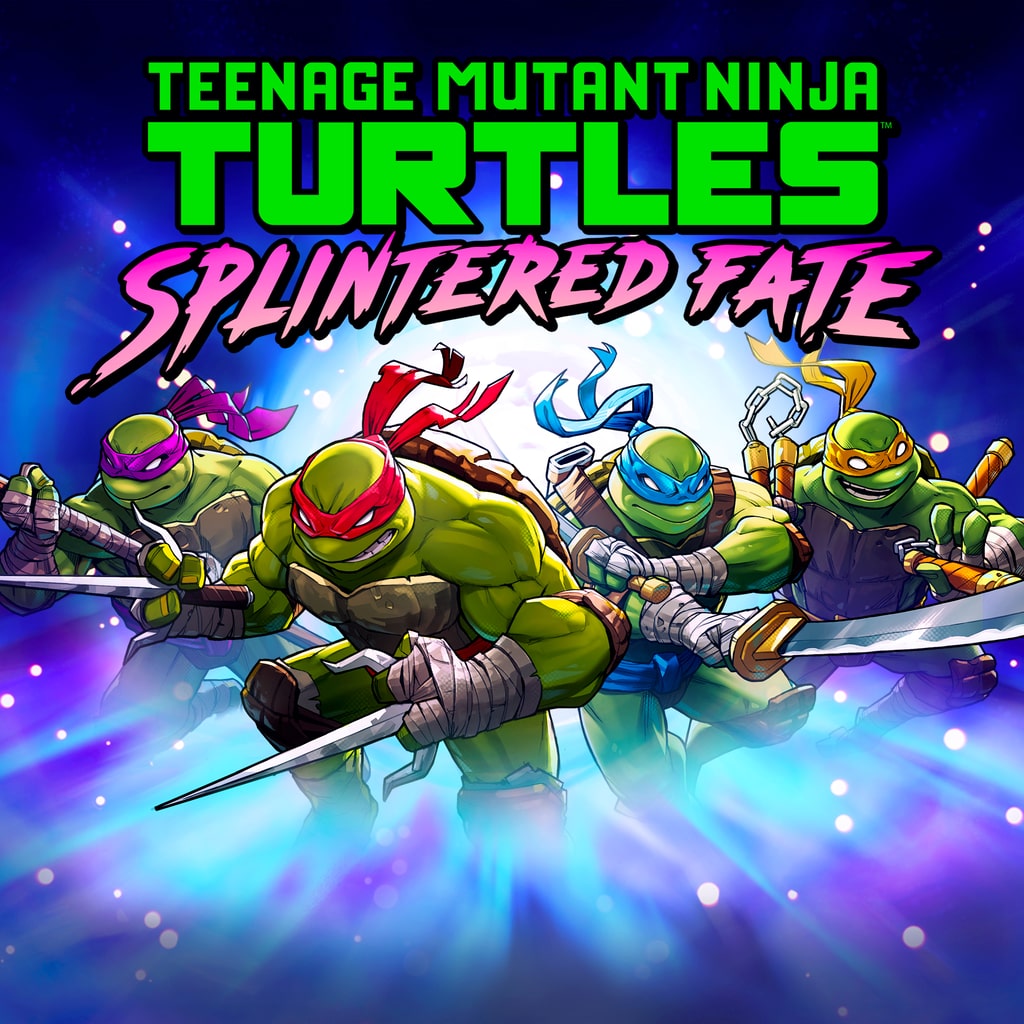
Teenage Mutant Ninja Turtles: Splintered Fate – Nintendo Switch 2 Edition arrives at a moment when the Turtles’ pop-culture legacy is both deep and deliberately broad. From comics to cartoons, films to games, the franchise has worn many skins. Splintered Fate wears one that explicitly acknowledges legacy and expectation: a beat-’em-up grounded in arcade sensibilities, powered by character identity, and structured around cooperative combat that blends accessibility with enough mechanical depth to reward repeated play.
On Nintendo Switch 2, this edition positions itself as the definitive way to experience the game, leveraging hardware performance and portability to support both solo and social play without obvious compromise. But legacy is a double-edged sword: Splintered Fate must balance fan service, mechanical engagement, and modern design expectations. Whether it achieves that balance is at the core of its appeal and limitation.
A Familiar World with Fresh Threads
Narratively, Splintered Fate does not seek to reinvent the TMNT mythos. Instead, it places familiar faces in a new predicament: mutagenic anomalies, fractured timelines, and uneasy alliances. The story serves more as connective tissue than as dramatic core, setting up reasons for conflict rather than deep emotional arcs.
This narrative positioning is wise. The strength of Teenage Mutant Ninja Turtles lies in character dynamics—brotherhood, mentor-student tension, and the juxtaposition of lighthearted banter with genuine stakes. The writing captures these tones comfortably; comic relief and plot progression coexist without derailing each other.
However, Splintered Fate occasionally errs on the side of exposition without payoff. Characters drop references to classic events or rivalries that resonate more with long-term fans than newcomers. This boosts nostalgia but can undercut cohesion when dramatic tension is required.
Combat and Core Mechanics
Combat is the backbone of Splintered Fate. Drawing inspiration from classic side-scroll beat-’em-ups and modern action titles, engagements are rhythmically paced: wave formations, enemy variety, and environmental hazards create patterns players learn to read and respond to.
Each Turtle—Leonardo, Michelangelo, Donatello, Raphael—feels distinct. Leonardo’s disciplined strikes prioritise precision; Michelangelo’s speed offers chaotic flow; Donatello’s reach and support utility open tactical spacing; Raphael’s raw power punishes hesitation. These differences are not cosmetic; they meaningfully alter how players approach encounters.
The Nintendo Switch 2 controls are responsive and clear, with combos flowing intuitively without overwhelming players unfamiliar with deep action systems. Special moves and finishing techniques add expressive layers without demanding gymnastics, making the game accessible to younger or casual players while still rewarding investment.
Enemy design supports this progression. Basic foot soldiers teach ideal spacing, while specialists—armoured foes, ranged attackers, and fast skirmishers—require pattern recognition and tactical adjustment. Boss encounters, when they occur, demand both patience and adaptability but avoid overly punitive design.
Where Splintered Fate excels is in how combat pacing adapts to context. Urban rooftops, subway tunnels, and sewer corridors each influence movement and engagement. Environments are not arenas for random brawling; they shape flow.
Progression, Customisation, and Systems Depth
Splintered Fate’s progression systems are layered enough to sustain engagement without obscuring core action. Experience points unlock abilities and stat improvements, while unlockable gear and cosmetic options provide both mechanical and aesthetic motivation.
Character builds matter, but Splintered Fate avoids the trap of unnecessary complexity. Loadouts influence playstyle more than min-max optimisation. Players seeking deeper experimentation will find value in mixing attributes and abilities, but this is not a game where perfect builds eclipse mechanical skill.
The game’s challenge modes and optional missions further extend engagement. These side offerings often demand mastery of movement and resource management rather than brute force. They serve as meaningful optional content without fragmenting narrative progression.
Visuals and Design on Nintendo Switch 2
On Nintendo Switch 2, Splintered Fate presents with confident polish. Character models are cleanly realised; environments are textured with enough detail to avoid monotony; lighting and particle effects add drama without cluttering frames.
Animation quality is particularly noteworthy. Combat animations are fluid, impactful, and responsive. Hit reactions, enemy stagger states, and movement transitions maintain clarity even in hectic scenarios. This visual feedback reinforces satisfaction and reduces combat ambiguity.
Backgrounds are more functional than cinematic. Urban decay, industrial zones, and classic TMNT backdrops are realised with fidelity but not spectacle. This suits the game’s identity: it is a battlefield first, a visual showcase second.
Audio and Ambient Dynamics
Sound design reinforces the kinetic energy of combat. Weapon impacts, grunt timing, and environmental audio cues—train rumble in tunnels, echoing footsteps in empty corridors—combine to give each encounter spatial presence.
Music in Splintered Fate is energetic without overwhelming. Tracks adapt to pacing: neutral exploration themes shift into higher-tempo patterns during combat waves, then recede into ambience when tension pauses. Voice work is effective when used sparingly; characters speak with personality, not performance excess.
The sum of these audio elements is functional immersion rather than orchestral spectacle. It supports play rather than distracts from it.
Pacing and Player Engagement
One of Splintered Fate’s notable strengths is pacing. The campaign moves briskly, alternating between narrative-driven objectives and open combat sequences. This rhythm prevents slog and keeps player focus centred.
Even at later stages, the game avoids overreliance on repetitive loops. Enemy variety, environmental hazards, and mission conditions combine to maintain engagement depth as playtime accumulates.
That said, the campaign is compact. While comprehensive in design, it does not overstay its welcome. For players seeking extended post-story play, challenge modes and optional missions add value, but that content is largely iterative rather than divergent.
Accessibility and Challenge Balance
Splintered Fate strikes a pragmatic balance between accessibility and challenge. Newcomers to action beat-’em-ups will find progression curves generous but fair, and the game eases players into mechanics without sacrificing substance. Difficulty options allow tuning without sacrificing core reward structure.
Experienced players will find enough nuance to justify mastery—perfecting dodges, optimising special move timing, and exploiting enemy pattern cues all enhance performance. The game rarely feels unfair; failure is educational rather than punitive.
Final Verdict
Teenage Mutant Ninja Turtles: Splintered Fate – Nintendo Switch 2 Edition is a confident reinterpretation of TMNT action gaming—one that honours legacy identity while advancing mechanical depth. Its strengths lie in responsive combat, expressive character differentiation, and pacing that respects player time without diluting engagement.
Narrative depth is modest but appropriate to its genre; visual identity is functional with moments of flourish; and progression systems support both casual enjoyment and deeper tactical play. While it does not radically redefine the beat-’em-up genre, it refines it through polish, coherence, and thoughtful design.
For fans of the franchise, this title delivers both nostalgia and mechanical substance. For action game enthusiasts, it delivers a satisfying combat system that respects both accessibility and mastery.