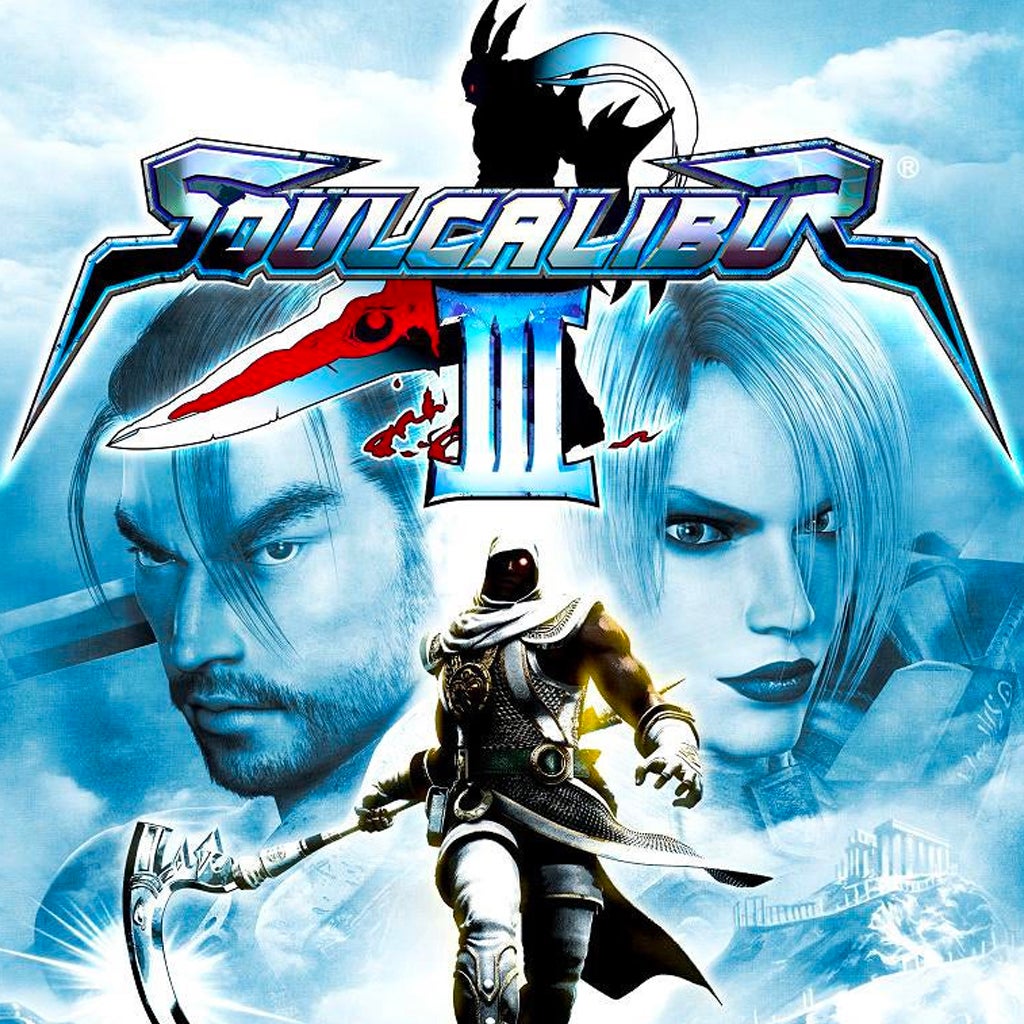
SOULCALIBUR III occupies a unique and often misunderstood position within Bandai Namco’s long-running weapons-based fighting franchise. Released originally in the PlayStation 2 era, this third numbered entry was both a continuation of the series’ elegant combat philosophy and an ambitious attempt to redefine what a single-player fighting game could be. Revisited today on PS4 and PS5, SOULCALIBUR III stands as a fascinating snapshot of a franchise willing to take creative risks—some successful, others more divisive.
It is not the most polished SOULCALIBUR, nor the most competitively balanced, but it may be the most daring. In many ways, SOULCALIBUR III feels less like a sequel and more like an experiment, pushing beyond arcade purity toward something broader and more narrative-driven.
Core Combat and Mechanical Identity
At its foundation, SOULCALIBUR III retains the series’ defining strengths: eight-way run movement, intuitive weapon-based combat, and a balance between accessibility and depth that few fighting games achieve as cleanly. Attacks are easy to understand, movement feels fluid, and spacing remains king.
However, the combat system introduces subtle but impactful changes. Character styles are more distinct, with certain fighters leaning harder into stance-based play, unconventional ranges, or timing-dependent execution. This added personality enhances single-player variety but creates balance inconsistencies that were controversial in competitive circles.
In modern play, these quirks are easier to appreciate. Freed from tournament expectations, SOULCALIBUR III’s combat feels expressive rather than constrained. Matches are often unpredictable, with momentum swings driven by positioning and adaptation rather than rote combo execution.
Character Roster and Style Diversity
The roster is one of SOULCALIBUR III’s greatest strengths. Series staples return alongside new fighters that experiment with unconventional mechanics and visual design. Characters feel more narratively grounded than in earlier entries, with stronger ties to the game’s overarching conflict.
Each fighter’s weapon and style are clearly differentiated, reinforcing the series’ identity as a weapon-based fighter rather than a traditional hand-to-hand brawler. This clarity remains one of SOULCALIBUR’s enduring strengths, and III leans into it confidently.
That said, balance is uneven. Some characters feel significantly stronger or more versatile than others, particularly in high-level play. While this undermines competitive integrity, it enhances variety in casual and solo contexts.
Single-Player Ambition: Chronicles of the Sword
SOULCALIBUR III’s defining feature is Chronicles of the Sword, a mode that dramatically expands the scope of the fighting game format. Rather than focusing solely on isolated battles, this mode blends tactical map-based progression with traditional one-on-one combat.
Players move armies across a world map, capturing territories, managing units, and engaging in battles that incorporate special conditions. When combat begins, matches are layered with objectives beyond simple victory, such as defending units or eliminating key enemies.
This mode is undeniably ambitious. It adds context, progression, and a sense of scale rarely seen in fighting games. While execution is imperfect—pacing can be slow, and AI behaviour is inconsistent—the mode remains compelling in concept and surprisingly engaging even today.
Chronicles of the Sword gives SOULCALIBUR III an identity beyond versus play, making it one of the most content-rich fighting games of its era.
Creation and Customisation
Another standout feature is the early implementation of character creation. While primitive by modern standards, the mode allows players to design fighters using existing styles and equipment, adding longevity and personal investment.
Created characters integrate into Chronicles of the Sword, reinforcing the sense that this is a game about legacy and personal expression, not just mastery of existing fighters. This forward-thinking approach laid groundwork for systems that would later become franchise staples.
Customisation options are limited and sometimes unbalanced, but the feature’s presence at all speaks to SOULCALIBUR III’s willingness to evolve.
Presentation and Audio
Visually, SOULCALIBUR III reflects its PS2-era origins but retains strong art direction. Character models are expressive, animations are fluid, and stages are rich in atmosphere. Environmental detail and lighting remain effective, even if technical fidelity shows its age.
On PS4 and PS5, improved resolution and performance stability help smooth out rough edges, making the experience more comfortable than it was originally. Load times are minimal, and input responsiveness remains solid.
Audio design is a highlight. The soundtrack blends orchestral drama with regional influences, reinforcing the game’s mythic tone. Weapon clashes carry weight, and voice acting—while occasionally melodramatic—adds personality rather than distraction.
Narrative and Thematic Tone
SOULCALIBUR III leans heavily into its lore. Themes of fate, ambition, and corruption are more prominent than in earlier entries, supported by character-specific story paths and branching outcomes.
While the narrative is still secondary to gameplay, its increased presence enhances immersion. Characters feel less like abstract fighters and more like participants in a broader conflict. This emphasis on story may feel excessive to purists, but it aligns with the game’s experimental identity.
Longevity and Replay Value
Thanks to its extensive single-player modes, custom characters, and stylistic variety, SOULCALIBUR III offers substantial replay value. Even without competitive aspirations, there is plenty to explore.
However, its limitations are also clear. Online play is absent, AI can be erratic, and balance issues remain unresolved. These factors prevent it from achieving the timeless competitive relevance of SOULCALIBUR II.
Final Verdict
SOULCALIBUR III is a bold, imperfect, and deeply interesting entry in the series. It trades competitive purity for ambition, embracing experimentation at the cost of balance. While it may not satisfy players seeking refined tournament play, it offers something rarer: a fighting game unafraid to expand its scope.
Revisited on PS4 and PS5, SOULCALIBUR III stands as a reminder of a time when major fighting franchises were willing to take risks. Its ideas may not all land cleanly, but its willingness to challenge genre expectations makes it essential viewing for fans of the series.
This is not the definitive SOULCALIBUR—but it is the most adventurous.