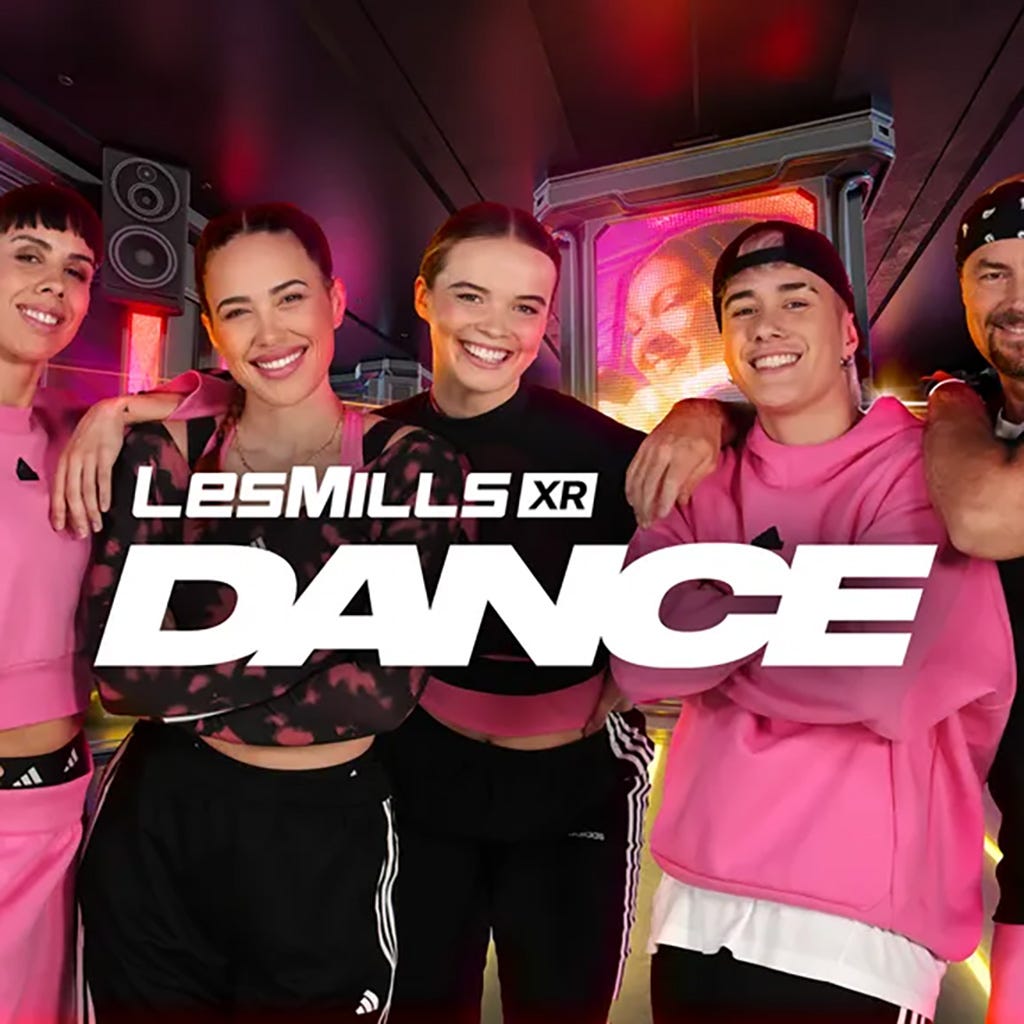
Virtual reality fitness titles often walk a delicate line between exercise utility and entertainment value. Lean too far into gamification and the workout loses credibility; lean too far into fitness and the experience risks feeling like homework. LES MILLS XR DANCE lands squarely in the latter camp—but does so with confidence, clarity of purpose, and a surprising amount of polish.
This is not a traditional rhythm game, nor is it a party-friendly dance experience designed for casual play. Instead, LES MILLS XR DANCE is a structured, instructor-led VR fitness programme that uses dance-inspired movement as its core mechanic. It is less about performance or self-expression and more about repetition, technique, and sustained physical engagement.
Presentation and First Impressions
From the outset, LES MILLS XR DANCE presents itself with a distinctly professional tone. Menus are clean, functional, and unmistakably fitness-focused. There is little in the way of narrative framing or playful theming; the interface prioritises clarity, readability, and ease of navigation. This approach makes sense given the brand’s real-world fitness pedigree, but it also immediately signals that this experience is designed for regular use rather than novelty sessions.
Visually, environments are minimalist and modern, often resembling stylised studio spaces rather than fantastical settings. Lighting is bright and purposeful, ensuring movements and instructor cues remain clearly visible at all times. While this lack of visual spectacle may disappoint players expecting flashy VR backdrops, it reinforces the game’s core goal: keeping the user focused on movement, form, and flow.
Instructors and Coaching
One of the defining elements of LES MILLS XR DANCE is its use of virtual instructors. These trainers are front and centre throughout sessions, guiding players through routines with consistent energy and clarity. Animations are smooth and readable, making it easy to follow even more complex sequences once familiarity builds.
Importantly, the instructors strike a careful balance between motivation and restraint. Encouragement is frequent, but rarely overwhelming. The tone feels professional rather than performative, echoing the atmosphere of a real-world studio class. This will resonate strongly with players who already enjoy group fitness environments, though it may feel impersonal to those seeking a more playful or character-driven experience.
The sense of progression comes not from unlocking flashy cosmetics or story beats, but from gradually improving execution and endurance. As sessions become more demanding, the instructors’ pacing and cues subtly adjust, encouraging refinement rather than simply pushing intensity.
Gameplay Mechanics and Movement
At its core, LES MILLS XR DANCE is built around precise, rhythmic movement rather than freestyle expression. Players are asked to follow choreographed routines that blend dance steps with fitness-focused actions such as squats, lunges, arm swings, and core engagement.
Tracking is generally reliable, with the system focusing more on broad movement accuracy than pinpoint precision. This design choice helps maintain flow and reduces frustration, particularly during faster sequences. However, it also means that advanced players may occasionally feel the game is forgiving to a fault, rewarding completion over technical excellence.
The workouts themselves are undeniably effective. Sessions elevate heart rate quickly and maintain intensity through sustained motion rather than sudden bursts. Over time, fatigue becomes part of the experience, reinforcing the sense that this is a legitimate workout first and a game second.
Music and Rhythm Integration
Music plays a central role in LES MILLS XR DANCE, but it is used differently than in traditional rhythm games. Tracks are selected to support tempo and energy rather than player-driven interaction. You are dancing with the music, not scoring points against it.
The soundtrack spans a range of high-energy electronic and pop-influenced tracks, chosen to sustain momentum across sessions. While none of the songs are likely to steal the spotlight, they serve their purpose effectively, providing a steady rhythmic backbone for movement.
Because scoring and progression are not heavily tied to musical precision, players are free to focus on physical engagement rather than chasing perfect timing. This reinforces the game’s fitness-first philosophy, even if it reduces replay appeal for rhythm-game purists.
Progression and Replay Value
Progression in LES MILLS XR DANCE is subtle and utilitarian. Rather than traditional levels or narrative milestones, advancement comes through session completion, increased difficulty options, and improved stamina. Unlocks are limited, and there is little in the way of extrinsic rewards beyond personal improvement.
This structure will appeal strongly to players who approach the game as part of a fitness routine. Daily sessions feel purposeful, and repetition becomes a feature rather than a flaw. For more traditional gamers, however, the lack of varied content and progression hooks may limit long-term engagement.
That said, the game succeeds in making repeat play feel productive. Even short sessions provide tangible physical benefit, and the consistency of design encourages habit-building over time.
Comfort, Accessibility, and Practical Use
Comfort options are well considered, with settings that accommodate different play spaces and fitness levels. Movements are scalable, and players can choose sessions that match their current ability without feeling penalised.
This accessibility is crucial, as VR fitness titles live or die by their usability. LES MILLS XR DANCE performs well in this regard, minimising friction and ensuring that sessions can be started quickly and completed without unnecessary interruptions.
Sweat, fatigue, and physical exertion are unavoidable here—and intentionally so. This is not a game designed for casual seated play or short novelty bursts. It demands space, effort, and commitment.
Final Verdict
LES MILLS XR DANCE is a confident, focused VR fitness experience that knows exactly what it wants to be. It does not attempt to disguise exercise as a game, nor does it chase spectacle at the expense of effectiveness. Instead, it delivers a structured, demanding, and professionally presented workout built around dance-inspired movement.
For players seeking a serious VR fitness solution with strong coaching and reliable routines, this is an excellent option. For those hoping for a playful rhythm game or a heavily gamified experience, it may feel overly restrained.
Ultimately, LES MILLS XR DANCE succeeds because it respects its audience and its purpose. It is not flashy, but it is effective—and in the crowded VR fitness space, that clarity of intent makes all the difference.