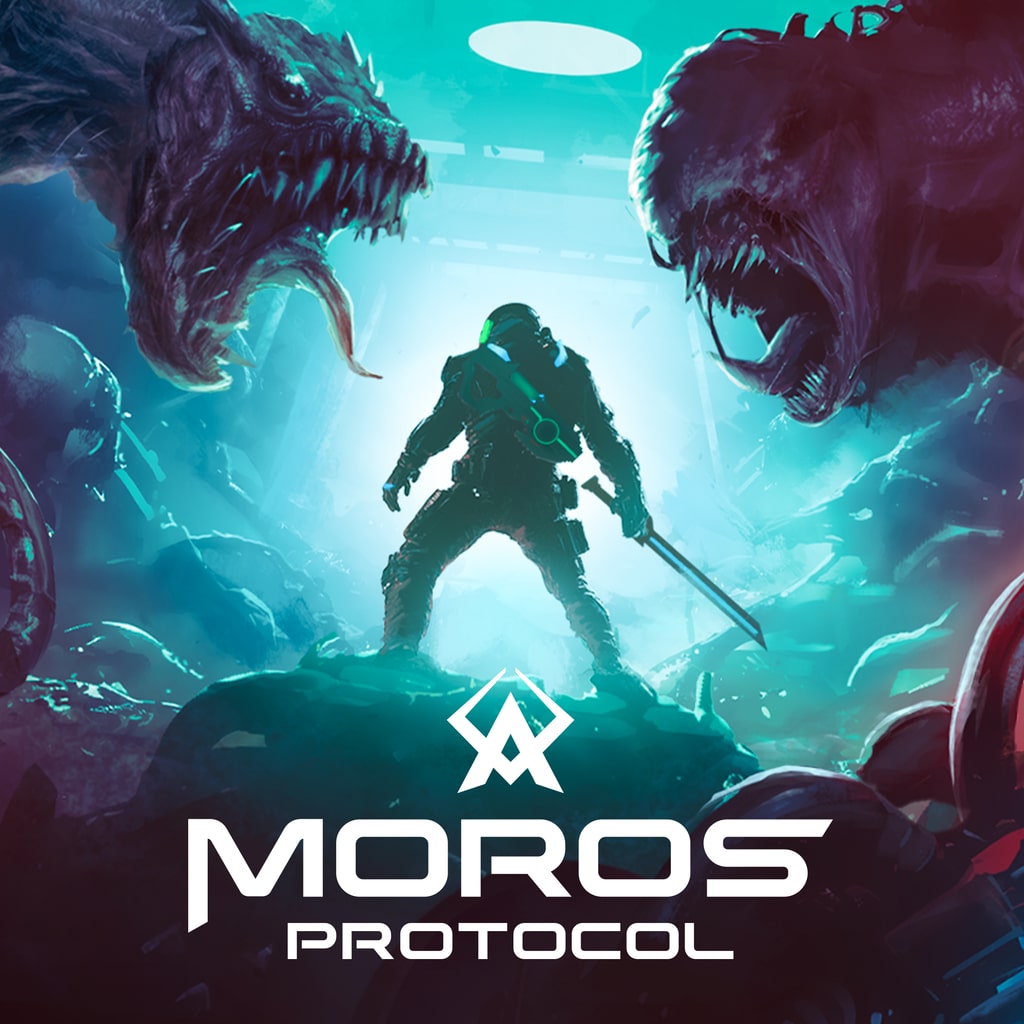
There is something wonderfully unsettling about waking on a derelict spaceship with no idea who you are, where you are, or what has happened to everyone around you. That is the uncomfortable position Moros Protocol throws you into, placing you aboard The Orpheus, a warship lost somewhere in the depths of space and now crawling with things that very much want you dead. There is no lengthy introduction to hold your hand, no grand exposition dump explaining every detail, and no comfortable period in which to find your feet. There is simply a weapon, a hostile environment, and the growing realisation that whatever happened here was very, very bad.
Developed by Pitch Black Games and published by Super Rare Games, Moros Protocol wears its affection for classic first-person shooters proudly. This is a game that understands the appeal of fast movement, powerful weapons, aggressive enemies, and corridors that seem specifically designed to become covered in blood. Yet beneath the crunchy pixel textures and deliberately low-poly presentation lies a modern roguelike structure, giving each run a different rhythm as players fight their way deeper into the abandoned warship.
The result is a fascinating meeting of old and new. It has the immediate physicality of a classic 90s shooter, the unpredictability of a roguelite, and the demanding encounters of a Souls-inspired action game. It is not always perfectly balanced, and its procedural systems can eventually expose their limitations, but when everything clicks, Moros Protocol delivers some wonderfully intense moments of first-person combat.
Fast, Brutal and Gloriously Unforgiving
The first thing that stands out is the pace. Moros Protocol does not want you creeping cautiously through every corridor, peeking around corners and waiting for enemies to make the first move. It encourages aggression, movement and confidence, throwing hostile creatures at you in numbers that make standing still a very short-lived strategy.
Combat has a wonderfully physical quality to it. Weapons have weight, gunfire has impact, and enemies react satisfyingly when struck. There is also the wonderfully simple ability to kick enemies, which feels like exactly the sort of gloriously unnecessary feature that belongs in a game inspired by the shooters of the 1990s and early 2000s. Sometimes you do not need another complicated ability or elaborate combat mechanic. Sometimes you just need to put your boot through something horrible.
Movement plays an equally important role. Enemies are not simply there to be shot at while you stand in one place. Projectile-heavy encounters force you to keep moving and pay attention to what is happening around you. Dodging incoming attacks, finding better positioning, and deciding when to push forward or retreat create a constant sense of urgency. When a room fills with enemies and projectiles begin flying in every direction, survival becomes a test of reflexes as much as firepower.
That is where the game captures the spirit of the classic boomer shooter particularly well. There is an immediacy to the action that modern FPS games sometimes lose beneath layers of progression systems and cinematic presentation. Moros Protocol is much more interested in putting a powerful weapon in your hands and asking whether you are good enough to use it.
Every Run Tells a Slightly Different Story
The roguelike structure changes how you approach the game. Death is not simply a failure that sends you back to a checkpoint. Instead, it becomes part of the learning process, allowing you to return stronger, wiser and, hopefully, better prepared for whatever awaits you on the next attempt.
Levels combine handcrafted environments with procedural generation, creating layouts that can change between runs. This gives exploration a welcome element of uncertainty, because you cannot simply memorise every corridor and encounter. Even when you recognise elements of the environment, there is always the possibility that the next room will present a different challenge.
That unpredictability is one of the game’s most effective ideas. You begin a run with one plan and can find yourself adapting almost immediately, depending on the weapons, augments and upgrades that become available. A weapon combination that works brilliantly in one run may not be quite as effective the next time around, encouraging experimentation rather than relying on a single solution.
Progression also gives failure a purpose. As you learn more about the ship and its inhabitants, you gradually become better equipped to push further into its depths. Permanent upgrades provide a sense of long-term development, while temporary improvements during individual runs encourage players to make decisions based on what is immediately available.
It is a familiar roguelite formula, but it fits the game’s premise remarkably well. The protagonist is effectively learning how to survive an impossible situation, and the player is doing exactly the same thing. Every death teaches you something, whether that is an enemy’s attack pattern, the value of a particular weapon combination, or simply the importance of not charging blindly into a room full of monsters.
Building Your Arsenal
Weapon customisation gives Moros Protocol another layer of personality. Rather than simply collecting increasingly powerful firearms, players can shape their loadout through augments and weapon modifications, allowing each run to develop its own identity.
This is where the game’s roguelite design can be particularly satisfying. Finding an upgrade that complements the weapon you are already carrying can suddenly change how you approach combat. One run might encourage a more aggressive style, while another might favour careful positioning and exploiting elemental effects. These choices may not completely reinvent the game, but they help ensure progression feels connected to the way you actually play.
The arsenal itself is suitably varied and powerful, and the developers clearly understand that weapons should feel enjoyable to use rather than simply existing as numerical upgrades. There is a certain pleasure in discovering a firearm that feels particularly effective against a specific enemy type and then looking forward to the next opportunity to use it.
The combination of firearms, melee options, augments and movement creates enough flexibility to keep experimentation worthwhile. The game does not necessarily offer the sheer variety of some of the genre’s biggest names, but what is here generally feels purposeful. The weapons are designed around the central philosophy of fast, aggressive combat, and that consistency helps the action maintain its identity.
A Decaying World of Low Poly Nightmares
Visually, Moros Protocol takes an interesting approach. Its low-poly environments and crunchy pixel textures deliberately avoid the glossy realism of contemporary shooters, instead evoking a lost PC game from another era that somehow wandered into a modern roguelite.
The aesthetic works remarkably well. The Orpheus is not presented as a pristine futuristic spaceship filled with gleaming corridors and sterile laboratories. It is a decaying war zone, full of grime, shadows and unsettling remnants of whatever disaster took place there. The visual limitations are therefore not a weakness. They become part of the atmosphere.
Dynamic lighting adds considerably to the tension. Darkened corridors can conceal threats until they are almost upon you, while sudden flashes of gunfire illuminate the surrounding environment during combat. The contrast between darkness and violent bursts of light gives firefights a satisfying sense of chaos without requiring an enormous amount of visual detail.
Sound design plays a similarly important role. Weapons have a satisfying punch, enemies make their presence known, and the eerie ambience of the ship constantly reminds you that you are somewhere you probably should not be. Some sections have an uncomfortable quiet that makes the sudden appearance of an enemy all the more effective.
It is a presentation that prioritises atmosphere over spectacle. The Orpheus does not need photorealistic textures to feel threatening. Sometimes a dark corridor, an unfamiliar noise and the knowledge that something is probably waiting around the corner are enough.
When Repetition Starts to Show
Unfortunately, the roguelite structure that gives Moros Protocol much of its replayability can also be one of its weaknesses. After extended sessions, some players may notice recurring room layouts and familiar environmental patterns. Procedural generation can create variety, but it cannot completely hide the underlying building blocks from which the levels are assembled.
The limited pool of boss encounters also becomes more noticeable over time. The first encounters can feel intimidating, particularly when their attack patterns demand careful movement and timing, but repeated exposure naturally reduces some of that tension. A greater variety of bosses and more substantial changes between later runs would have helped the game maintain its sense of discovery.
There are also moments when the difficulty feels more punishing than genuinely demanding. The distinction is important. A difficult encounter can be incredibly rewarding when the player understands why they failed and knows what they need to improve. When a run falls apart because several threats converge in an awkward combination, however, the experience can feel more frustrating than educational.
Thankfully, the game’s responsive movement and satisfying weapons make it enjoyable enough to return after a bad run. You may curse your fate when everything goes wrong, but there is usually a little voice in the back of your head saying you can do better next time. That is an important quality for any roguelite to possess.
Bring a Friend Into the Nightmare
The inclusion of drop-in co-op is another welcome addition. Fighting your way through The Orpheus with a friend changes the experience considerably, transforming the campaign’s lonely horror into something more chaotic and occasionally much more entertaining.
Co-op also adds a strategic dimension to combat. One player can draw attention while another attacks from a different angle, and having someone nearby can make particularly difficult encounters feel more manageable. At the same time, adding another player does not completely remove the danger, as enemies and environmental threats can still overwhelm a poorly coordinated team.
Perhaps more importantly, co-op fits the game’s personality. There is something inherently enjoyable about experiencing an intense, retro-inspired shooter alongside a friend, particularly when everything goes horribly wrong. The kind of moments that would be stressful alone can become hilarious when both players are desperately trying to survive the same room.
It is not necessarily the feature that defines Moros Protocol, but it adds meaningful replay value and makes the game more appealing to players who prefer sharing their adventures.
A Shooter With Plenty of Bite
Moros Protocol understands something important about classic shooters: sometimes the best way to make a game exciting is simply to have the player move, shoot and react. Its retro presentation gives it a strong visual identity, while the roguelite mechanics ensure the adventure is not simply a straight run from one corridor to the next.
The game is at its best when its different systems collide. You find a weapon combination that suits your playstyle, enter an unfamiliar room, discover that the enemies are arranged differently from the previous run, and suddenly find yourself fighting for survival with projectiles flying everywhere. Those moments can be fantastic, particularly when you emerge from the chaos with barely any health remaining and realise that you somehow pulled it off.
It is not flawless. Repetition becomes increasingly apparent during longer sessions, the boss variety could be stronger, and the procedural structure does not always deliver the sense of endless discovery that the concept promises. Yet there is enough energy and personality here to make those shortcomings easier to forgive.
Verdict
Moros Protocol is a brutal, fast-moving and surprisingly atmospheric, retro-inspired FPS that successfully combines classic shooter mechanics with roguelite progression. Its satisfying weapons, energetic movement, crunchy visual style and excellent sound design give it a strong identity, while the ability to customise your loadout means every run can take a slightly different direction.
The procedural elements are not always as varied as they could be, and repeated layouts and a limited selection of bosses can eventually take some of the mystery out of the experience. Even so, the underlying combat remains enjoyable enough to keep you coming back, and the addition of drop-in co-op provides another reason to return to The Orpheus.
There is something wonderfully old-school about Moros Protocol. It does not need to bombard you with cutscenes or bury its action beneath endless exposition. It gives you a gun, puts you aboard a nightmare of a spaceship and asks you to fight your way through it. Sometimes that is all you really need.