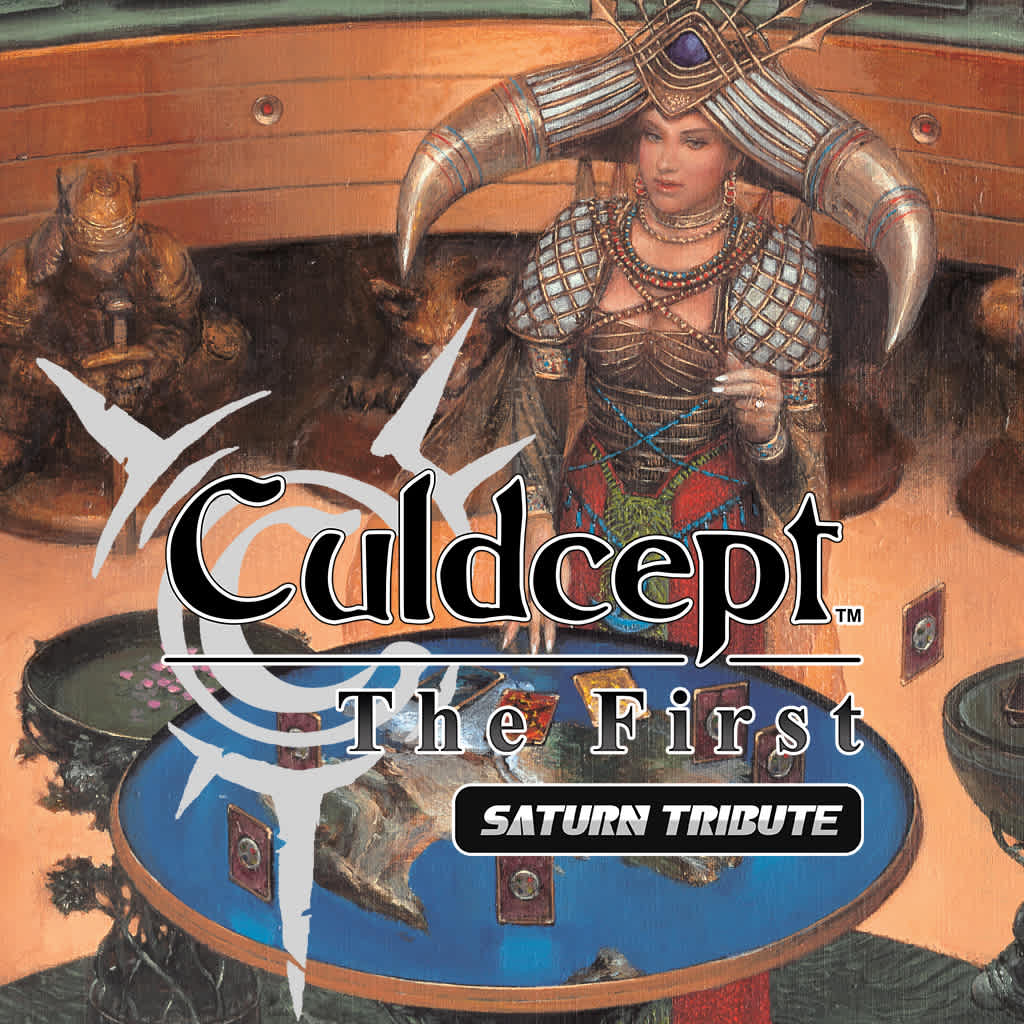
Some games arrive on modern consoles feeling like they have been dusted off, polished up and sent back into the world with little thought for why anyone should care. Then there are games like Culdcept The First Saturn Tribute, where simply being able to play the original 1997 Culdcept outside Japan feels like a small piece of gaming history being returned to its rightful place. It is an oddball, wonderfully eccentric mix of board-game strategy, collectable cards, creature battles and resource management that really should not work as well as it does. Yet somehow, decades after its debut on the Sega Saturn, there is still something genuinely compelling about rolling the dice and watching your carefully constructed plans either flourish or collapse spectacularly.
The original Culdcept was the start of a series that would go on to develop a dedicated following, but western players were left looking in from the outside. That makes Culdcept The First Saturn Tribute more than a simple retro re-release. It is an opportunity to experience the foundations of a cult series and discover just how inventive OmiyaSoft was in the late 1990s. It certainly shows its age in places, but there is a warmth and personality here that many modern strategy games could learn from.
A Board Game With Teeth
At first glance, Culdcept sounds surprisingly straightforward. You roll a die, move around a board and try to accumulate enough magic before making your way back to the castle. Anyone familiar with games such as Monopoly will immediately recognise the basic idea, particularly when you begin claiming pieces of land and charging opponents for landing on your territory. The clever part is what happens when you introduce a deck of more than 300 cards into that familiar formula.
Land is divided into four colours, each representing a particular terrain and corresponding to different creature alignments. Claiming a space is only the beginning, because you then need to decide how best to develop it. Upgrading land increases its value and can make passing through your little corner of the board increasingly painful for your opponents, but doing so requires careful management of your resources. It creates that wonderful strategy game dilemma where you always feel as though there is something else you could be doing with your magic.
The board therefore becomes much more than a path from one side to another. It gradually transforms into a constantly changing battlefield, with ownership, positioning and risk all playing their part. You can build a formidable stronghold and hope your rivals are unlucky enough to land there, or take a more aggressive approach and try to dismantle their plans directly. The dice introduce an element of chance, but the game gives you enough strategic tools to make that uncertainty feel exciting rather than frustrating.
When Somebody Lands On Your Land
The most entertaining moments often arise when an opponent lands on one of your territories. They can simply pay the toll and continue, which is usually the sensible option if your defending creature looks like an especially unpleasant thing to fight. Alternatively, they can risk an attack, hoping their own creature and any supporting cards can overcome your defender.
This is where Culdcept reveals its true personality. What initially looks like a board game suddenly becomes a miniature tactical card battle, with creatures facing one another and players using item cards to swing the outcome. Weapons, armour and other effects can turn an apparently hopeless confrontation into a victory, while a little preparation can turn a modest creature into a surprisingly formidable guardian.
There is a lovely sense of tension in these encounters because losing is not simply a matter of watching health disappear. Territories have genuine strategic value, so taking an opponent’s land can completely alter the balance of a match. Likewise, successfully defending a valuable square can feel like a genuine achievement, particularly when you know the opponent was counting on taking it from you.
Building Your Book
The card system is where the depth really begins to reveal itself. Your book contains 50 cards, with more than 300 available across the game, and building a useful deck is an important part of learning how Culdcept works. You have creatures to consider, as well as spells, items and other cards that can support your wider strategy.
It is tempting to simply throw together the strongest-looking creatures and hope for the best. Culdcept quickly teaches you that this is not necessarily the smartest approach. Your cards need to work with the territories you are trying to control, while your overall deck needs to account for the different situations that can arise during a match.
That process of experimentation is one of the game’s greatest pleasures. You gradually discover combinations that suit the way you like to play, whether that means concentrating on defensive control, building a network of valuable territories or taking a more aggressive approach to stealing land. There is something deeply satisfying about putting together a book that finally feels like your own creation and seeing it perform exactly as you hoped.
A Story From Another Time
There is a surprisingly substantial single-player adventure here as well. The story unfolds on the continent of Bablashca, where humanity has enjoyed a period of prosperity before mysterious stone tablets linked to the ancient book of Culdcept appear. As you might expect, the arrival of something with that much power does not exactly lead to a peaceful afternoon.
A lone young protagonist becomes caught up in the resulting conflict and sets out on a journey to restore peace. It is classic 1990s fantasy storytelling, complete with colourful characters, magical lore and plenty of melodrama. The presentation has an unmistakably Japanese Saturn-era charm, and the inclusion of the original Japanese FMV sequences with English subtitles adds another layer of authenticity.
The story is unlikely to be the reason most people stick around, but it does a good job of giving individual matches a sense of purpose. There is something more satisfying about progressing through a campaign when every new opponent feels like another step on a larger journey rather than simply another randomly selected board.
Strategy With a Little Luck
The relationship between strategy and luck is perhaps the most interesting thing about Culdcept. Dice rolls can ruin a carefully considered plan, but they can also create opportunities you could never have manufactured yourself. The trick is to build a strategy that can survive bad luck while being ready to capitalise when fortune finally smiles on you.
That makes every turn meaningful. You are constantly thinking about where you might land, which territories are worth investing in, whether you have enough resources to defend yourself, and whether an opponent is about to make a move that could undermine everything you have built. Even something as simple as choosing whether to upgrade a territory can become a surprisingly difficult decision.
It is this mixture of randomness and planning that gives the game its character. If everything were completely predictable, it would lose some of its board game appeal. If everything were left to chance, there would be little reason to care about deck construction or tactical decisions. Culdcept sits somewhere in the middle, and that balance remains remarkably effective.
A Beautifully Old School Saturn Experience
Visually, this is very much a Sega Saturn game, and I mean that as a compliment. The chunky sprites, bold colours and pixel-based presentation have an undeniable charm, while the character artwork and FMV sequences reinforce the feeling that you are playing something rescued directly from another era.
The battles are simple by modern standards, but they have a pleasing clarity. Creatures are immediately recognisable, and attacks have enough impact to make the encounters feel lively without pretending to be something they are not. There is a wonderful authenticity to the presentation that makes it easy to imagine discovering this game in a Saturn shop in the late 1990s.
The soundtrack fits the package beautifully, too. Its retro FM synth sound has plenty of energy and helps establish a slightly surreal fantasy atmosphere. Sound effects accompanying card draws, battles and other actions are suitably punchy, giving the game that unmistakable old-school electronic personality.
Modern Comforts Make a Difference
The biggest gift this Saturn Tribute brings to the original is not graphical polish. It is convenience. Rewind functionality, quick save and load options, and the ability to reveal hands make the experience considerably more approachable for modern players who may not have the patience for some of the limitations associated with older games.
Being able to rewind is particularly useful when experimenting with the game’s systems. Rather than accepting a disastrous sequence of events and potentially losing a lengthy session, you can step back and see where things might have gone differently. It also makes the game an easier recommendation for newcomers who are still learning its considerable number of rules.
The Bonus Pack system provides additional rewards after matches, while the display options help the game sit more comfortably on modern screens. These additions do not fundamentally change what Culdcept is, which is exactly how it should be. They simply remove some of the friction that comes with playing a game originally designed for hardware that predates much of its modern audience.
A Cult Classic That Earned Its Reputation
What surprised me most about Culdcept The First Saturn Tribute is how fresh the core concept still feels. We have seen countless board and card games over the years, yet this particular combination remains distinctive. It is not simply Monopoly with monsters, nor is it merely a collectable card game bolted onto a board. The two sides genuinely depend on each other.
That interconnected design is what makes the game worth experiencing today. Every card decision can affect your position on the board, while every move around the board can influence how useful your deck becomes. It is a constant conversation between luck, planning, territory and combat.
It is also a reminder that originality does not necessarily mean inventing something nobody has ever seen before. Sometimes it means taking familiar ideas and combining them in a way nobody quite expected. Culdcept did exactly that in 1997, and thankfully its central idea has survived remarkably well.
Final Thoughts
Culdcept The First Saturn Tribute is an unusual game, but in the best possible way. Its blend of board-game movement, territorial control, deck-building and tactical combat remains surprisingly addictive nearly three decades after its original release. The 1997 foundations are obvious, and newcomers will need time to learn how all the systems fit together, but once everything clicks, there is satisfying depth beneath the colourful Saturn-era presentation.
This is also exactly the sort of release that makes retro collections worthwhile. Rather than simply reviving a famous name, it gives western players access to an important part of the Culdcept story they previously missed. The modern quality-of-life additions make the experience considerably more comfortable without sanding away its personality, while the original visuals, music and presentation retain all the charm of the era.
It will not appeal to everyone. Players looking for fast action or straightforward card battles may find the pace deliberate, and the combination of dice rolls and complex strategic decisions can initially feel daunting. Give it time, though, and Culdcept The First Saturn Tribute starts to reveal why this strange little Saturn classic developed such a devoted following.
For strategy fans, card game enthusiasts and anyone with an affection for the more unusual corners of gaming history, this is a fascinating trip back to where it all began. It is quirky, clever, occasionally unforgiving and wonderfully different. Most importantly, it still feels like a game rather than a museum piece, which is probably the greatest compliment you can pay a title approaching its thirtieth birthday.